Whale watching in Coffs Harbour
Whale Watching in Coffs Harbour is your guide to spotting whales. Where to see them, on land and water, how to get there and where to stay. Plus tips on how to avoid seasickness.
Coffs Harbour provides the perfect stop over for whales on the humpback highway, as it’s protected by the Solitary Islands and the meeting point of the East Australian Current from the north and the cooler currents from the south providing a unique marine environment.
It’s also a major stopover for people on the road trip from Sydney to Brisbane.
If Coffs Harbour is too far to travel, check out Whale Watching on the East Coast of Australia for other locations.
Some links in this post are affiliate links, which means I may earn a small commission if you choose to make a purchase. It helps support Roam with No Regrets at no extra cost to you — thank you for your support!
About Humpback Whales
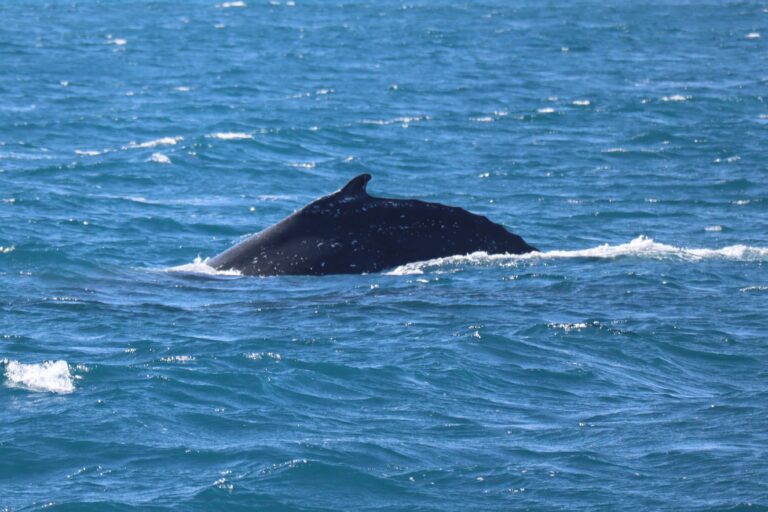
Humpback whales travel 10,000kms from their feeding grounds in Antarctica to the breeding grounds in sub-tropical waters. Whales can swim up to 8km/hr but during the migration cruise at an average leisurely 1.6km/hr. This is affectionately known as the humpback highway.
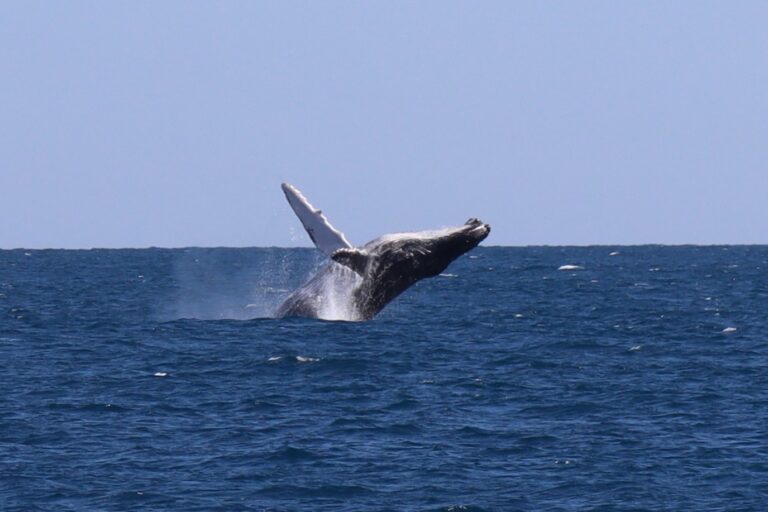
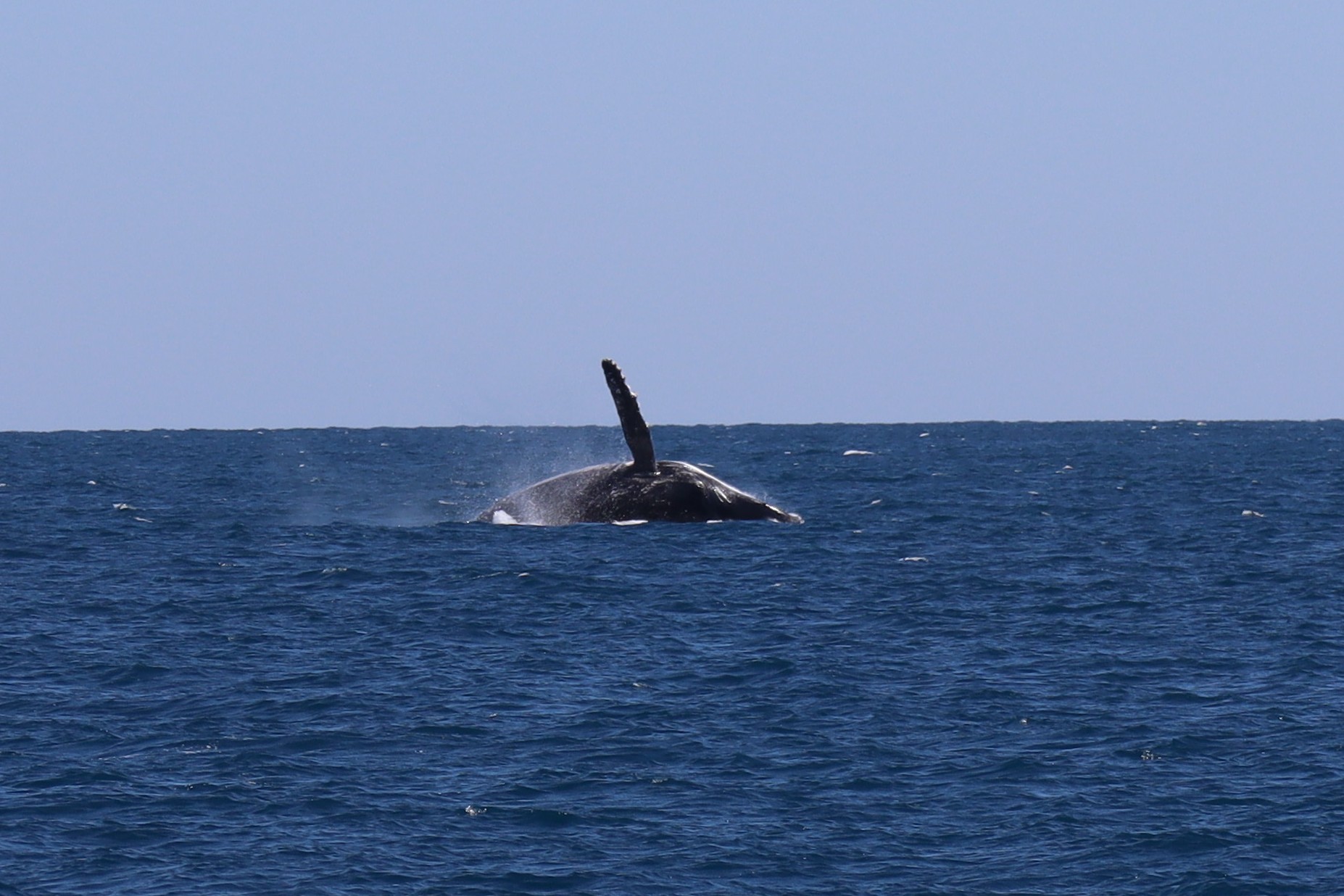
Humpback whales measure 16-17m in length and weigh up to 40 tonnes. That’s a bit bigger than a bus! So, when they breach, that is when they throw their entire body out of the water, in an action of pure joy, it’s truly impressive. Humpback whales can live up to 50 years. They eat krill and small fish and practice the techique called bubble netting where they swim in circles blowing bubbles which compress the krill or fish together, then they will swim up through the bubble net and open their enormous mouths to engulf their meal. Humpback whales can eat 1360kg of krill per day during feeding season.
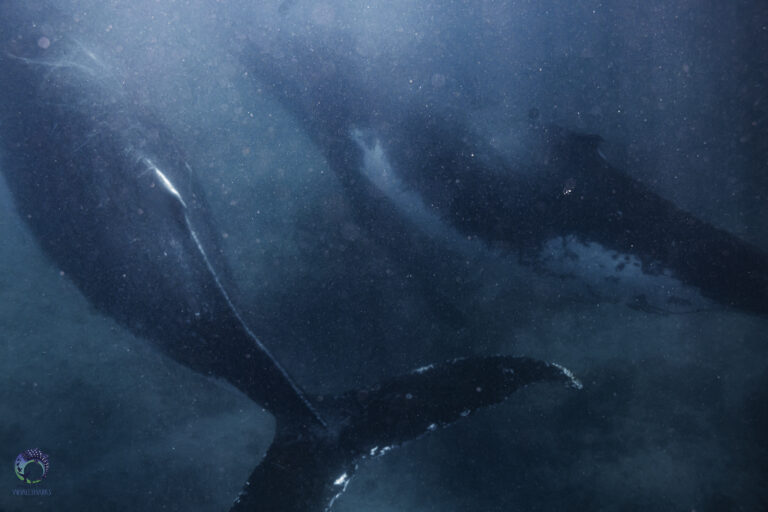
The trip south later in the year is slower as the new mums swim with their 4-5m long, 2 tonne calves. Humpback whales are the most playful whale species. Look out for spouts, spyhops, pectoral slaps, body rolls and if you are lucky, breath-taking breaches where the 40 tonne mammals launch themselves skyward in a display of pure power and joy.
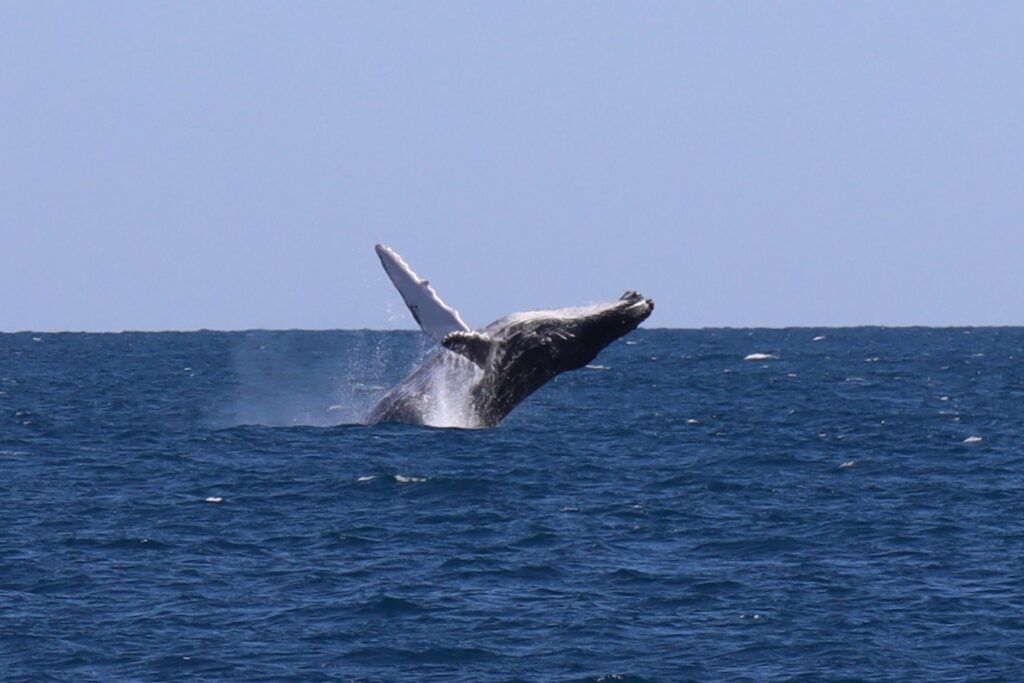
If you are lucky, you might even see Migaloo, the famous white whale.
When do the whales visit?
Humpback whales visit Coffs Harbour from June to November.
Getting to Coffs Harbour
Driving
Coffs Harbour is located 6 hours north of Sydney or 4 hours south of Brisbane and is a great town to break up the drive up the NSW coast.
Flying
Coffs Harbour Airport has direct flights from Brisbane, Melbourne and Sydney.
Public Transport
Trains run twice daily from Brisbane leaving from Roma Street Station to Coffs Harbour and take about 5 hours. There are also 2 train services daily from Central Station, Sydney to Coffs Harbour and takes almost 9 hours.
There is a decent bus service in and around Coffs Harbour.
Visit Trip Planner | transportnsw.info for timetable information.
Where to stay
Luxurious – Pacific Bay Resort This resort is located to the north of Coffs Harbour and is located on a stunning golf course. The onsite restaurant is fantastic.
Mid range – Coffs Harbour Holiday Apartments
Budget – Country 2 Coast Motor Inn Coffs Harbour The motor inn is located right next to the Big Banana. We stay here quite regularly and the onsite restaurant is quite good.
Holiday parks – Big 4 Park Beach Holiday Park. This holiday park is located opposite the beach and within walking distance of the jetty and marina. It’s the perfect spot for road trippers and families.
Whale watching tours
Coffs Harbour is located just to the south of the Solitary Islands Marine Park where the humpback whales meet to continue their journey north. There is no sand bar at the harbour so cruises can generally depart in most conditions. Whales are often seen with just 15 minutes of leaving the harbour! Choose you cruise below.
Whale Watching Coffs Harbour – Jetty Dive Centre
Whale Watching Coffs Harbour – Whale Watch Experience
If you’re worried about getting seasick, read my guide on How to Avoid Seasickness, 10 Proven Tips that Actually Work.
Land based whale watching
There are many headlands and lookouts around Coffs Harbour overlooking the Solitary Islands Marine Park which provide excellent whale watching opportunities.
- Muttonbird Island – is accessed via Coffs Harbour Jetty. At the end of the jetty there is a short steep climb onto the island. There is an elevated walkway to the eastern lookout where you can watch for whales.
- Macauleys Headland (Park Beach) – walk up to the headland from the beach carpark.
- Sawtell Headland, Sawtell – Sawtell is a lovely coastal village located just to the south of Coffs Harbour. There is easy access for parking plus several benches and grassy areas for picnics.
- Boambee Headland, Sawtell – this rugged headland has carparks at the top of the headland and halfway up. Choose one of the walking trails around the headland to view the whales.
- Look At Me Now Headland, Emerald Beach is accessed from a carpark at the top of the headland. Relax on the grassy headland with a picnic but be prepared to share the grass with the mob of resident kangaroos.
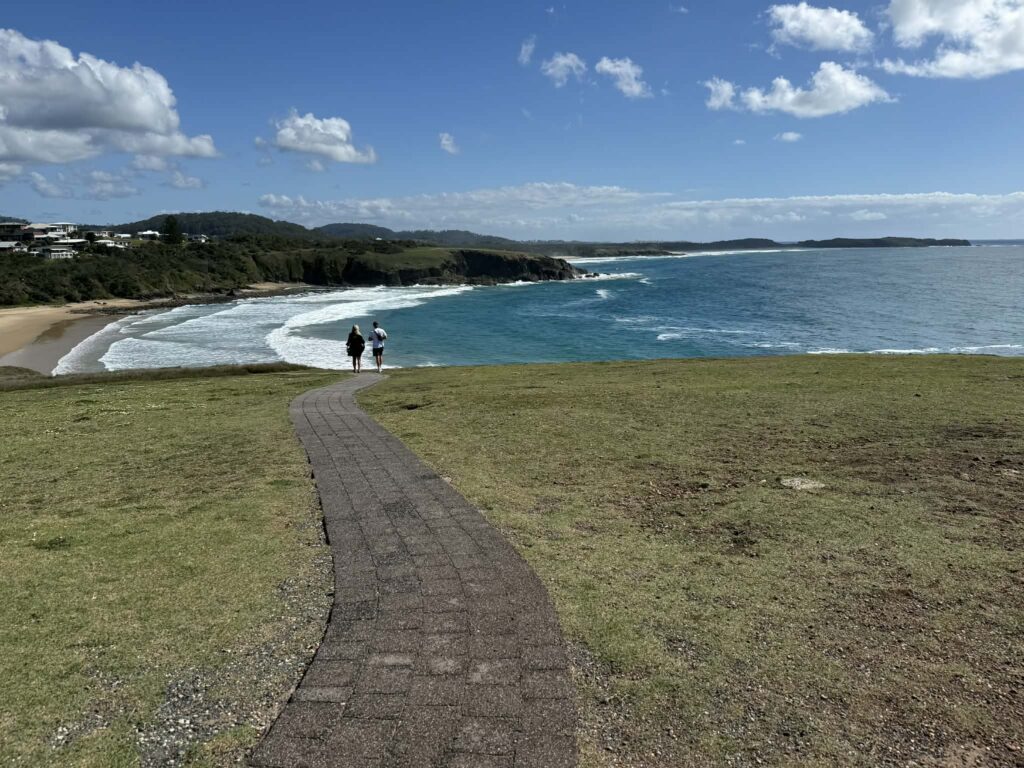
- Sealy Lookout, Coffs Harbour. Sealy Lookout and its Forest Sky Pier provides stunning views over Coffs Harbour and the Solitary Islands. It’s a fair way from the coast so binoculars are recommended.
- Woolgoolga Headland, Woolgoolga is located to the north of Coffs Harbour. The headland is accessed from a carpark at the top of the headland. After whale watching, explore the seaside village of Woolgoolga.
So what are you waiting for?
Book your winter whale watching holiday now, or if you are a local, take a day off and spend the day with these gentle giants. You won’t regret it.
If you are looking for the ultimate humpback whale bucket list experience, read How to Swim with Humpback Whales for an experience you’ll never forget.
Don’t forget to share, like or pin this post.