Whale Watching on the East Coast of Australia
Every year, thousands of humpback whales make one of the world’s most spectacular migrations, travelling more than 10,000kms along Australia’s east coast. Known as the Humpback Highway, this incredible journey transforms coastal lookouts and whale watching cruises into front-row seats for one of nature’s greatest wildlife spectacles.
From the sapphire waters of Merimbula in southern NSW to the sheltered nursery grounds of Hervey Bay in Queensland, each destination offers a different whale watching experience. Some are famous for close encounters on the water, while others provide spectacular land-based viewing from dramatic coastal headlands.
This guide follows the Humpback Highway north, comparing the best places to see whales on Australia’s east coast. Whether you’re planning your first whale watching cruise, searching for the best free lookouts, or deciding which destination suits your travel plans, you’ll find everything you need to choose the perfect place to experience the annual humpback migration.
Some links in this post are affiliate links, which means I may earn a small commission if you choose to make a purchase. It helps support Roam with No Regrets at no extra cost to you — thank you for your support!
Discover Australia’s Humpback Highway
Every year, one of the world’s greatest wildlife migrations unfolds just offshore along Australia’s east coast. Known as the Humpback Highway, this remarkable migration sees tens of thousands of humpback whales travel between the icy waters of Antarctica and the warm tropical waters of Queensland.
Unlike many wildlife spectacles that require travelling to remote locations, Australia’s Humpback Highway passes close to beaches, coastal lookouts and harbours, making it one of the easiest places in the world to see whales in the wild. Whether you’re standing on a headland in New South Wales or joining a whale watching cruise in Queensland, there’s a good chance you’ll witness these gentle giants on their incredible journey.
What is the Humpback Highway?
The Humpback Highway is the migration route followed by around 40,000 humpback whales as they travel along Australia’s east coast each year. Their annual round trip covers around 10,000 kilometres, making it one of the longest mammal migrations on Earth.
During summer, humpback whales feed almost continuously in the nutrient-rich waters of Antarctica, building up the energy reserves needed for their long journey north. As winter approaches, they leave the Southern Ocean and begin migrating to warmer waters where they mate, give birth and care for their newborn calves.
Because the migration hugs much of the Australian coastline, whales can often be seen surprisingly close to shore. In some locations, they pass within a few hundred metres of beaches and rocky headlands, offering spectacular viewing opportunities without even stepping on a boat.
Why Australia’s East Coast is One of the Best Places in the World to See Whales
Few countries offer whale watching as accessible as Australia. The migration passes hundreds of kilometres along the coastline, giving visitors plenty of opportunities to witness humpback whales regardless of whether they’re exploring southern New South Wales, Sydney or Queensland.
Each destination offers something different. Some are renowned for dramatic cliff-top viewpoints, while others provide exceptional whale watching cruises that bring you close to the migration route. Hervey Bay is particularly unique, as its sheltered waters become an important resting stop for mothers and calves during the southbound migration.
No matter where you choose to watch, seeing a humpback whale breach, slap its enormous tail on the water or surface just offshore is an unforgettable reminder of the incredible journey these animals complete every year.
When is the Best Time to See Whales?
Whale watching season on Australia’s east coast generally runs from May to November, when humpback whales migrate between Antarctica and the warm breeding waters of Queensland. While you can spot whales throughout the season, the best time to visit depends on where you’re travelling and the type of experience you’re hoping to have.
The migration happens in two distinct phases. During the northbound migration (May to July), whales are making their way to the breeding grounds. On the southbound migration (August to November), many mothers return with newborn calves, often creating slower-moving and more playful encounters.
May to July: The Northbound Migration
The first humpback whales begin appearing off the south coast of New South Wales in May before continuing north along the coastline.
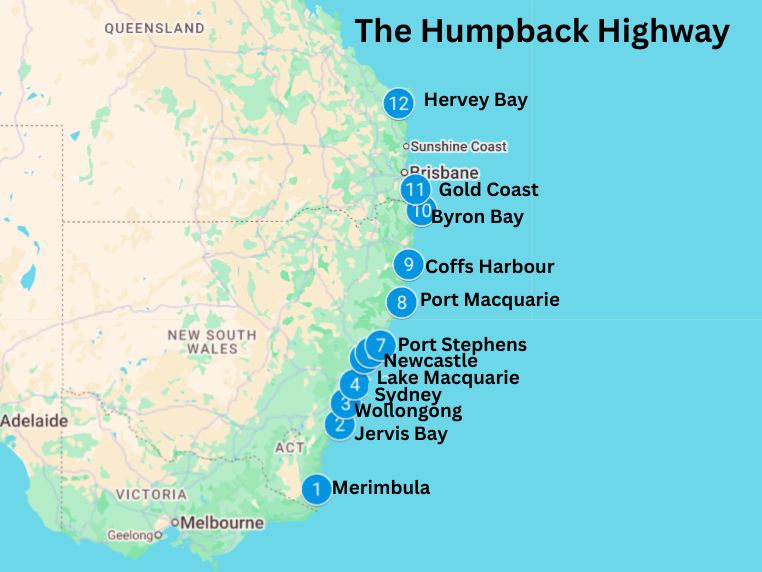
As the migration progresses, whale watching opportunities move further north, with whales passing popular destinations including Jervis Bay, Sydney, Newcastle, Port Stephens, Port Macquarie, Coffs Harbour, Byron Bay and the Gold Coast before reaching the breeding grounds in Queensland.
During this stage, whales are generally travelling with purpose, so they tend to keep moving rather than stopping for extended periods. However, this is still an exciting time to witness spectacular behaviours such as breaching, tail slapping and pectoral fin slapping as the migration gains momentum.
If your goal is simply to experience the migration and maximise your chances of seeing whales, the northbound season offers excellent viewing right along Australia’s east coast.
August to November: The Southbound Migration
The return journey is often considered the highlight of the whale watching season.
After spending winter in warmer waters, humpback whales begin travelling south towards Antarctica. Many mothers are now accompanied by calves that are only weeks or months old, creating unforgettable viewing opportunities as the young whales learn essential survival skills.
Because calves need regular rests, whales often travel at a slower pace during the southbound migration. This gives whale watchers more time to observe behaviours such as playful breaching, spy hopping and close interactions between mothers and calves.
Several destinations, particularly Hervey Bay, become renowned for these family groups. The calm, sheltered waters provide an ideal resting area where mothers can nurse their calves before continuing their journey south.
Best Time by Region
Although whales can be seen somewhere along the east coast for much of the season, timing varies depending on your destination.
| Destination | Best Time |
|---|---|
| Merimbula | May–July, September–November |
| Jervis Bay | May–July, September–November |
| Wollongong | May–July, September–October |
| Sydney | May–July, August–November |
| Lake Macquarie | June–July, September–October |
| Newcastle | June–July, September–October |
| Port Stephens | May–July, September–November |
| Port Macquarie | June–July, September–October |
| Coffs Harbour | June–July, August–October |
| Byron Bay | June–July, September–October |
| Gold Coast | June–October |
| Hervey Bay | July–October (especially August–October) |
Which Month is Best?
If you’re flexible with your travel dates, September is often considered one of the best months for whale watching on Australia’s east coast.
By this time, many mothers are travelling south with their calves, the weather is generally warming up, and whale activity is often at its peak. Cruises frequently report multiple sightings, while coastal lookouts can provide excellent land-based viewing.
That said, there isn’t a single “best” month for everyone. If you enjoy watching whales on the move, June and July are fantastic choices. If you’d love to see mothers with calves and more playful behaviour, plan your trip between August and October.
No matter when you visit during the migration season, witnessing a humpback whale in the wild is an unforgettable experience. The key is choosing a destination that matches your travel dates—and the kind of whale watching adventure you’re looking for.
Which East Coast Destination is Right for You?
One of the best things about whale watching on Australia’s east coast is that every destination offers a different experience. Some are famous for dramatic coastal lookouts where you can spot whales for free, while others are known for award-winning whale watching cruises that bring you close to the action.
Whether you’re planning a weekend getaway, a family holiday or an epic road trip along the coast, there’s a destination to suit your travel style. Here’s a quick guide to help you choose.
| If you want to… | Best destination | Why you’ll love it |
|---|
| See mothers and calves | Hervey Bay | Sheltered waters make it a favourite resting place for mums and calves during the southbound migration. |
| Visit Australia’s whale watching capital | Hervey Bay | One of the country’s most famous whale watching destinations, with consistently excellent sightings. |
| Stay in a major city | Sydney | Easy access to cruises, iconic coastal lookouts and plenty of attractions to combine with your trip. |
| Take one of the best whale watching cruises | Jervis Bay | Crystal-clear waters and highly regarded tour operators. |
| Watch whales from shore | Byron Bay | Cape Byron Lighthouse offers one of Australia’s best land-based whale watching lookouts. |
| Plan a family holiday | Port Stephens | Family-friendly cruises, beautiful beaches and plenty of activities beyond whale watching. |
| Escape the crowds | Lake Macquarie | A quieter destination with excellent coastal viewpoints and fewer visitors. |
| Enjoy a weekend getaway from Sydney | Wollongong | Close to Sydney with scenic lookouts, coastal walks and regular whale sightings. |
| Capture incredible photos | Merimbula | Rugged coastline, uncrowded viewpoints and fantastic photography opportunities. |
| Combine whale watching with nature | Coffs Harbour | National parks, beaches and rainforest make it a great all-round destination. |
| Enjoy a relaxed coastal escape | Port Macquarie | Beautiful beaches, coastal walks and excellent whale watching by land or sea. |
| Mix whale watching with entertainment | Gold Coast | Great cruises plus beaches, dining and world-famous attractions. |
| Find an all-round destination | Newcastle | Excellent cruises, coastal lookouts, beaches and vibrant cafés all in one place. |
Still can’t decide? The good news is there’s no wrong choice. Every destination along Australia’s Humpback Highway offers the chance to witness one of nature’s greatest migrations, with each location providing its own unique perspective.
Below, you’ll find our detailed guides to the 12 best whale watching destinations on Australia’s east coast, including the best time to visit, where to spot whales, cruise recommendations and local travel tips to help you plan your perfect whale watching adventure.
The Best Places to See Whales on Australia’s East Coast
From the sapphire waters of Merimbula in southern New South Wales to the sheltered bays of Hervey Bay in Queensland, Australia’s Humpback Highway is dotted with incredible places to watch the annual whale migration. Whether you prefer spotting whales from dramatic coastal lookouts or heading out on a whale watching cruise for a closer encounter, each destination offers its own unique perspective on this unforgettable natural spectacle.
Explore our guides below to discover the best time to visit, the top whale watching cruises and lookouts, and local tips to help you make the most of your whale watching adventure.
Merimbula
Merimbula is the first stop on the Humpback Highway for the humpback whales and whale watchers making their annual migration from their feeding grounds in Antarctica to the shallower breeding grounds in the north.
Whales pass through in May and June, and return with their calves in October and November.
Merimbula is a delightful coastal town of 3,800 people located on the shores of Lake Merimbula on the Sapphire Coast (far south coast) of NSW. It’s a great little spot with great beaches, fantastic fishing and of course whales. Spend the weekend or a week and feel refreshed.
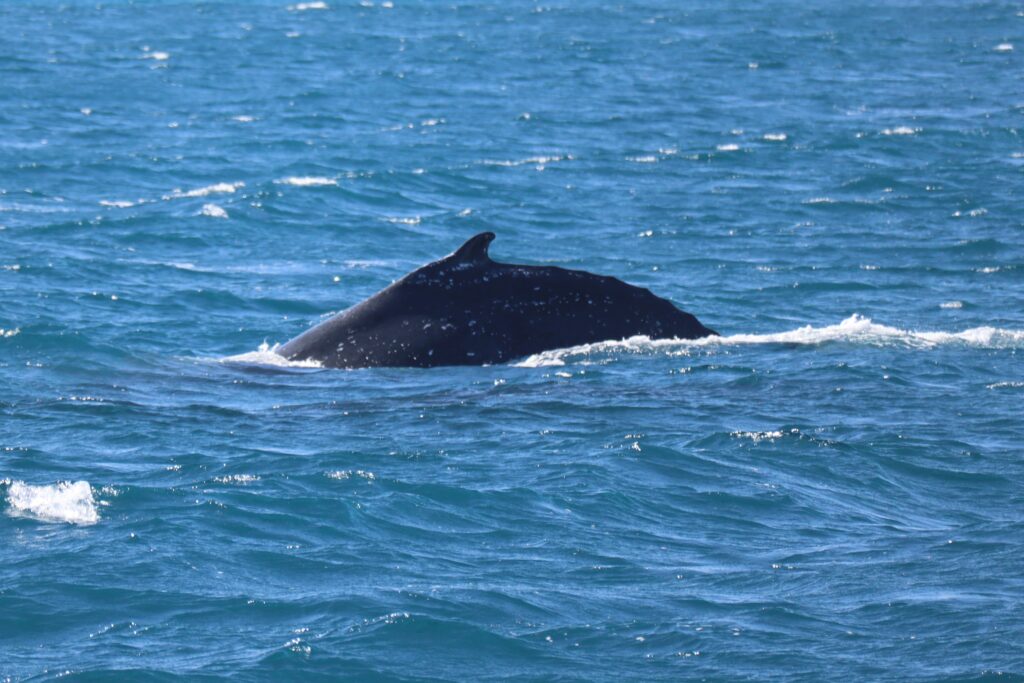
Sapphire Coastal Adventures will bring you eye to eye with whales in the wild on a 2-hr whale watching adventure. These guys are so confident that you will see whales that they offer a whale sighting guarantee.
Book your whale watching cruise with Sapphire Coastal Adventures.
If you’d rather keep your feet on dry land, Short Point Recreational Reserve provides an easily accessible elevated headland with wooden chairs. A perfect place to sit down for a picnic and what for whale blows as the whales pass by. Sometimes, on the way south, whales will stop in the sheltered waters of Merimbula Bay with their calves for a rest.
For more awesome whale watching locations or where to stay, read our guide Whale Watching in Magnificent Merimbula.
Jervis Bay
Jervis Bay Marine Park is a huge oceanic bay covering 102 square km. Towns along the shoreline include Vincentia, Huskisson and Callala Bay and Hyams Beach (yep, that’s the one with the whitest sand in the world according to the Guiness Book of Records). The marine park is home to fur seals, penguins and dolphins as well as the passing whales.
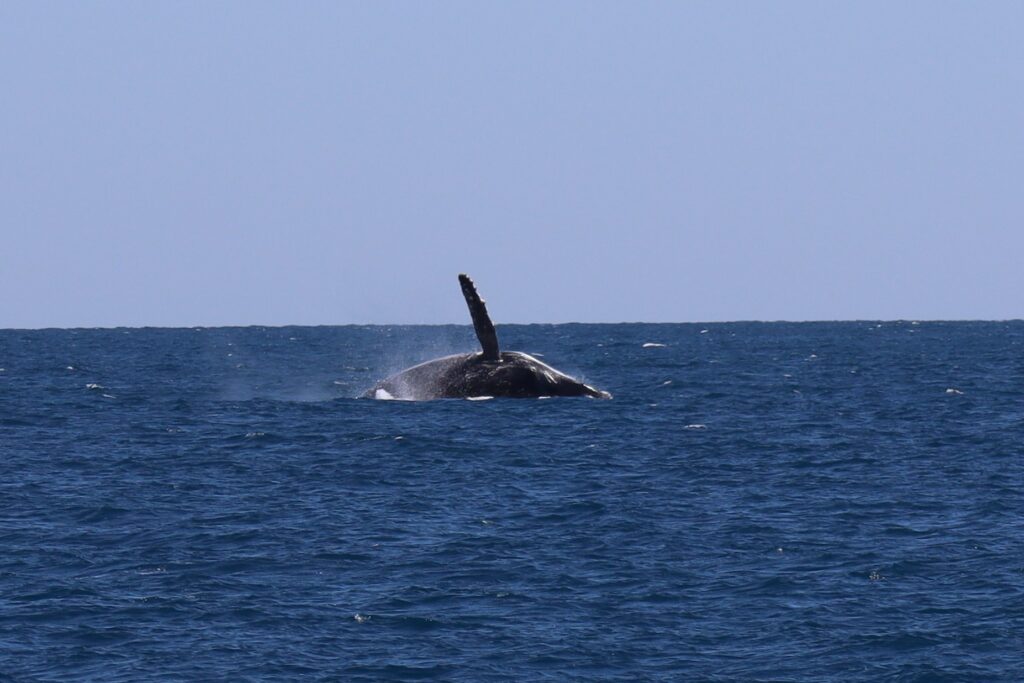
Jervis Bay is a beautiful place to get back to nature and relax. Stay for a weekend and you will wish you stayed for a week.
For a free whale watching option, head to Point Perpendicular. It’s located at the southern end of Beecroft Peninsular. The lighthouse is open on the weekend so you can check it out at the same time.
Wollongong
Wollongong is home to just over 300,000 Australians and is the third largest city in NSW after Sydney and Newcastle. It is nestled between the Illawarra Escarpment and the Pacific Ocean providing dramatic coastline and ideal whale watching opportunities.
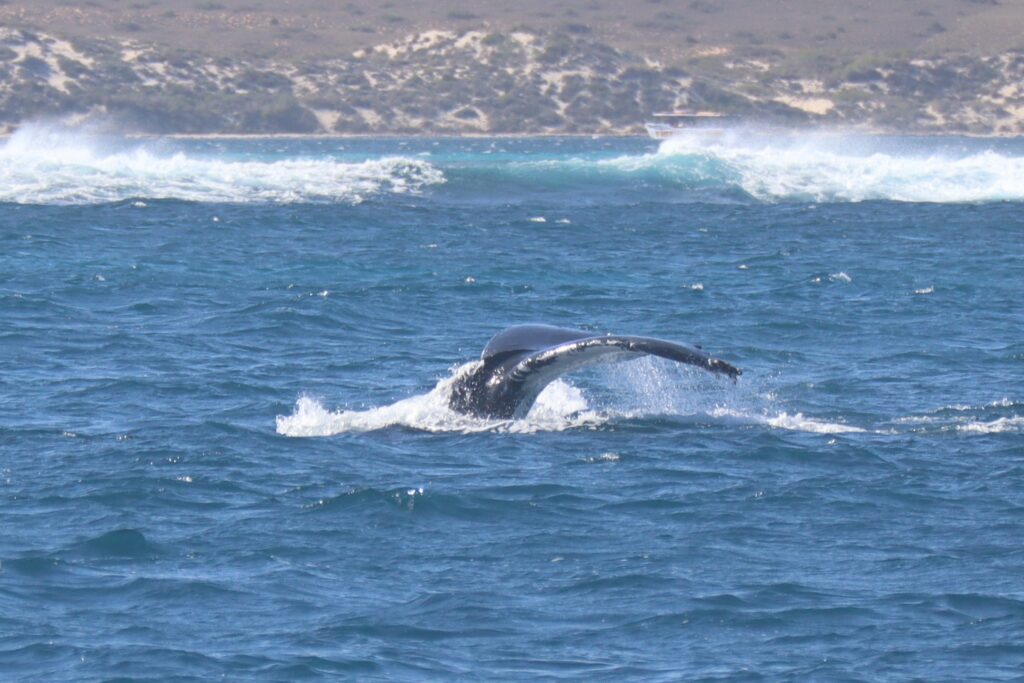
Aquilla Fishing Charters is Wollongong’s first whale watching cruise. Their 60ft vessel has a limit of 22 guests, providing a more personal experience. They offer a 3-hour weekend adventure with a whale-sighting guarantee or come back for free this season.
Book a cruise with Aquilla Fishing Charters
Short of time, head to Wollongong Lighthouse. Located on Flagstaff Point this vantage point is excellent for spotting whales. Take the time to enjoy the Blue Mile Walk around the harbour whilst you’re there.
Read our guide Whale Watching in Wollongong for more cruise options and other free locations to watch whales.
Sydney
Sydney is home to 5 million Sydneysiders and the iconic Sydney Harbour Bridge and Opera House. The city hosts 3.5 million international visitors each year, but did you know that each year, whales also enter the harbour to check out what all the fuss is about.
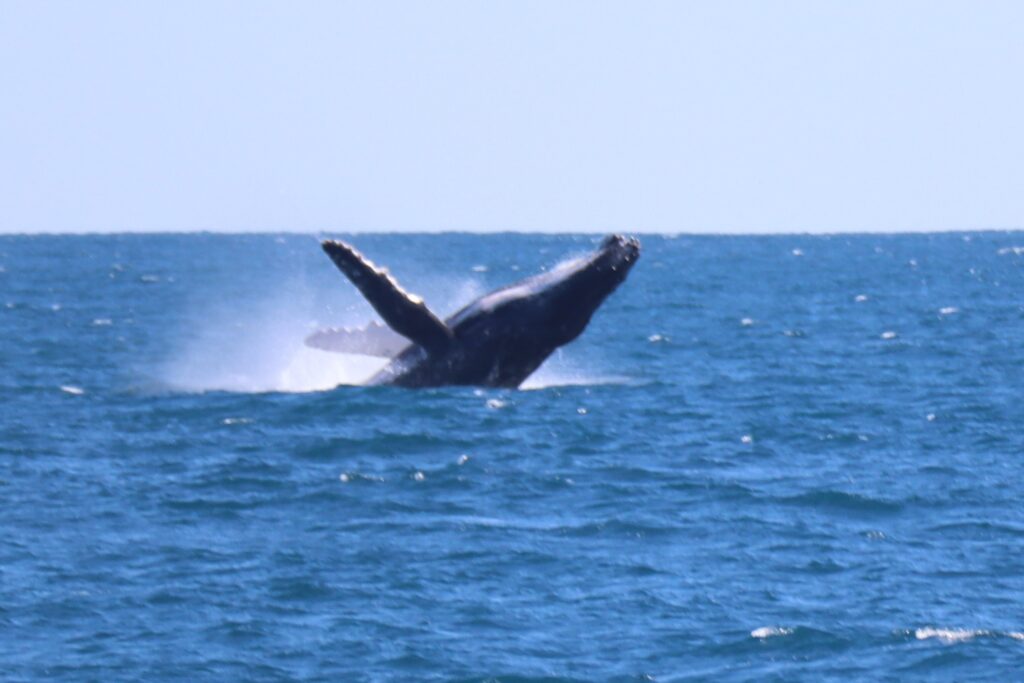
From May to November, whale watching cruises in Sydney leave from Circular Quay and head out through the heads. Cruise durations range between 2 and 3 hours. Be sure to check out the sea conditions before you go as it can be very lumpy at sea if the swell is up.
There are so many vantage points you can watch the whales for free. The closest one to the city is The Gap Bluff Walking Trail – catch the 324 bus from Town Hall to Robertson Park, Military Road, Watsons Bay (approx 40 mins) and walk from there.
Check out my guide Whale Watching in Sydney for cruise options and other fantastic viewpoints to spot these marine mammals .
Lake Macquarie
Lake Macquarie is the hidden gem on the Humpback Highway. With its dramatic clifftop viewpoints and fewer crowds, it provides the perfect outlook to watch the whales pass from shore.
Perhaps the best one is from the cliffs above Caves Beach. After watching the whales, climb down to the beach at low tide and check out the impressive sea caves.
Discover more about Caves Beach with our guide Discover the Magic of Caves Beach.
Newcastle
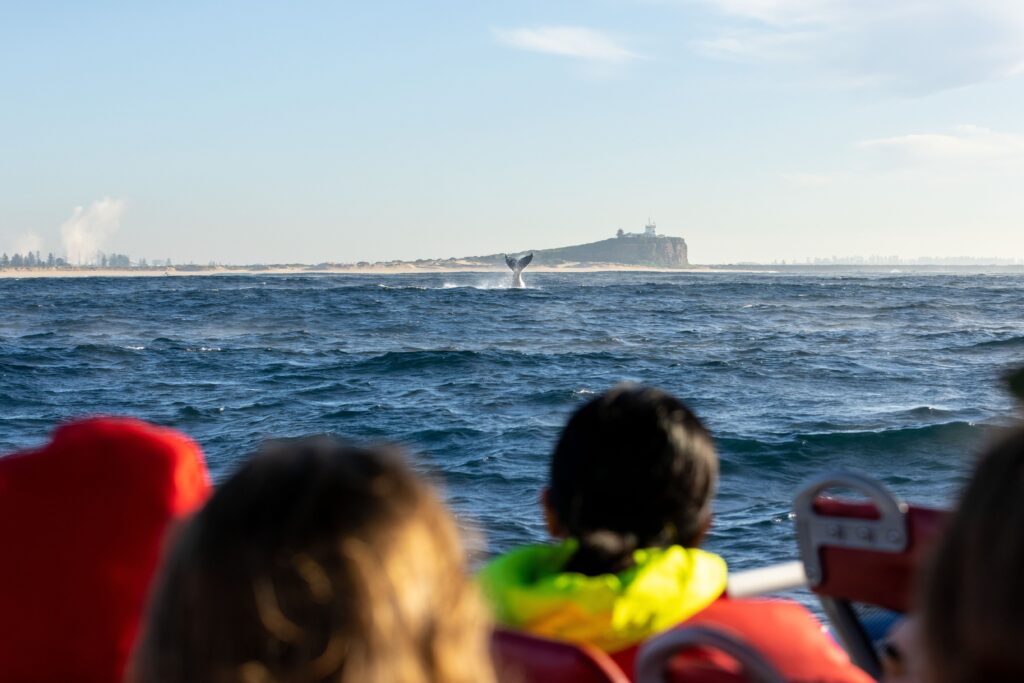
Newcastle is probably the easiest location to watch the whales without a car. The light rail takes you directly to the cruise wharf. Newcastle has an easy bar to cross enabling boats head out in most conditions. Alternatively, walk to Fort Scratchley and Nobbys Breakwall for free land-based options. Regular buses travel the route along the Bathers Way where there are many more excellent clifftop viewing opportunities.
For more free whale watching lookouts and cruise options, read Whale Watching in Newcastle.
After your whale watching fix, check out some of the Best Beaches in Newcastle or grab a bite to eat overlooking the harbour at Honeysuckle.
Port Stephens
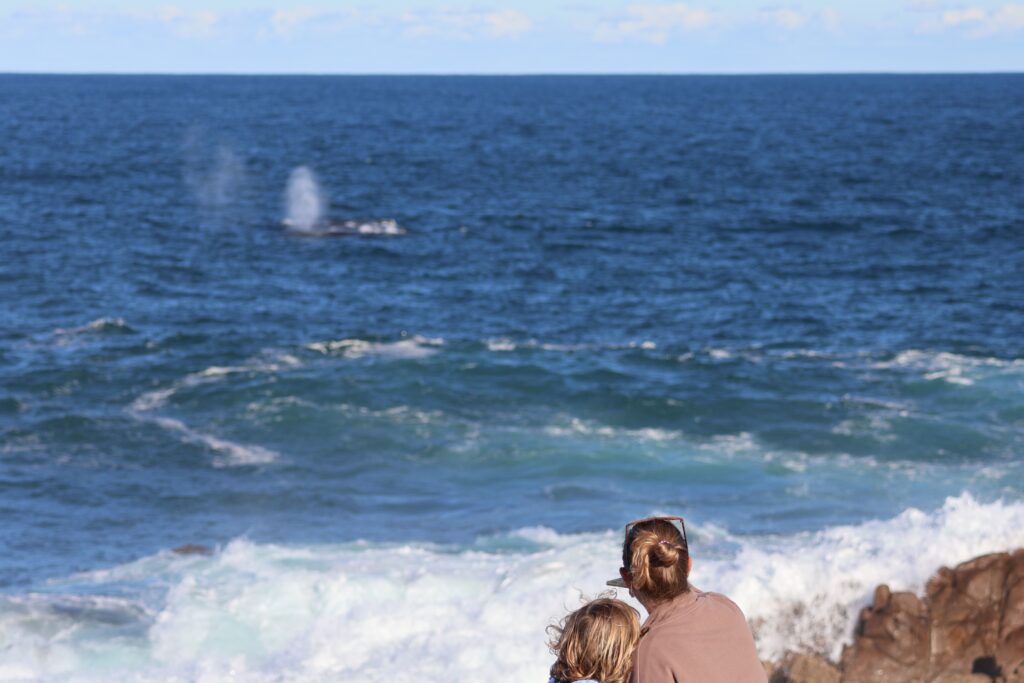
Port Stephens boasts 26 beaches and a harbour larger than Sydney Harbour. It’s also a place protected by offshore islands and provides calmer waters for whales to have a rest on their annual migration.
Port Stephens is in the middle of the humpback highway, so by the time the last whales head north, the first whales are heading south. Winter is the perfect time to go for a cruise to see the gentle giants (mid-May to November). It’s also home to 150 resident dolphins so you are likely to see both at the same time.
There are 3 whale watching cruise operators in Port Stephens and all depart from D’Albora Marina in Nelson Bay. The largest boat in the fleet is Moonshadow, providing the most stable option for those worried about getting seasick or those seeking an amazing photo opportunity. You should see the photos that have on their Facebook page – Wow!
Book your whale watching cruise with Moonshadow.
There are lots of great land based vantage points for whale watching but the Boat Harbour Whale Watch Lookout is hands down the best. Whales can pass a couple of hundred metres from the headland, which is as close as a commercial whale watching cruise will get.
Check out my detailed guide on Wonderful Whale Watching in Port Stephens.
Port Macquarie
Port Macquarie is known for its golden beaches, wildlife and rich convict history. With over 50,000 people calling “Port” home, you’ll find just about everything you need. It is also home to Port Macquarie Koala Hospital, where visitors can view these iconic animals being nursed back to health before being released back into the wild.
Port Jet Cruises operates 2 boats offering 90-minute cruises during whale watching season (late May to November). The Waverider is an open rib boat with a protective roof. It shields you from the sun and rain, while offering an intimate encounter with stunning marine life. The Essence has three different viewing decks and even has UNDERWATER VIEWING WINDOWS.
Book your cruise here Port Jet Cruises
If you want to keep your feet on solid ground, head to Tacking Point Lighthouse. It’s located 8km south of town and its elevated position provides 180-degree panoramic ocean views and is the perfect spot to watch whales cruise by.
Coffs Harbour
Coffs is considered as the half-way point when driving from Sydney to Brisbane. Offshore, is the Solitary Islands Marine Park, where the warm waters of the East Australia current mix with the cooler nutrient-rich waters of the south allowing tropical, sub-tropical and temperate marine species to thrive together.
Humpback whales visit Coffs Harbour from June to November. You can join a whale watching cruise from the Coffs Harbour Marina. There is no sand bar at the harbour so cruises can generally depart in most conditions. Whales are often seen with just 15 minutes of leaving the harbour!
Read our detailed guide Whale Watching in Coffs Harbour for more details.
There are many headlands and lookouts around Coffs Harbour overlooking the Solitary Islands Marine Park which provide excellent whale watching opportunities.
Muttonbird Island is accessed via Coffs Harbour Jetty. At the end of the jetty there is a short steep climb onto the island. There is an elevated walkway to the eastern lookout where you can watch for whales. After spotting whales, take the lower path along the marina. There are lots of fish swimming beneath your feet. On my last visit, I was delighted to spot Dory and watched a turtle feeding.
Byron Bay
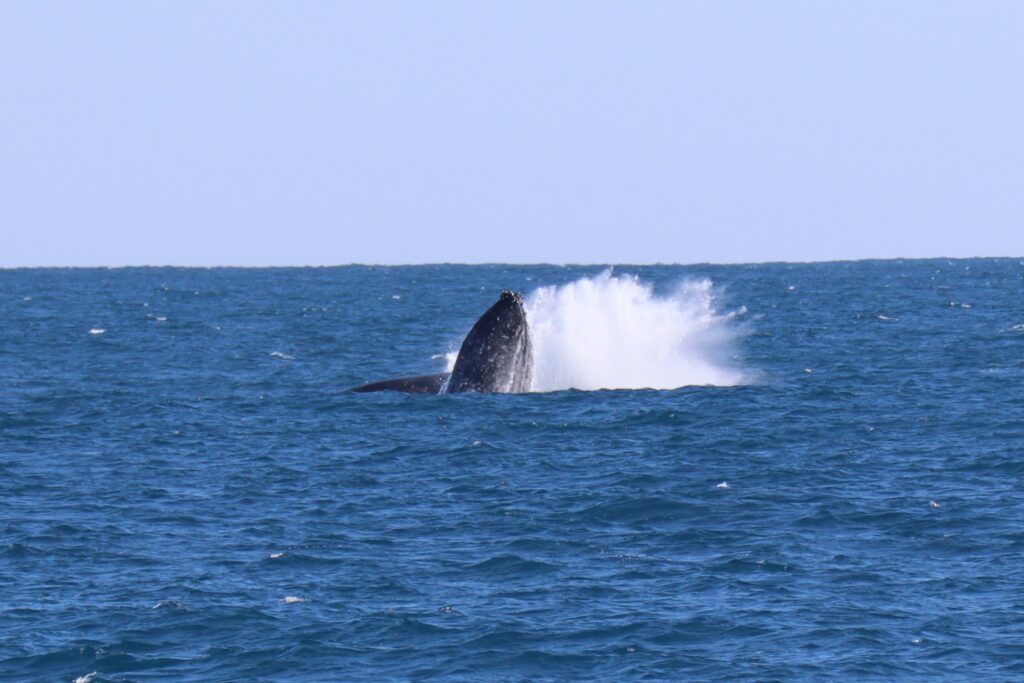
Byron Bay, home to Chris Hemsworth, has a distinctive hippy, bohemian vibe. There are 3 whale watching cruise operators, departing from different departure points. The really cool thing is they have hydrophones on board so you can listen to the underwater whale songs.
Cape Byron Lighthouse is the go-to location for whale watching. It’s also the most easterly point in Australia so tick that one off your bucket list.
Read Whale Watching in Beautiful Byron Bay for more information on cruise operators, where to see whales for free and where to stay in Byron Bay.
Gold Coast
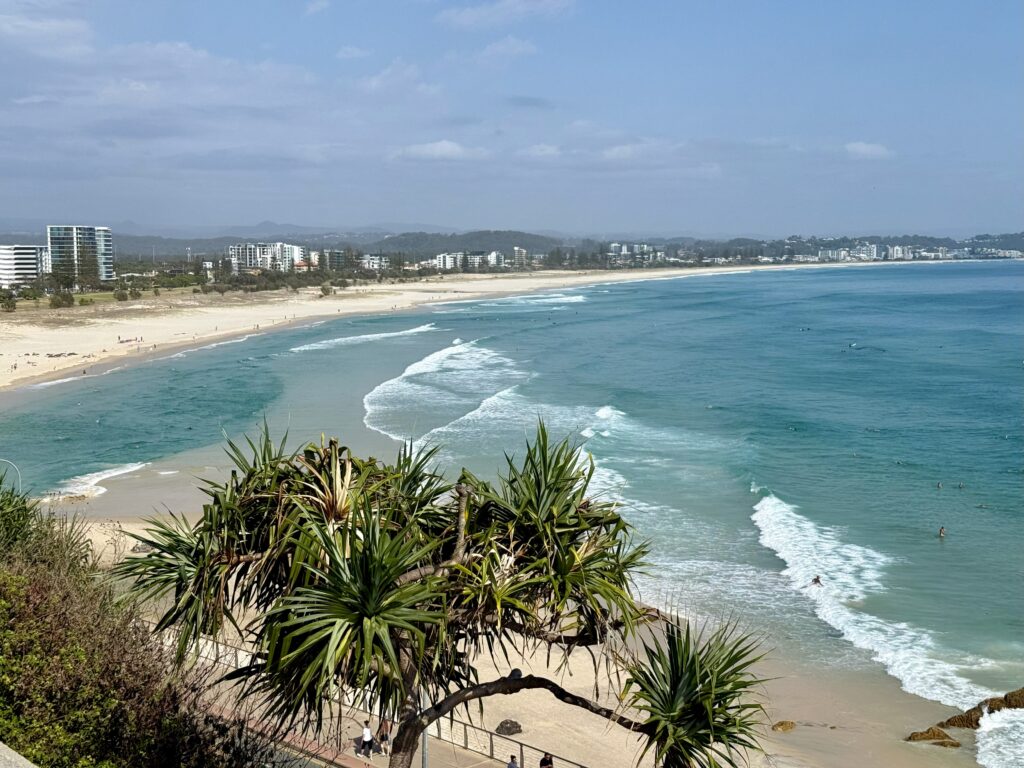
The Gold Coast really doesn’t need an introduction. You can basically fly here from anywhere in the world! There are so many exciting things to do on the Gold Coast, you’ll have a whale of a time. To actually see the whales, visit the Gold Coast from June to October.
There are numerous whale-watching cruises from Sea World Cruises (who also do a lot of work rescuing distressed whales) to Aqua Adventures who offer the option to jump in the water and swim with the whales and listen to their amazing songs and clicks under the water.
My favourite spot on the Gold Coast is Kirra Beach. The views from Kirra Hill are amazing and a fantastic spot for watching whales pass by.
Hervey Bay
Hervey Bay is a unique spot on the humpback whale migration and is the world’s first Whale Heritage Site. Humpback whales visit Hervey Bay from July to October. This is where they have their calves, rest and play at the northern end of their migration. It is known for the whale behavoiur of mugging, where the whales like to people watch.
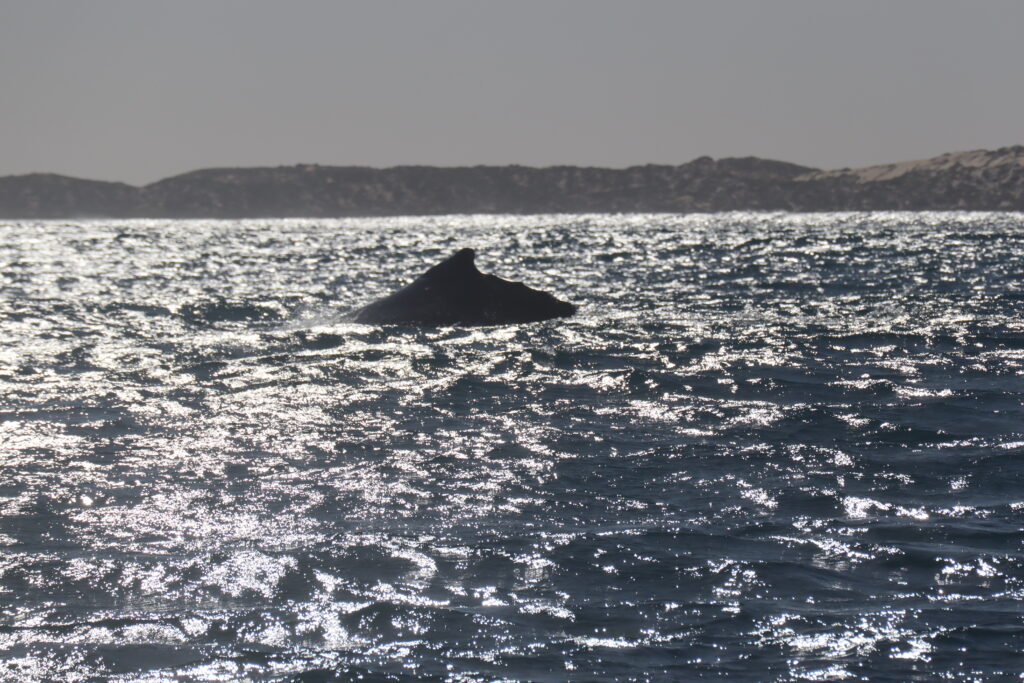
Hervey Bay Whale Watch Hervey Bay has become world famous for its incredible whale encounters, in particular, a behaviour called “mugging” where the whales lift their heads out of the water to take a good look at you!
To see whales for free, take a walk along one of Australia’s longest piers. The historic timber Urangan Pier stretches an impressive 868m into Hervey Bay providing a perfect spot to watch the whales playing in the bay.
Cruise vs Land-Based Whale Watching
One of the biggest decisions you’ll make when planning your whale watching adventure is whether to head out on a whale watching cruise or watch from one of Australia’s spectacular coastal lookouts. Both offer incredible opportunities to see humpback whales, but the experience can be very different.
If you’re hoping for close encounters and expert commentary, a cruise is hard to beat. On the other hand, land-based whale watching is free, accessible and can be just as rewarding when the whales are travelling close to shore.
The best option ultimately depends on your budget, travel style and the type of experience you’re looking for.
Whale Watching Cruises
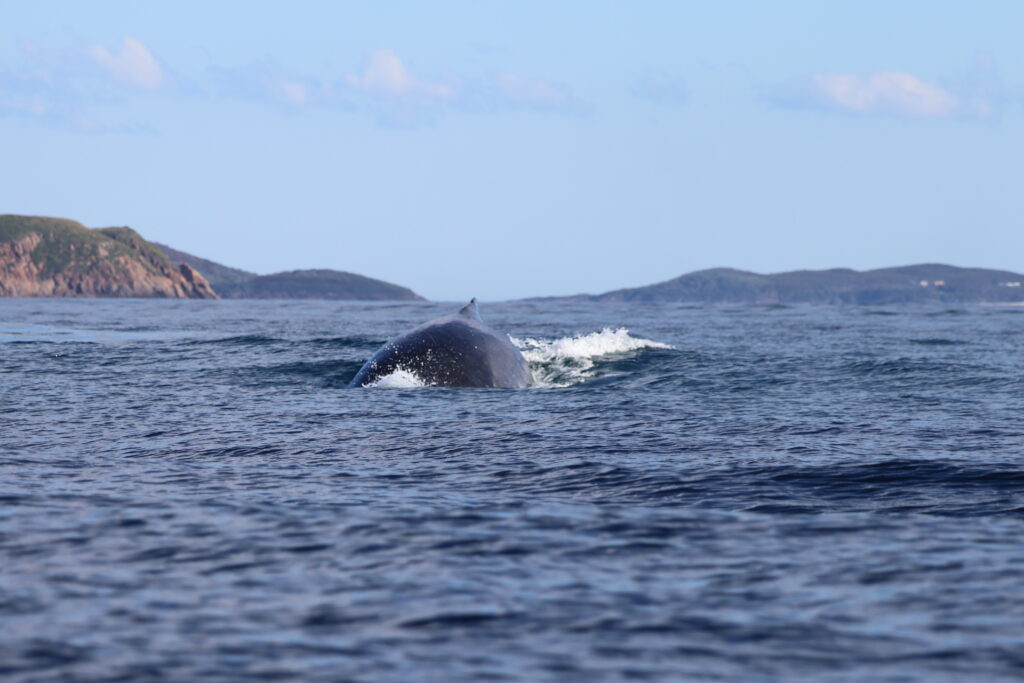
Joining a whale watching cruise gives you the chance to experience humpback whales up close in their natural environment. Licensed operators know where whales are most likely to be found and often provide fascinating commentary about their migration, behaviours and conservation.
Being on the water also gives you a unique perspective. Seeing a humpback whale breach or surface alongside the boat is an unforgettable experience that simply can’t be replicated from shore.
Pros
- Closer views of the whales.
- Greater chance of witnessing behaviours such as breaching, tail slapping and pectoral fin slapping.
- Commentary from experienced guides or marine naturalists.
- Fantastic opportunities for wildlife photography.
- You may also spot dolphins, seals and seabirds.
Cons
- More expensive than land-based viewing.
- Sightings are never guaranteed.
- Sea conditions can be rough, especially during winter.
- Motion sickness can affect some passengers.
Land-Based Whale Watching
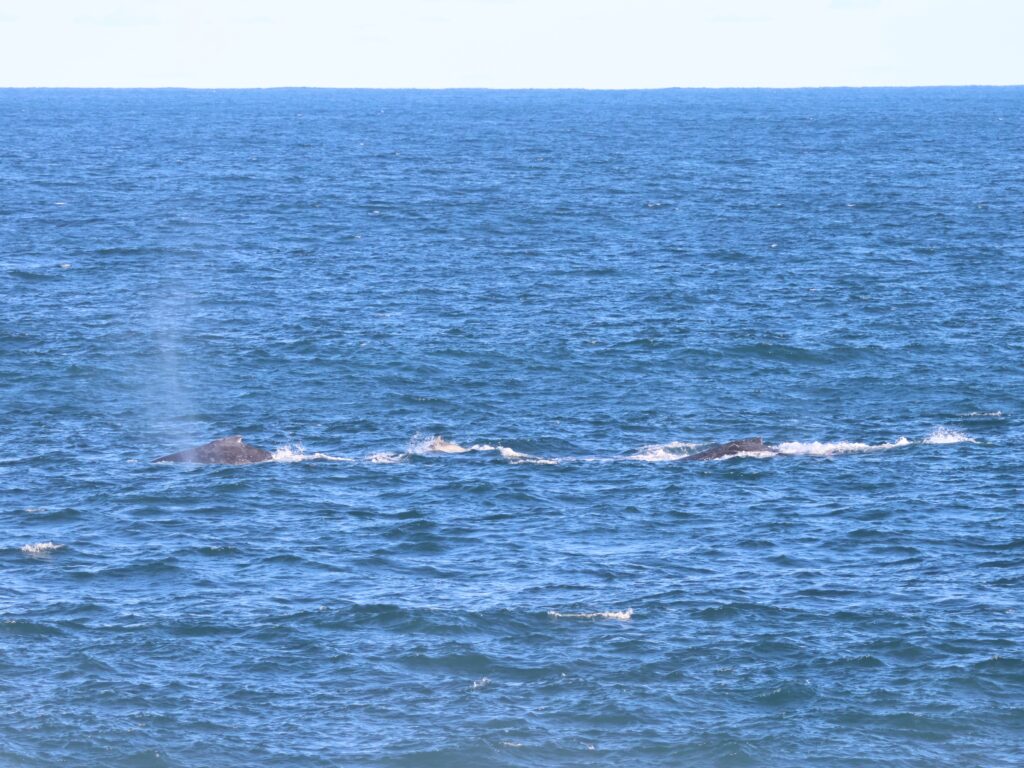
You don’t need to step onto a boat to enjoy Australia’s humpback migration. Many of the best whale watching destinations have elevated headlands, lighthouses and coastal lookouts where whales can often be seen passing close to shore.
Land-based whale watching is ideal if you’re travelling on a budget, have young children or simply prefer to stay on dry land. It’s also a great option for photographers with long lenses, as you can take your time without worrying about the movement of a boat.
Bring a pair of binoculars and scan the horizon for the distinctive blow from a whale’s blowhole or the splash of a breaching whale.
Pros
- Completely free.
- No risk of seasickness.
- Great for families and visitors of all ages.
- Watch at your own pace.
- Easy to combine with scenic coastal walks and sightseeing.
Cons
- Whales may be further offshore.
- You won’t experience the close encounters possible on a cruise.
- Weather and visibility can affect sightings.
- A good pair of binoculars can make spotting whales much easier.
Which Option Should You Choose?
If seeing whales up close is at the top of your bucket list, a whale watching cruise is well worth the investment. The chance to witness a humpback breaching nearby or hear the excitement of everyone onboard as a whale surfaces alongside the boat is an experience you’ll never forget.
If you’re travelling on a budget, are prone to seasickness or simply enjoy exploring Australia’s coastline, land-based whale watching can be just as memorable. Many headlands along the Humpback Highway offer outstanding viewing opportunities, particularly during the peak migration months.
Of course, if time allows, why not experience both? Watch whales from a coastal lookout one day, then head out on a cruise the next. Seeing the migration from both land and sea offers two very different, but equally rewarding, perspectives on one of Australia’s greatest natural spectacles.
| Feature | Whale Watching Cruise | Land-Based Whale Watching |
|---|---|---|
| Cost | Paid tour | Free |
| Distance to whales | Often much closer | Usually further away |
| Best for | Close encounters and photography | Budget travellers and families |
| Seasickness | Possible | None |
| Expert commentary | Yes | No |
| Flexibility | Fixed departure times | Visit whenever you like |
| Equipment | Provided by operator | Binoculars recommended |
| Overall experience | Immersive and memorable | Relaxed and accessible |
Some destinations, such as Byron Bay, are renowned for land-based whale watching, while others, including Hervey Bay and Port Stephens, are best experienced on a dedicated whale watching cruise.
Whale Behaviour You Might See
Spouts or Blows
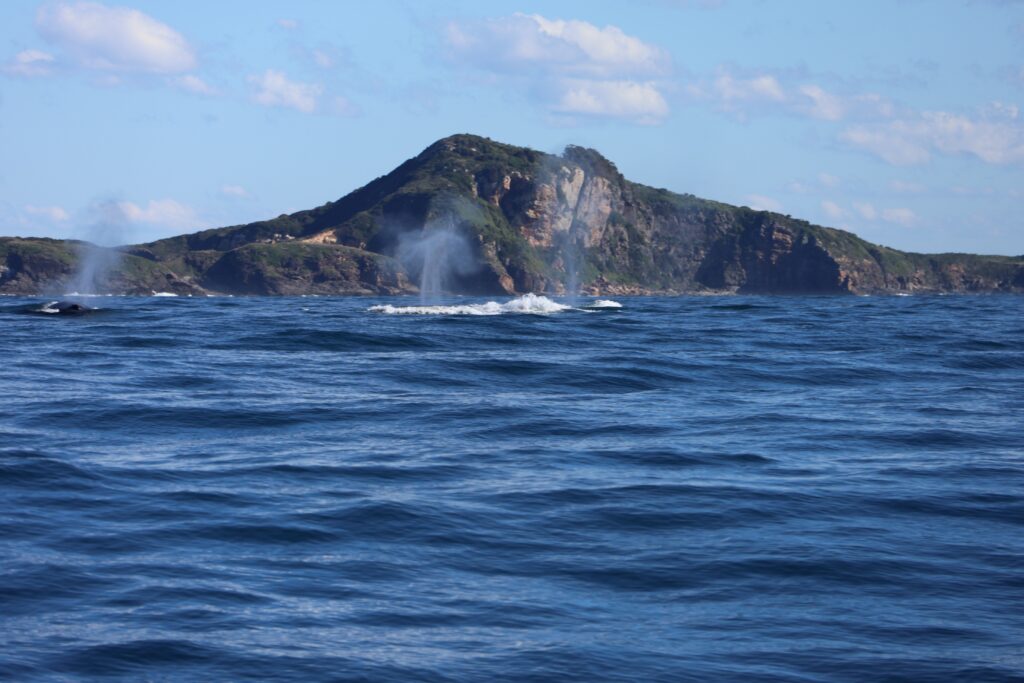
Spouts are the first thing you look for when whale watching. Whales send a massive spout of water into the air as they exhale when they come up for a breath. Once you find the spout, you can follow the whales, heading north from May to July- that is from right to left when watching from land. Or heading south from September to November – from left to right.
Breaching
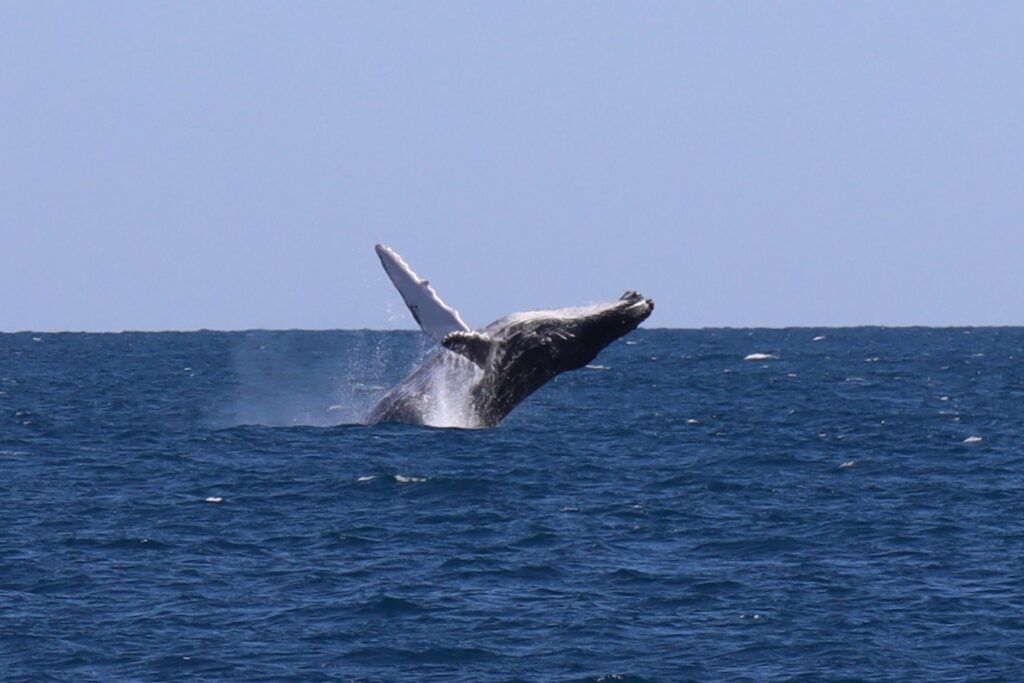
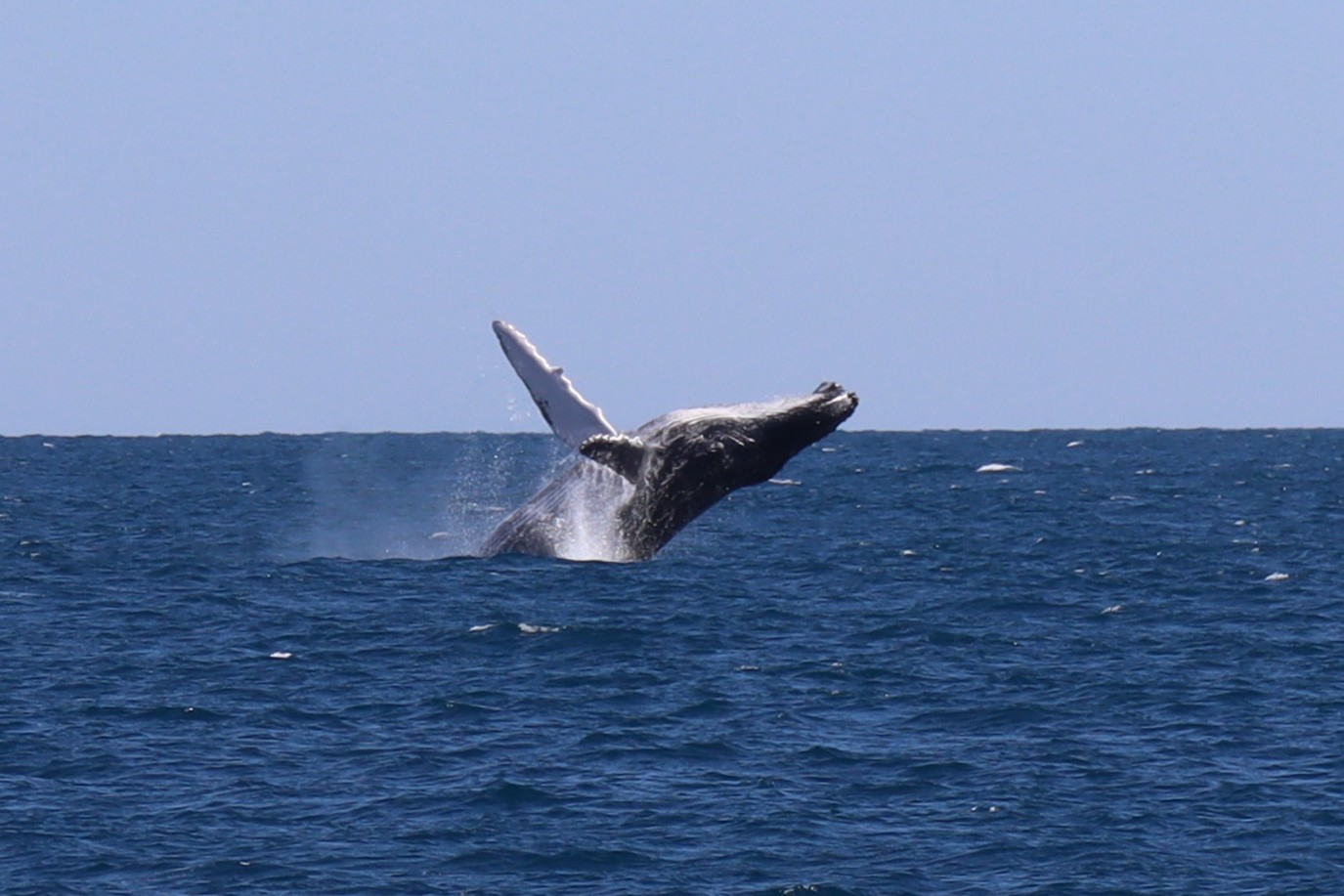
If you’re lucky enough to witness a humpback whale breaching, it’s a moment you’ll never forget. Humpback whales measure 16-17m in length and weigh up to 40 tonnes. That’s a bit bigger than a bus! So, when they breach, that is when they throw their entire body out of the water, in an action of pure joy, it’s truly impressive.
Scientists aren’t entirely sure why humpback whales breach, but there are several theories. It may be a form of communication, allowing whales to send sound waves through the water to others nearby. Breaching may also help remove parasites from their skin, be part of courtship displays, or simply be a form of play—especially for younger whales learning new behaviours.
Although breaching is never guaranteed, it’s one of the highlights of any whale watching trip and a reminder of the incredible power and agility of these gentle giants.
Tail Slapping
One of the loudest and most dramatic behaviours you might witness is tail slapping, also known as lobtailing. This occurs when a humpback whale lifts its powerful tail flukes out of the water and forcefully slaps them back onto the surface, creating a thunderous splash that can be heard from hundreds of metres away.
Scientists are still studying exactly why humpback whales tail slap, but it is thought to play an important role in communication. The loud noise and vibrations may help whales signal to others nearby, warn off rivals or maintain contact with members of their group. Some researchers also believe tail slapping may help dislodge parasites or simply be part of playful behaviour, particularly in younger whales.
Pectoral Fin Slapping
Another eye-catching behaviour you may see is pectoral fin slapping, often called pec slapping. Humpback whales have the longest pectoral fins of any whale species—reaching up to 5 metres long—and they sometimes lift one or both fins out of the water before slapping them loudly onto the surface.
The splash can be surprisingly powerful, sending water spraying in all directions. Scientists believe pectoral fin slapping is a form of communication, helping whales signal to others nearby. It may also be used during social interactions, courtship, or playful behaviour, particularly among younger whales.
Pec slapping is often easier to observe than breaching because whales may repeat the behaviour several times in a row. You might see a whale lying on its side with a fin raised high in the air before bringing it down with a dramatic slap.
Spy Hopping
Spy hopping is one of the more unusual behaviours you might witness during a whale watching trip. It occurs when a humpback whale rises vertically in the water, lifting its head and eyes above the surface before slowly sinking back beneath the waves.
Scientists believe whales may spy hop to get a better look at their surroundings, such as nearby boats, coastlines or other whales. Because humpbacks have excellent hearing underwater but relatively limited vision below the surface, lifting their heads above the water may help them investigate objects of interest.
Unlike breaching or tail slapping, spy hopping is relatively uncommon and often lasts only a few seconds. If you’re lucky enough to see it, it can feel as though the whale is curiously looking back at you, making it one of the most memorable moments of a whale watching trip.
Mugging
One of the most extraordinary whale watching experiences is known as mugging—when a curious humpback whale voluntarily approaches a stationary boat and lingers nearby. Instead of simply swimming past, the whale may circle the vessel, surface alongside it or even appear to watch the people on board.
Mugging is not something that can be predicted or encouraged. It happens entirely on the whale’s terms, with licensed whale watching operators following strict guidelines to ensure the animals are not disturbed.
While mugging is rare along much of Australia’s east coast, Hervey Bay is renowned for this behaviour. During the southbound migration, the calm, sheltered waters of the bay become a resting area for mothers, calves and juvenile whales. These relaxed conditions often lead to the curious close encounters that have made Hervey Bay one of the world’s most celebrated whale watching destinations.
If you’re fortunate enough to experience mugging, it’s a truly unforgettable reminder that these intelligent marine mammals are every bit as curious about us as we are about them.
Mothers and Calves
Whales make excellent mothers. On the migration south, you will see calves (4-5m long and 2 tonnes) swimming within metres of their mothers.
Once, we were heading out of Port Stephens heads, to drop some folks off at Broughton Island to go camping. They asked “how long will it take to get there?” I said “it depends what you see on the way”. Right on cue, a mother and calf whale surfaced near us. We stopped our boat and watched the pair for an hour. Our passengers said it was the best part of their entire weekend.
Competitive Pods
One of the most exciting behaviours you might witness during the humpback whale migration is a competitive pod. This occurs when several male whales compete for the attention of a single female, creating a fast-moving and energetic group.
Competitive pods can include anywhere from a few whales to more than a dozen, with males jostling for position, swimming at speed and displaying powerful surface behaviours. It’s not uncommon to see breaching, tail slapping and pectoral fin slapping as the whales interact with one another.
These groups are most often seen during the northbound migration, when whales are travelling towards their breeding grounds. While competitive pods aren’t an everyday sighting, they are one of the most dramatic encounters you can experience on a whale watching cruise.
If you’re fortunate enough to come across a competitive pod, you’ll quickly appreciate the strength, speed and agility of humpback whales as they race through the water in pursuit of a potential mate.
Whale Watching Tips
A little preparation can make all the difference to your whale watching experience. Whether you’re heading out on a cruise or watching from a coastal lookout, these simple tips will help you stay comfortable and improve your chances of spotting humpback whales.
Book Your Cruise Early
Whale watching is one of Australia’s most popular seasonal activities, especially during school holidays and weekends. If you’re planning to take a cruise, book in advance to secure your preferred date and departure time.
Dress for the Conditions
Even on sunny days, it can feel surprisingly cool out on the water. Wear layers, including a windproof jacket, and opt for comfortable, non-slip shoes. If you’re watching from land, check the forecast and dress appropriately for the weather.
Pack the Essentials
Before you head out, make sure you have:
- Sunscreen
- Sunglasses
- A hat
- Water
- A camera or smartphone
- Binoculars for land-based whale watching
Choose the Right Viewing Spot
If you’re watching from shore, head to an elevated coastal lookout or headland for the best views. Whales are often easier to spot from higher vantage points, especially on calm, clear days.
Be Patient
Wildlife sightings are unpredictable, and whales don’t always appear straight away. Spend time scanning the horizon for blows (the misty spray from a whale’s blowhole), breaches or splashes. Patience is often rewarded.
Keep Your Camera Ready
Whale behaviours can happen without warning. If you’re hoping to capture a breach or tail slap, keep your camera switched on and ready to shoot. Using burst mode can increase your chances of getting the perfect photo.
Consider Morning Cruises
Weather and sea conditions are often calmer in the morning, making for a more comfortable experience and smoother photography. However, conditions vary from day to day, so always check the marine forecast.
Prepare for Seasickness
Even if you’ve never experienced motion sickness before, the ocean can be unpredictable. If you’re concerned, it’s worth taking precautions before your cruise. Read our guide on how to avoid seasickness for practical tips and remedies.
Respect the Whales
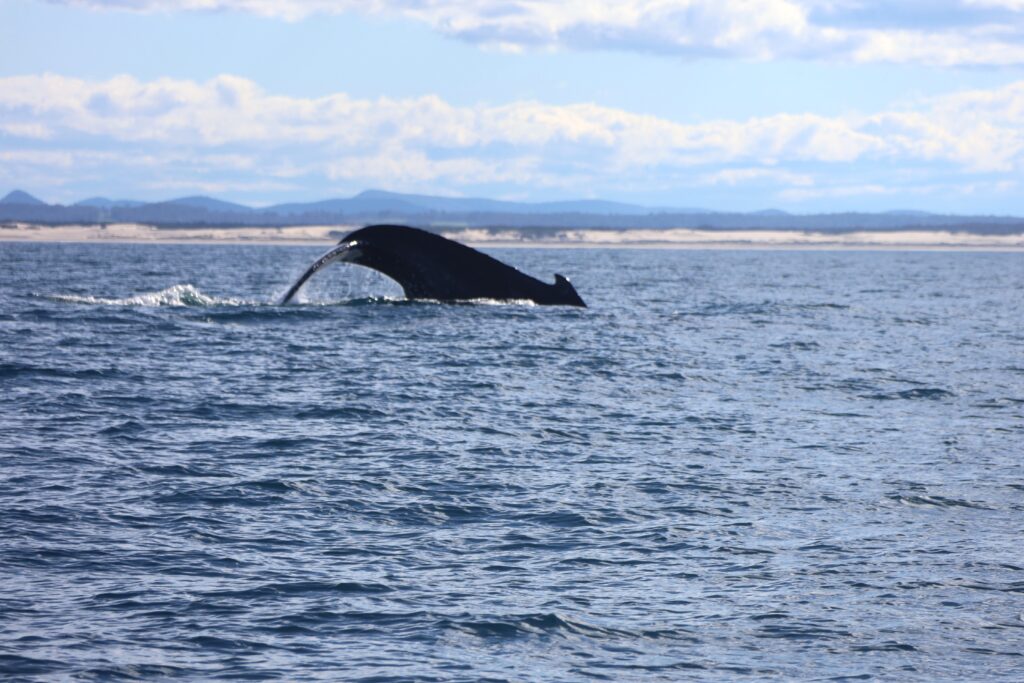
Australia has strict regulations to protect marine mammals. Licensed whale watching operators follow approach distances and other guidelines to minimise disturbance, while recreational boaters must also keep a safe distance. Never attempt to approach, feed or swim with whales, and always enjoy these incredible animals responsibly.
With a little planning and realistic expectations, you’ll be well prepared to enjoy one of Australia’s most spectacular wildlife experiences. Whether you spot a single whale breaching offshore or witness a playful calf swimming beside its mother, every encounter is unique and unforgettable.
Frequently Asked Questions
When is whale season on Australia’s east coast?
The whale migration starts in May in Merimbula and heads north. By June, thousands of whales are passing coastal headlands everyday until they reach the sheltered waters of Hervey Bay where they breed and give birth in July and August. In August, humpbacks start the long swim to Antarctica with the last whales passing down the coast in November.
Can you see whales without going on a cruise?
Yes, you can see Humpback whales without going on a cruise. Take a walk to a coastal headland, usually the ones that jut into the ocean further are best. Headlands with lighthouses provide exceptional whale watching.
Are whale watching cruises worth it?
Whale watching cruises provide a different experience, closer and more intimate that from shore. My personal opinion, absolutely. If you suffer from motion sickness, maybe a cruise is not for you.
Which month is best?
June and July have the largest numbers of whales passing up the coast. However, September to November, they travel slower with their calves, often stopping in bays and estuaries to allow the calves to rest.
Can children go whale watching?
Children love going to see the whales. Be careful on rocky headlands and keep your children close as most do not have fencing.
What should I wear?
I highly recommend warm clothes, polarised sunglasses (takes the glare off the water) and comfortable walking shoes.
Are whales guaranteed?
Whales are wild animals and sightings are not guaranteed. Some cruise operators have such a great success rate, they offer a free cruise if whales are not sighted.
How long do whale watching cruises last?
Whale watching cruises can last anywhere from 90-minutes to 3-hours, depending on the distance required to travel to open ocean.
Can you see whales from Sydney?
100%. Sydney has many whale-watching cruise operators and excellent cliff top vantage points. Sometimes, whales even enter the harbour, stopping ferries and shipping until they return to the ocean.
Is Hervey Bay different from other destinations?
Hervey Bay is the world’s first Whale Heritage Site. It’s where the whales stop to rest, have their calves and play.
Can I see whales for free?
Yes, you can see whales for free from any headland on the east coast of Australia. This guide lists some of the best.
Plan Your Whale Watching Adventure
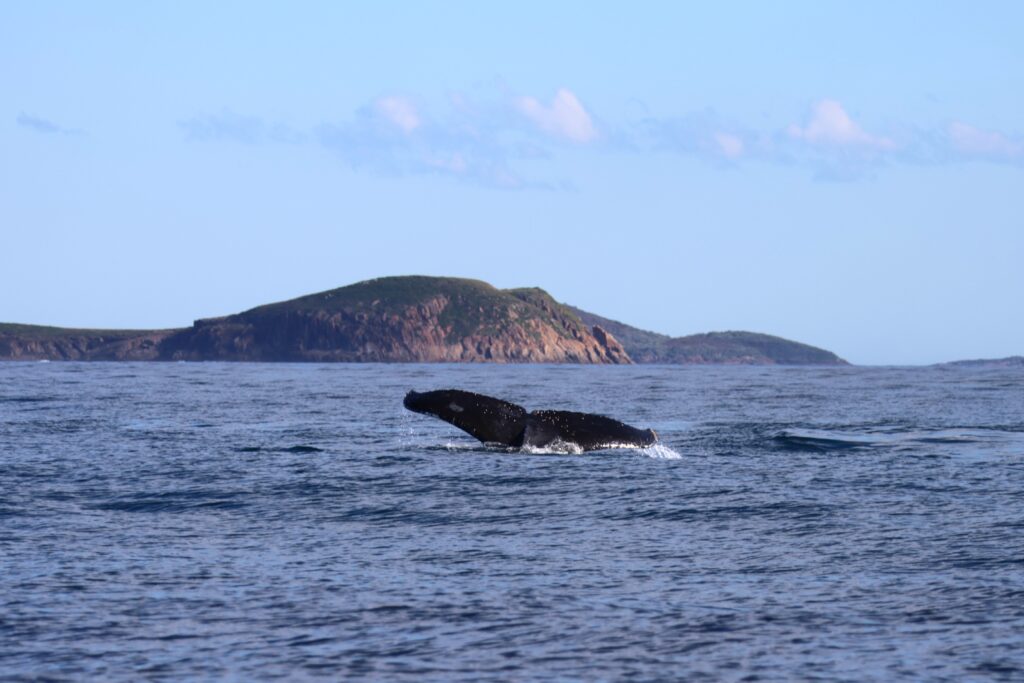
Every year, thousands of humpback whales transform Australia’s east coast into one of the world’s most spectacular wildlife destinations. From the rugged coastline of Merimbula to the calm waters of Hervey Bay, each stop along the Humpback Highway offers its own unique way to experience this remarkable migration.
Whether you choose to watch from a dramatic coastal lookout, join a whale watching cruise or plan a road trip to visit several destinations, seeing a humpback whale in the wild is an experience you’ll never forget. No two encounters are ever the same, making every sighting a memorable reminder of the incredible journey these gentle giants undertake each year.
So what are you waiting for? Book your winter whale watching holiday now, or if you are a local, take a day off and spend the day with these gentle giants. You won’t regret it.
Don’t forget to share, like or pin this post.
For an absolute bucket list whale adventure, read How to swim with Humpback Whales