Tully River Rafting: What to Expect
I’ve rafted the Tully River three times, and each trip has given me a slightly different perspective on what makes this such a memorable Far North Queensland adventure.
I’ve gone with my sister, taken my 65-year-old uncle, and eventually waited until my own kids were old enough. My son was 19, and my daughters were 16 and 14 when we finally took them.
They were nervous.
I’d waited years for them to be old enough (Minimum age on the Tully River for Grade 3-4 rapids is 13), bought the tickets and then told them they were going.
It wasn’t optional.
They were anxious about the rapids and what might happen if they fell out. Then we hit the first rapid.
After that, they absolutely loved it.
That’s the thing about Tully River rafting. The anticipation can be far worse than the reality.
If you’re wondering what actually happens on a Tully River rafting trip, this is my experience from start to finish.
Planning to raft the Tully? Check current availability and tour options before you start planning the rest of your Cairns itinerary.
Some links in this post are affiliate links, which means I may earn a small commission if you choose to make a purchase. It helps support Roam with No Regrets at no extra cost to you — thank you for your support!
Meeting at the Golden Gumboot in Tully
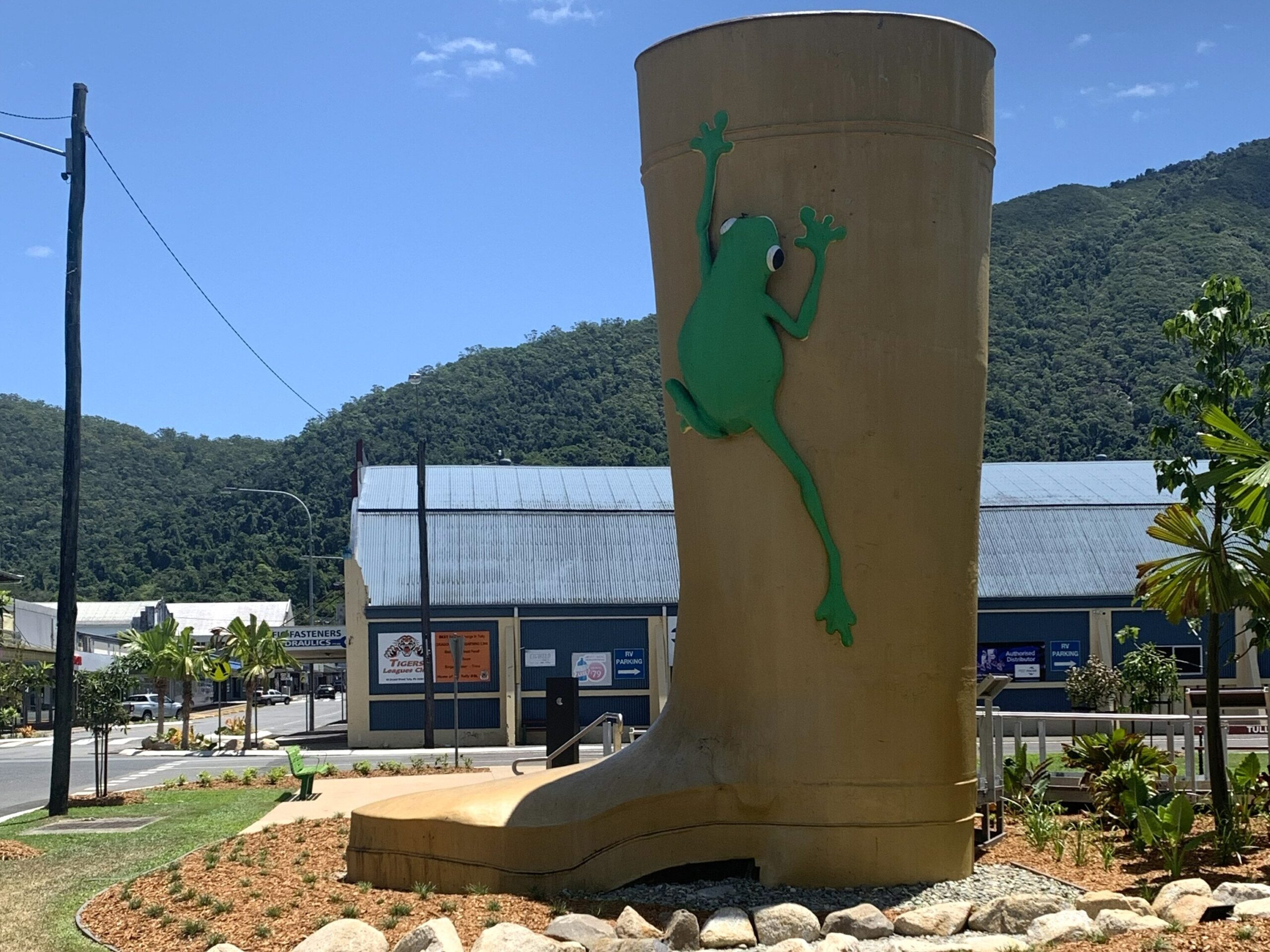
If you’re staying in Cairns, you can take the rafting company’s transfer rather than making your own way to Tully. Every time I’ve rafted, we’ve met the operator in Tully because of where we were staying, so driving ourselves made more sense.
If you’re coming from Cairns, though, I’d take the transfer. It’s a long day, and adding the drive there and back yourself makes an already full-on day even longer.
Meeting in Tully also gives you the opportunity to see one of the town’s most unusual landmarks — the Golden Gumboot.
The giant golden gumboot represents Tully’s extraordinary rainfall. You can climb to the top for a view over the town and towards the sugar refinery.
It’s a rather appropriate place to start a day that is going to involve a considerable amount of water.
Want to see what is the wettest month? Check out my guide on the Best Time to Visit Far North Queensland to find out.
Why does Tully rafting start in the afternoon?
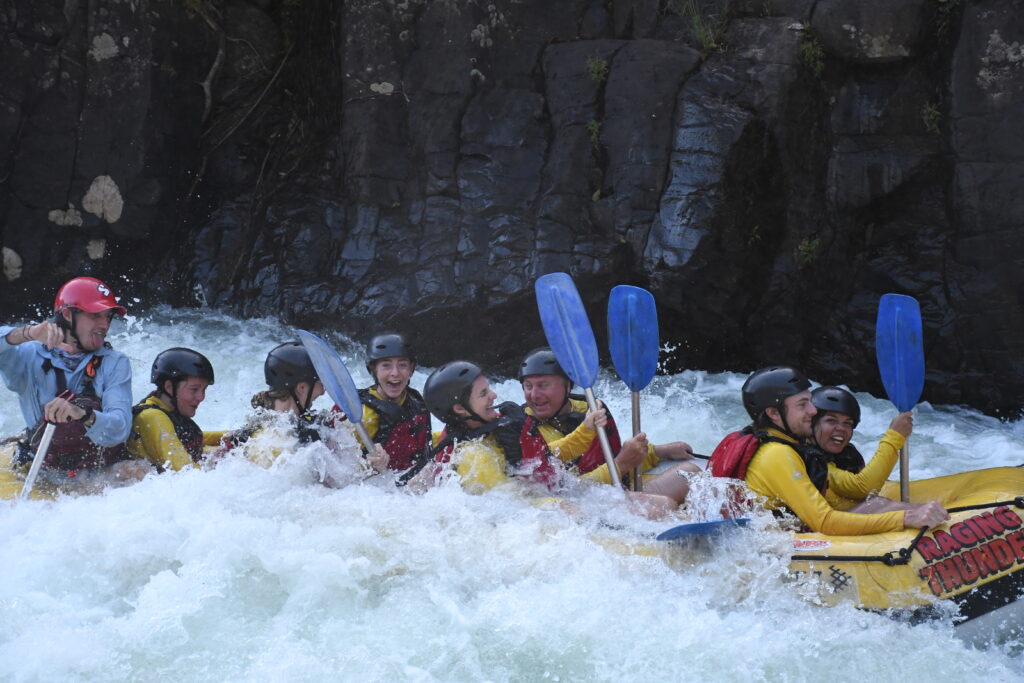
When I first went rafting on the Tully, the trip started at around 10am.
Back before solar power was popular — no, not when dinosaurs roamed the earth! — the hydroelectric dam releases happened in the morning, so the rafting trips were timed around them.
These days, the power system operates differently and the releases happen later. The rafting trip now starts around 2pm.
The timing isn’t random. The rafting operation works around the water released from the hydroelectric system.
It’s one of those things you probably wouldn’t realise when booking a rafting trip. You’re not simply turning up whenever you feel like it and floating down the river — the river’s flow and the hydroelectric releases are an important part of how the experience works.
The drive into the Tully Gorge
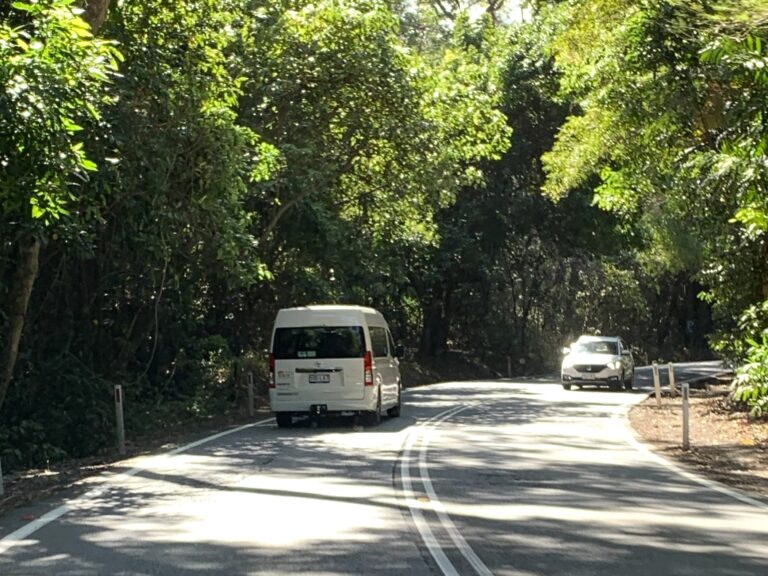
Once everyone is together, you head up towards the gorge and the rafting launch area.
This is also when the safety briefing begins.
And there is one particularly important instruction:
Definitely no phones.
You’re about to spend several hours being thrown around in white water. Your phone is not coming with you.
Getting kitted out for the Tully River
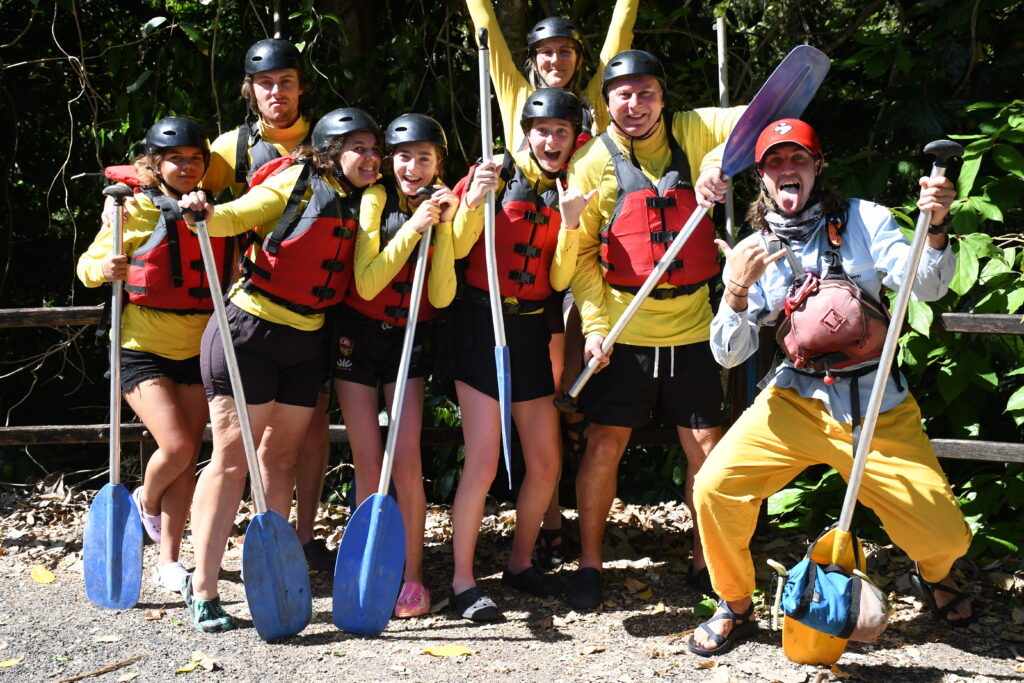
At the top of the gorge, it’s time to get ready.
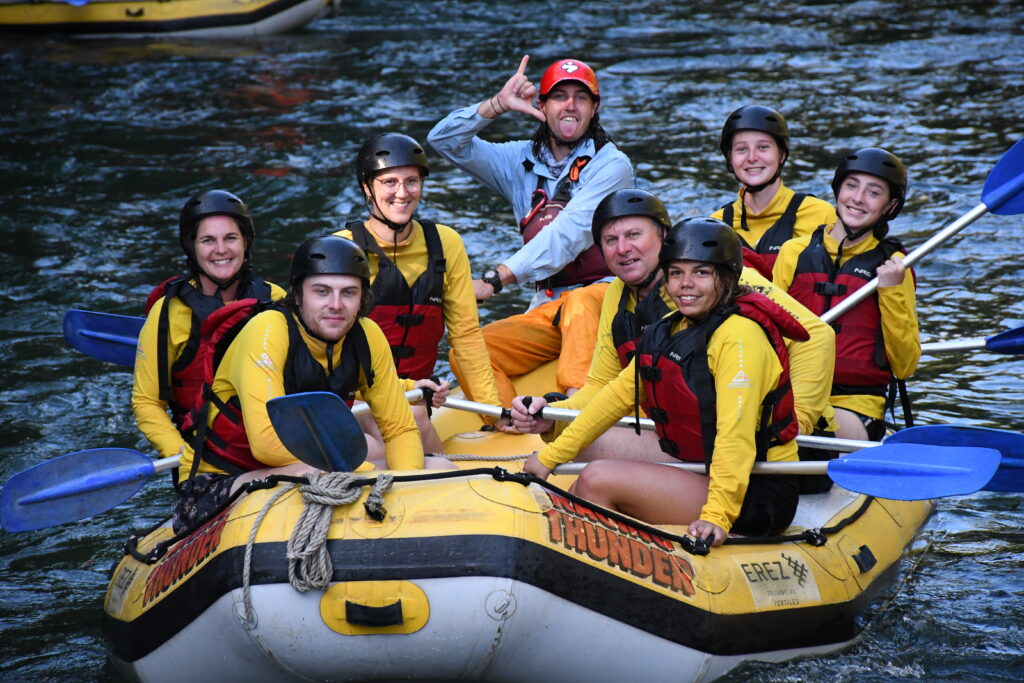
You are fitted with the safety equipment you’ll need for the river, including:
- A bright yellow rash shirt
- Life jacket
- Safety helmet
- Crocs
- Paddle
- A special strap for prescription glasses if you need one
The bright yellow rash shirt isn’t just for looks. It helps you be visible on the river, protects you from the sun and is thick enough to provide some protection from the March flies.
The Crocs are also there for a reason. They allow water to drain away rather than leaving your feet sitting in wet shoes, while still providing some protection for your feet if you end up out of the raft.
And yes, you can raft wearing prescription glasses.
Sam did.
The operator provided a special strap to keep his glasses secure during the rafting. Sunglasses, however, stay on the bus.
What about what you wear?
One of my favourite Tully memories happened before we even got on the river.
A group of tourists arrived for their rafting adventure wearing what they apparently thought was appropriate rafting clothing.
One woman was wearing a white, three-tiered skirt.
White.
Three tiers.
For white-water rafting.
I remember looking at her and thinking, Oh dear.
The rafting company has rules about appropriate clothing for good reason. You are going to get wet, and clothing that becomes heavy or restrictive in the water isn’t what you want.
So leave the white three-tiered skirt at home.
Learning how to paddle
Once you’re kitted out, you get your paddle and climb down to the river.
Then you climb into the raft and learn what you’re actually supposed to do.
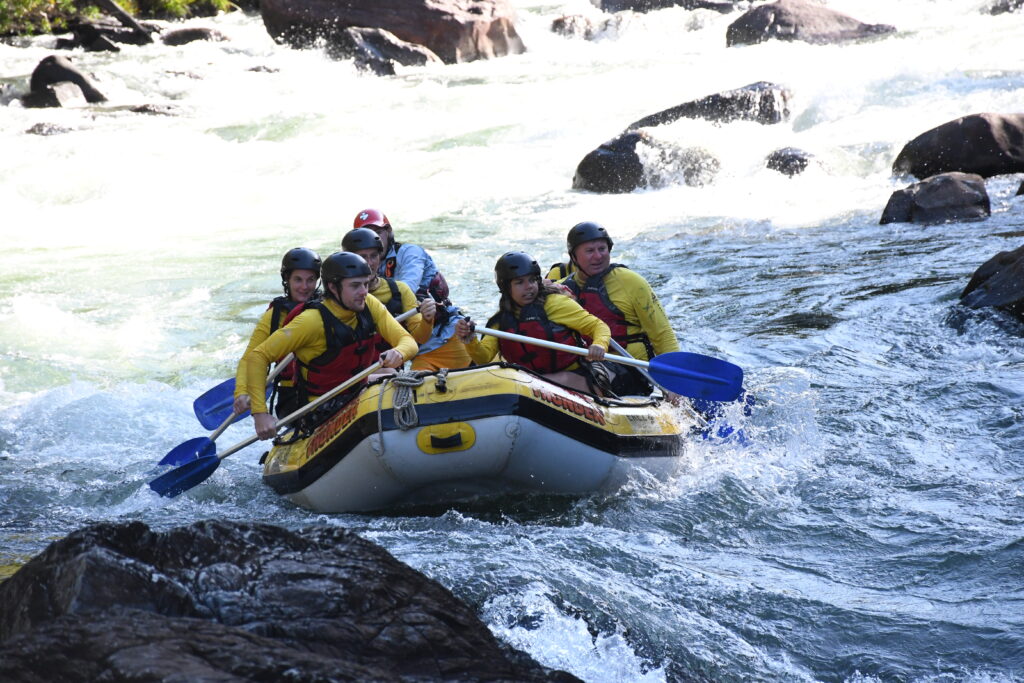
The guides take you through the manoeuvres and commands you’ll need on the river, including:
- Get down
- Get up
- Lean right
- Lean left
- Paddle left
- Paddle backwards
- Hold on
And one thing you learn very quickly is to always hold the handle of your paddle.
You don’t need to arrive as an experienced white-water rafter. The guides teach you what you need to know before you tackle the bigger rapids.
The first rapid: Alarm Clock Rapid
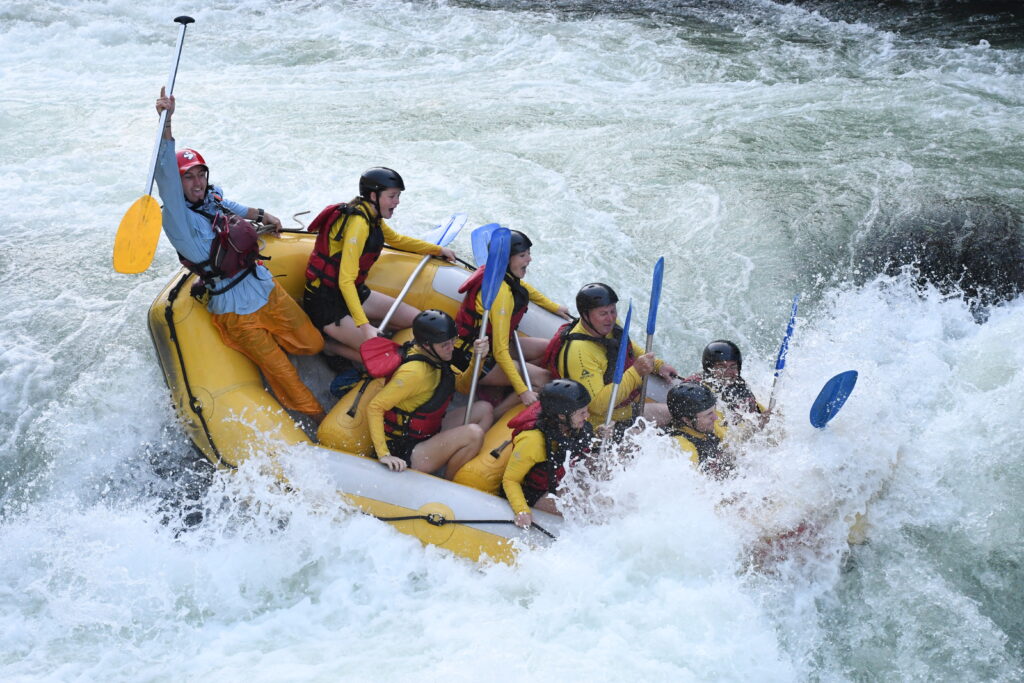
Then comes the moment everyone’s been waiting for.
The first rapid.
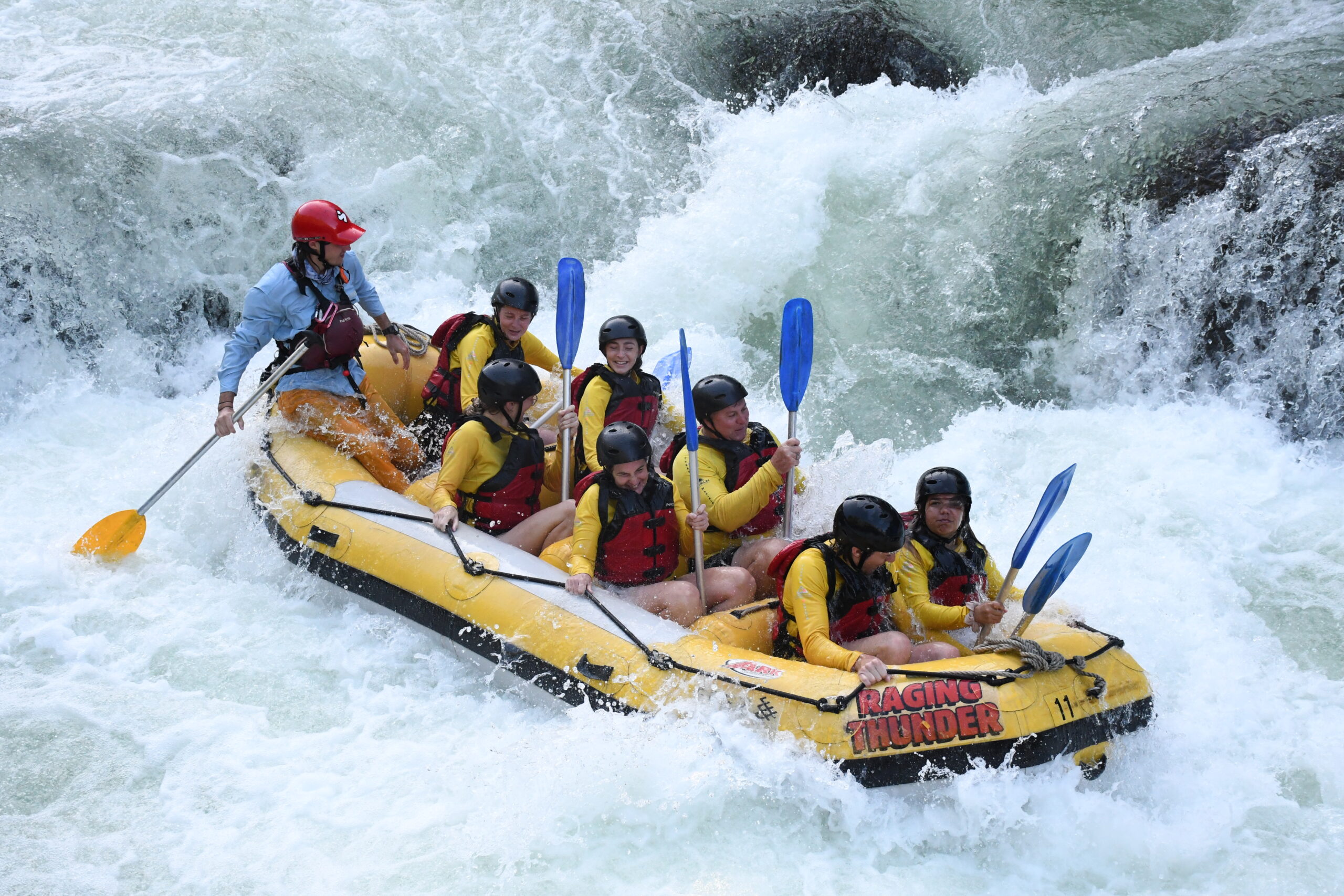
For us, that’s Alarm Clock Rapid.
It’s a particularly appropriate name if you’re still doing the morning departure. 😂
This is the point where the nerves disappear.
For my kids, the anticipation had been building all morning. They were nervous about what was going to happen.
Then we hit the first rapid.
And suddenly they got it.
The fear was replaced by excitement.
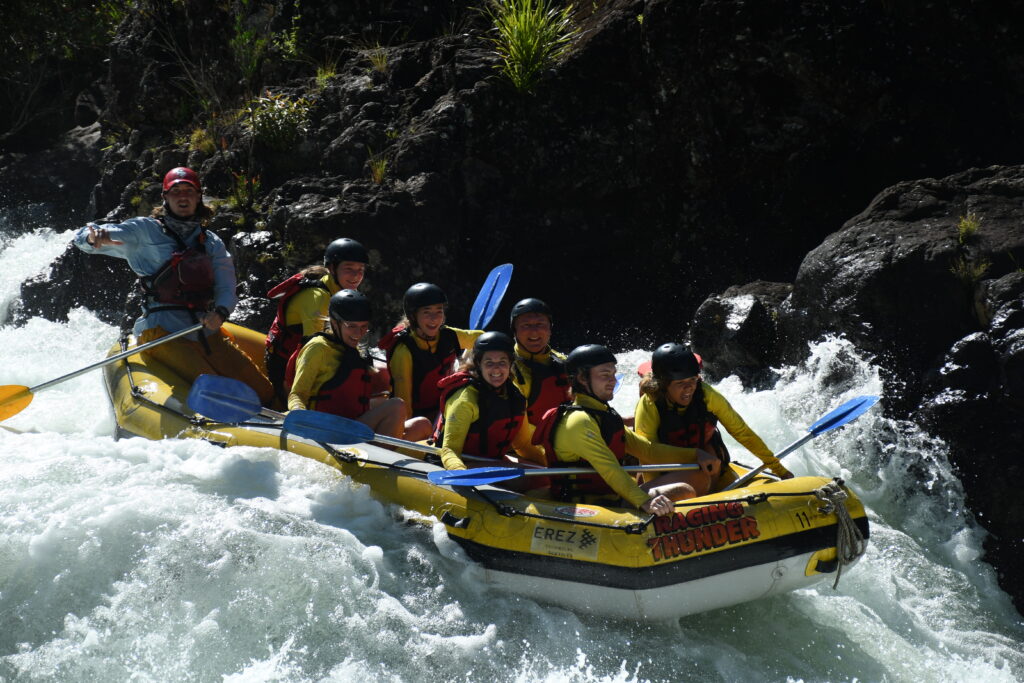
After that, they couldn’t get enough.
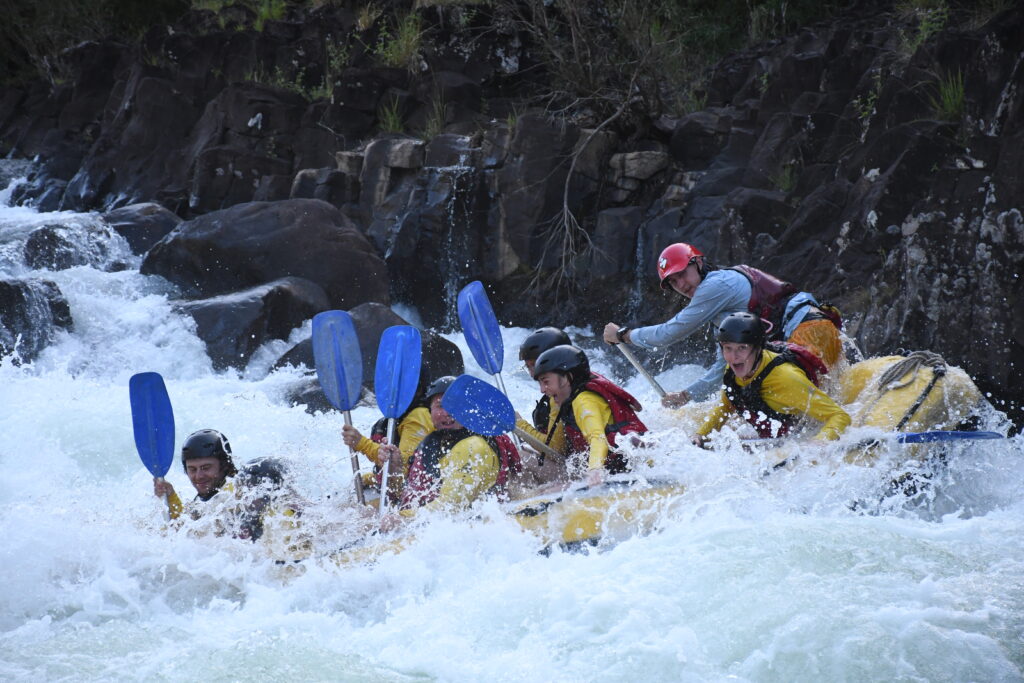
Meeting the Tully River rapids
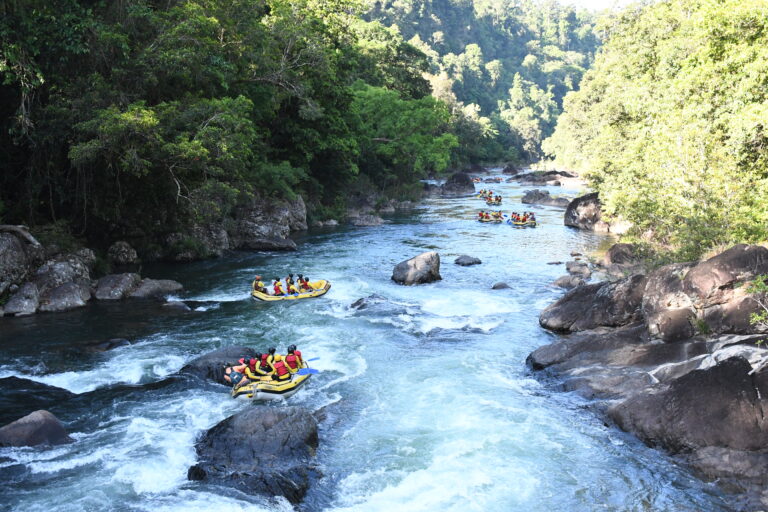
The Tully is known for its Grade 3–4 white-water rapids, and there are some wonderfully memorable names along the way.
There’s the Full Stop Drop.
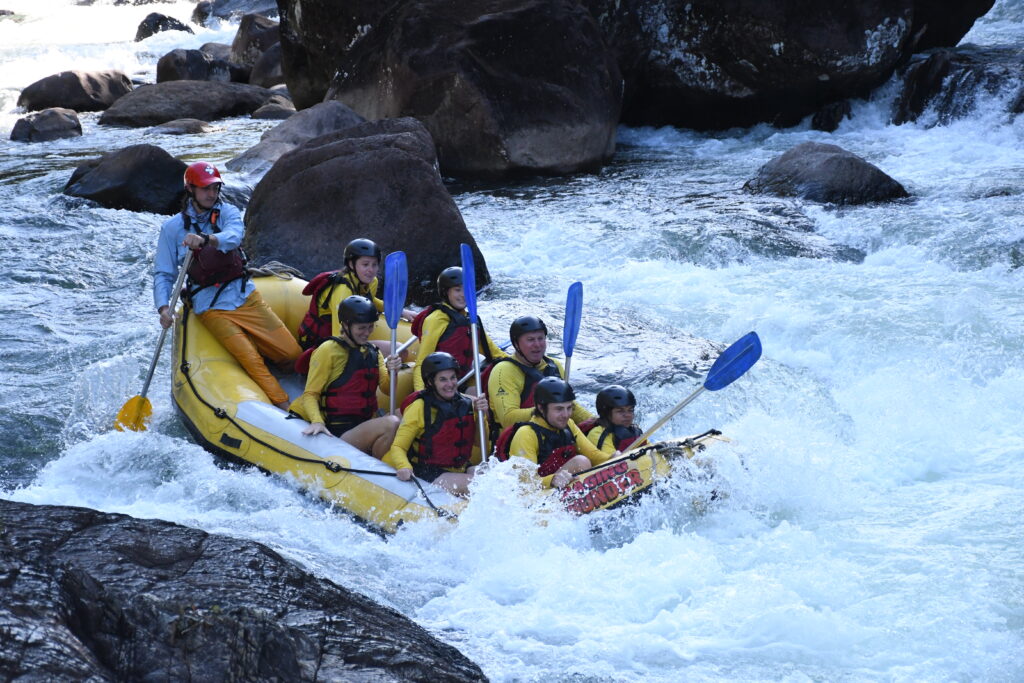
There’s Oh Shit Rock.
Yes, that’s genuinely what it’s called.
The guides tell you about it beforehand. You know it’s coming. You watch the river looking for it.
And then you see it.
“Oh shit… rock!”
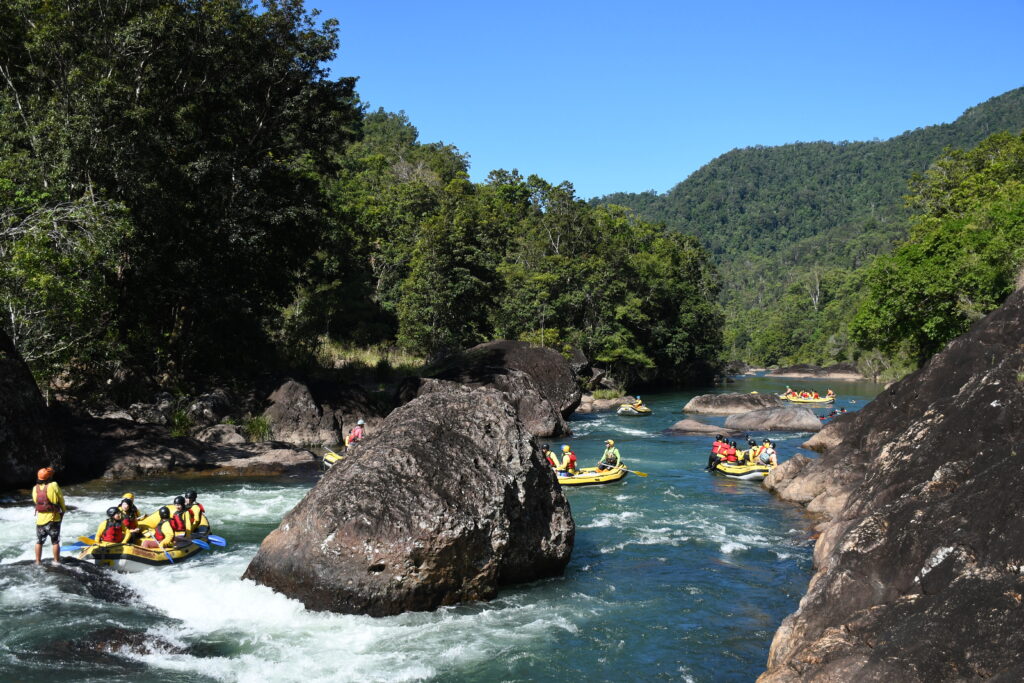
At that point, you understand exactly how it got its name.
Then there’s River Guide’s Revenge.
I won’t spoil every rapid for you. Part of the fun is discovering them as you go.
What I can tell you is that you’re not simply thrown into the river and left to work it out. The guides tell you what’s coming and you work together as a raft to get through it.
It’s not all white water
One thing I think people sometimes forget when they see photos of Tully rafting is that you’re not battling rapids continuously for the entire trip.
There are quieter stretches of river too.
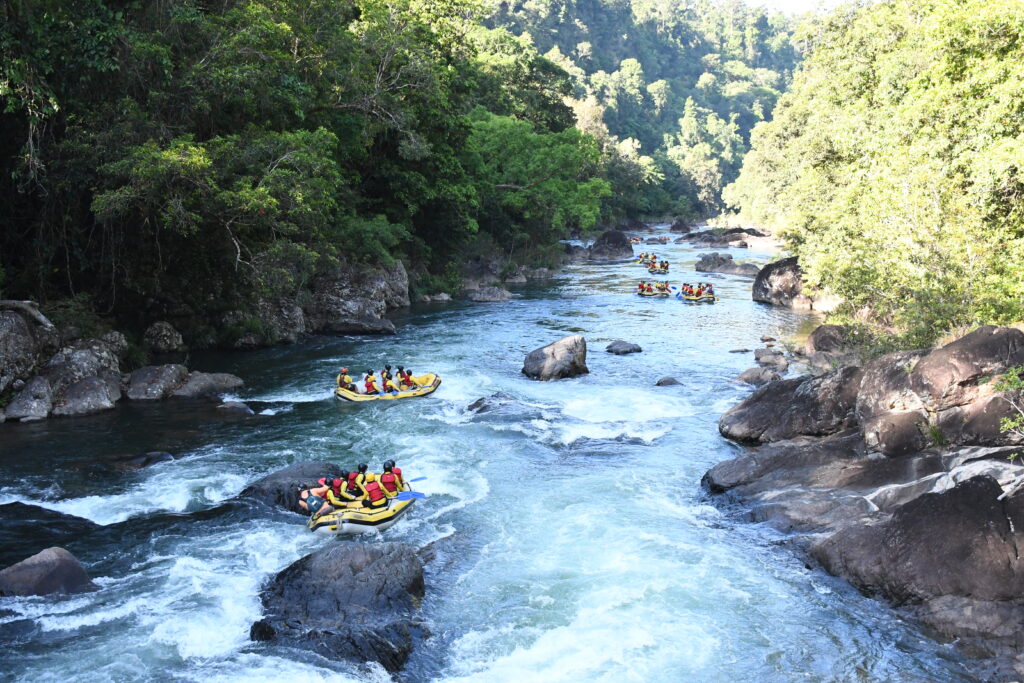
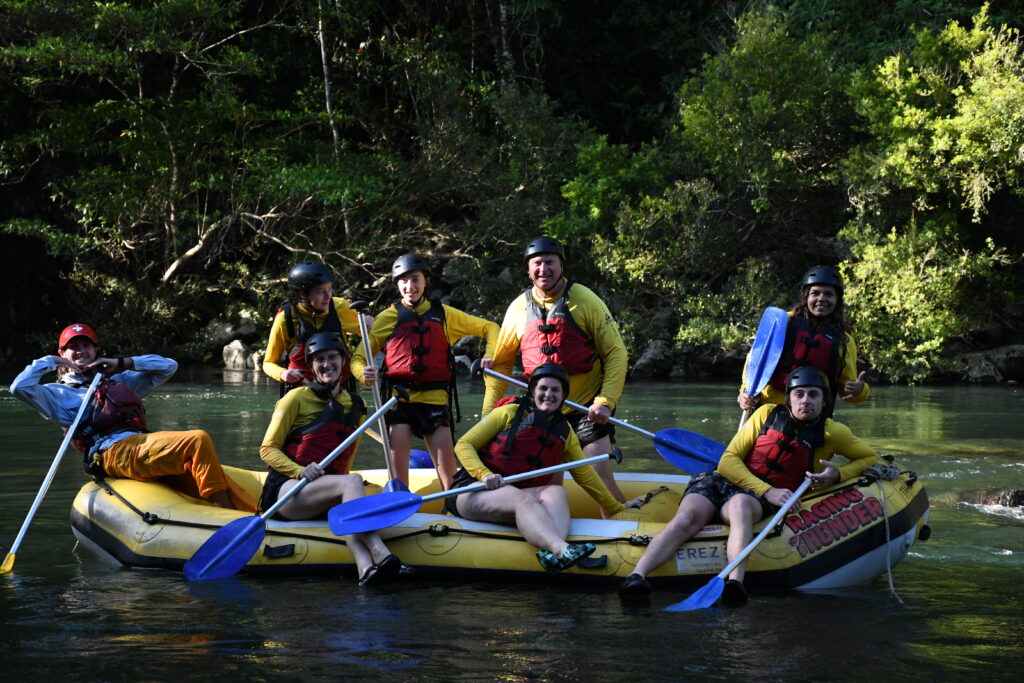
And this is where things can get a little silly.
At one point you can get out of the raft and simply float downstream.
We also used the opportunity to ambush the other rafts.
Yes, there were water fights.
Because apparently once you’ve spent hours paddling through rapids, the obvious thing to do is start attacking the other rafts with water.
Rafting under a waterfall
There’s also a waterfall that you can raft underneath.
It’s one of those moments when you realise that this isn’t simply a white-water experience. You’re travelling through a spectacular rainforest gorge, with the river, cliffs, waterfalls and rainforest all around you.
It’s one of the things that makes the Tully feel like an adventure rather than just an activity.
What does the Tully River water feel like?
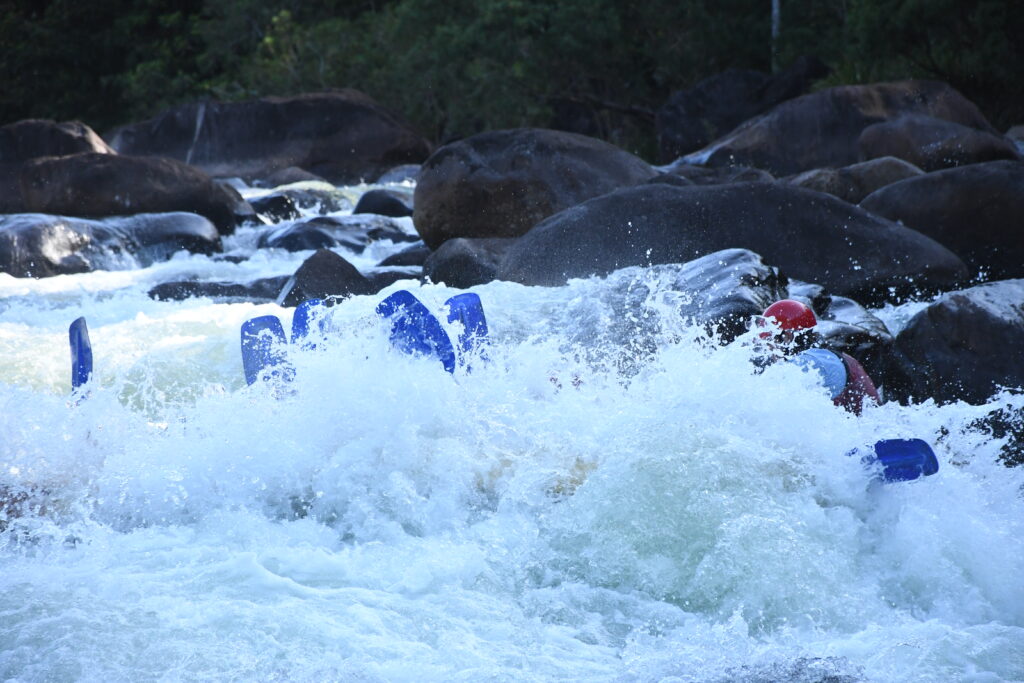
Cool.
But not freezing cold.
And after spending the day in the water, there’s an unexpected bonus.
Your skin feels amazing.
All that cool, fresh water leaves it feeling incredibly soft and hydrated by the end of the day.
I wasn’t expecting that to be one of my observations about white-water rafting, but there you go.
The end of the rafting day
Eventually, the light starts to change.
The shadows lengthen across the gorge and the sun begins to disappear behind the surrounding rainforest.
You climb out of the river and, before you can completely switch off, there’s one final job.
Helping carry the rafts back up the hill.
After several hours of rafting, you’re tired, wet and ready for a shower — but somehow you’re still hauling an inflatable raft up the hill with everyone else.
Then it’s time to get changed.
Changing after Tully River rafting
This is something worth knowing before you go.
There aren’t fancy change rooms waiting for you.
You change beside the road, using different sides of the buses for men and women.
So come prepared.
Take a complete change of dry clothes.
And bring a plastic bag for your wet clothes.
Trust me — you don’t want to discover that you have nowhere to put several hours’ worth of soaking wet rafting gear once you’re back on the bus.
Dinner after rafting
Once everyone is changed, the bus heads to a local pub for dinner.
The usual choices include things like chicken schnitzel and hamburgers, along with a very Queensland choice of drink — XXXX beer.
And, as the Queensland joke goes:
It’s called XXXX because Queenslanders can’t spell beer.
After dinner, there’s also an opportunity to purchase photographs from the day.
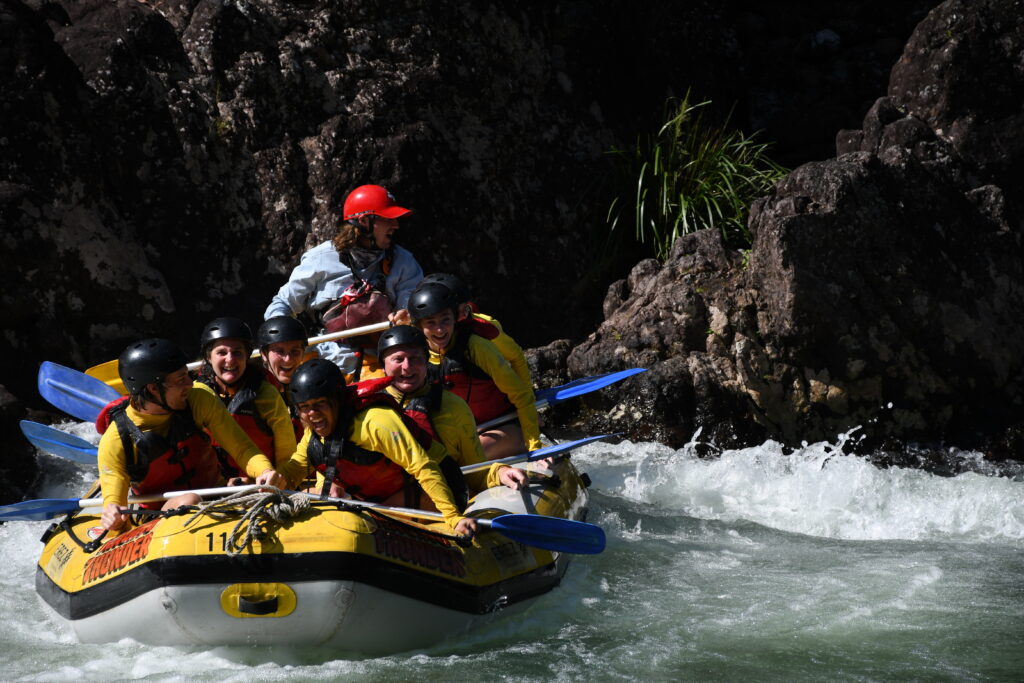
Then, if you’re staying in Cairns, it’s time for the long drive back.
Which brings me back to my earlier advice: take the transfer from Cairns if it’s available.
It’s been a very long day already.
The 65-year-old who became the star
One of my favourite Tully trips was actually years before we took our kids.
My sister and I took our 65-year-old uncle rafting with us.
Before booking, we checked with the rafting company to make sure there weren’t any age or health restrictions that would prevent him from participating. Once we’d confirmed that he was suitable to raft, we were good to go.
And he embraced it.
In fact, he became the star of the video.
The guides even nicknamed him Spike Milligan.
It was a great reminder that you don’t necessarily have to fit the stereotypical image of a young adrenaline junkie to enjoy the Tully. But if you’re older or have any concerns about whether rafting is suitable for you, check the operator’s current requirements before booking.
So, is Tully River rafting scary?
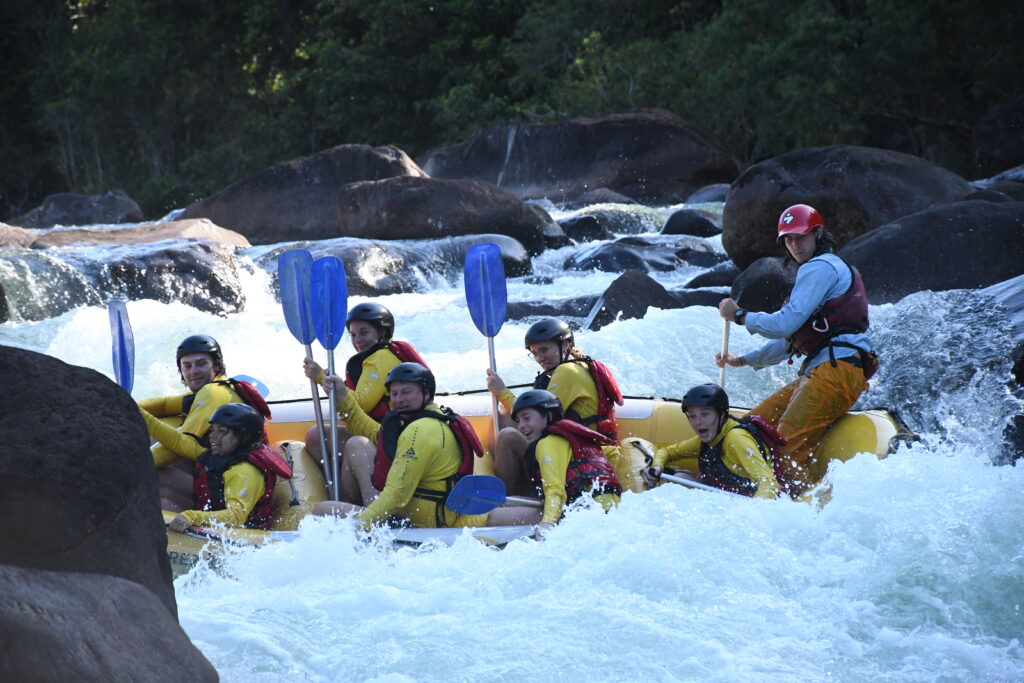
It can be — particularly before you start.
I’ve watched my own kids go from genuinely anxious about rafting to absolutely loving it once they’d experienced that first rapid.
And I think that’s an important distinction.
You’re allowed to be nervous.
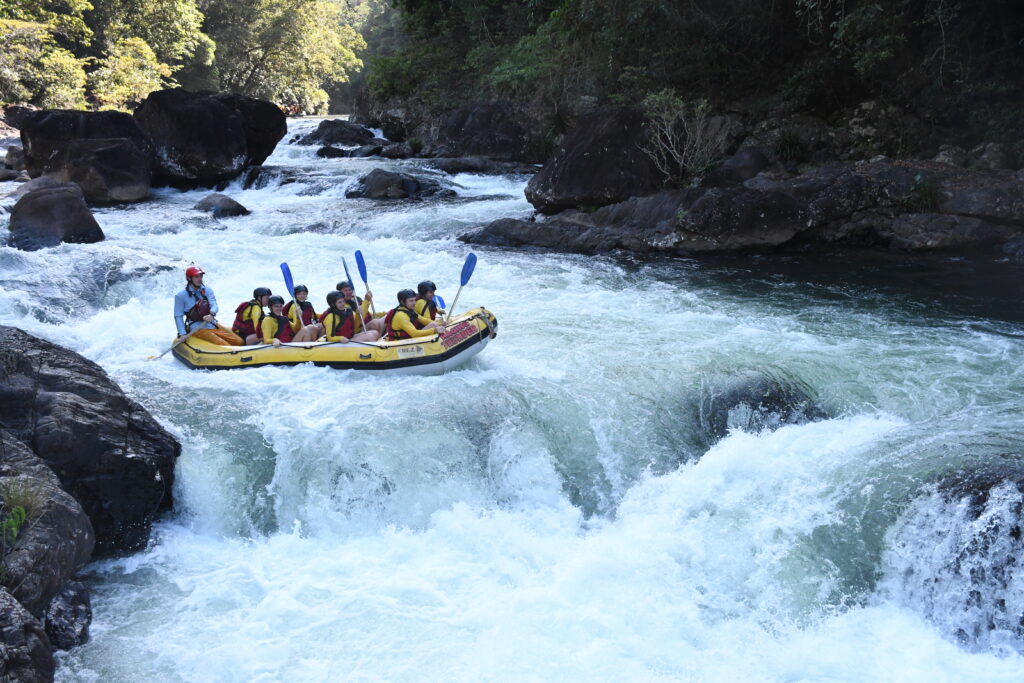
You’re allowed to wonder what you’ve signed yourself up for.
But you’re also taught what to do, you’re with experienced guides, and you’re part of a team in the raft.
Once that first rapid is behind you, you may find yourself wondering what you were so worried about.
That’s certainly what happened to my kids.
Is Tully River rafting worth it?
I’ve done it three times.
I’ve rafted with my sister, taken my 65-year-old uncle, and taken my three kids when they were 19, 16 and 14.
Every time, I’ve come away thinking it was worth doing.
The Tully isn’t a gentle sightseeing trip. It’s a full-on day, there’s a lot of water, there’s plenty of paddling and you’ll finish tired.
But somewhere between Alarm Clock Rapid, Oh Shit Rock, floating down the quieter stretches, ambushing other rafts and watching the sunlight disappear from the gorge, it becomes one of those experiences you’ll remember long after you’ve dried off.
And if you’re nervous?
Maybe buy the tickets before you give yourself too much time to think about it.
Ready to give it a go?
Check current prices, availability and departure options for Tully River rafting.
Looking for more adrenaline, more adventures? Check out my guide on the Best Adventure Activities in Far North Queensland.