Where to See Dolphins in Port Stephens: The Ultimate Local Guide
There are few places in Australia where seeing dolphins is as easy as it is in Port Stephens.
Whether you want to swim with them, join a dolphin cruise or simply watch them from a headland for free, there’s a good chance you’ll spot these incredible marine mammals somewhere around the bay.
After spending years exploring Port Stephens, I’ve been lucky enough to see dolphins in almost every corner of the harbour—from mothers teaching calves to fish in the shallows, to huge offshore super pods stretching as far as the eye can see.
Here’s everything you need to know about dolphin watching in Port Stephens.
Some links in this post are affiliate links, which means I may earn a small commission if you choose to make a purchase. It helps support Roam with No Regrets at no extra cost to you — thank you for your support!
Did You Know?
Port Stephens is home to around 150 resident bottlenose dolphins that live in two distinct communities.
One community lives in the eastern harbour, east of Soldiers Point, while the second community ranges west of Soldiers Point through Tilligerry Creek, Lemon Tree Passage and all the way to Karuah.
National Parks and Wildlife has an excellent guide showing many of the dolphins’ dorsal fins used for identification, along with the remarkable story of Flopper, a dolphin whose dorsal fin collapsed after surviving a shark attack as a calf.
Learn more here:
NPWS Port Stephens Dolphin Visitor Guide
Why Port Stephens is One of Australia’s Best Places to See Dolphins
Unlike many destinations where dolphin sightings are occasional, Port Stephens has a resident population that lives here year-round.
That means every visit offers a genuine chance of seeing dolphins, whether you’re standing on a headland, walking along the marina or out on the water.
If you’re planning a complete holiday, start with my Port Stephens Ultimate Travel Guide by a Local, which covers everything from beaches to wildlife, walks and local secrets.
What Species of Dolphins Live in Port Stephens?
The resident population of dolphins in Port Stephens are the Indo-Pacific Bottlenose Dolphin.
Indo-Pacific Bottlenose Dolphin (Tursiops aduncus)
Bottlenose dolphins are sleek and streamlined, with a prominent dorsal fin. Each dorsal fin is different, a bit like a fingerprint in a human and are used by researchers to identify individuals.
The are grey in colour, being slightly darker on the top, and lighter on the top for camouflage. They typically grow to 2.6m long and weigh up to 230kg. Calves are born live at 1m long and 9-20kg (cute).
They are highly social animals and communicate with whistles and clicks. They don’t sleep but can shut down half of their brain down at a time to rest. They generally live 30-40 years.
Common Dolphins (Delphinus delphis)
Outside the heads and along ocean beaches, you will encounter the Common Dolphin and Common Bottle Nose Dolphin.
Common dolphins are a similar size to the Indo-Pacific dolphin but have a striking hourglass or criss-cross pattern on their sides, often with a yellowish or tan patch, a dark cape ranging from black to brown, and white undersides with occasional yellow streaks. They can be found in pods from hundreds to thousands!
Common Bottlenose Dolphins (Tursiops truncatus)
The Common Bottlenose Dolphin is similar colouring to our local dolphins but much bigger ranging in length from 2-4m but weighing in significantly more at 150-650kg.
Why Do Dolphins Love Port Stephens?
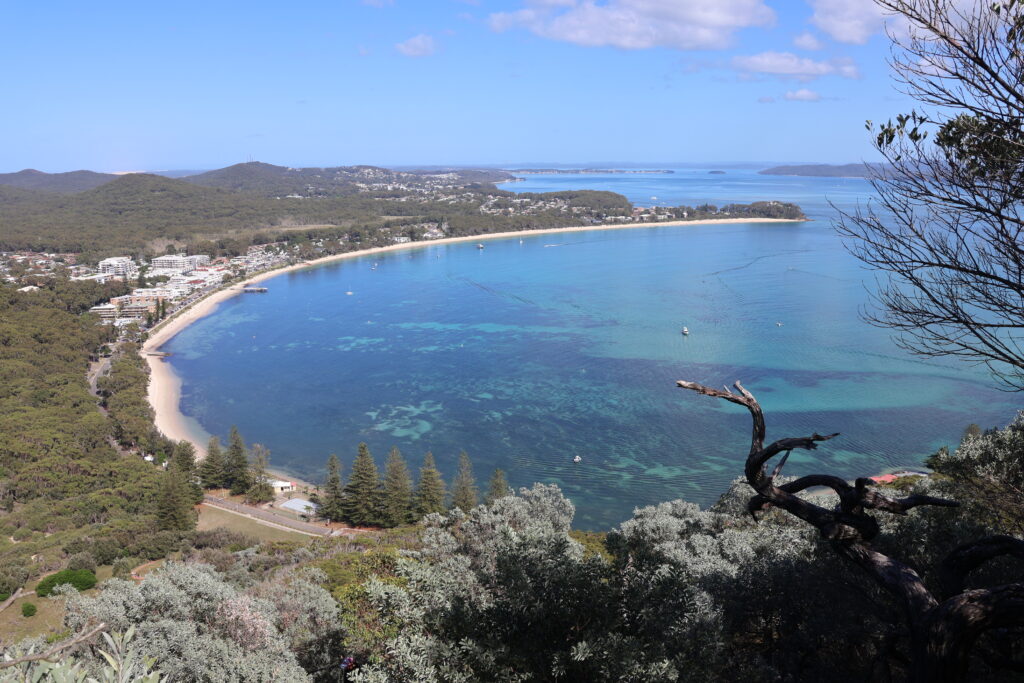
Port Stephens isn’t just a beautiful place to visit—it’s also the perfect home for dolphins. The combination of abundant food, sheltered waters and healthy marine habitats provides everything they need to thrive, which is why around 150 resident Indo-Pacific bottlenose dolphins call the bay home year-round.
An Abundance of Food
Dolphins are opportunistic hunters, and Port Stephens offers an incredible buffet. The harbour is rich in fish, squid and cuttlefish, with large schools of baitfish regularly moving through the bay.
It’s not uncommon to see dolphins working together to herd fish into shallow water before taking turns to feed. If you spot diving seabirds or fish breaking the surface, keep an eye out—dolphins are often hunting nearby.
I’ve watched dolphins fishing in Tanilba Bay, herding the schools of fish to the beach to corner their prey before darting in for a meal.
Sheltered Waters
Unlike the open ocean, Port Stephens is a large natural harbour protected by headlands and islands. While the entrance can experience ocean swells, much of the bay remains relatively calm, providing dolphins with a safe place to rest, socialise and travel.
The sheltered waters also make it easier for them to conserve energy compared to constantly swimming in rough offshore conditions.
It’s one of the reasons dolphins can often be seen close to shore, whether they’re cruising through Lemon Tree Passage, exploring Tilligerry Creek or travelling along the Myall River near Tea Gardens.
A Safe Nursery for Calves
Port Stephens is an important nursery for young dolphins. The calm, protected waters provide an ideal environment for mothers to raise their calves during their first few years of life.
Young dolphins stay close to their mothers, learning essential survival skills such as hunting, navigating the harbour and interacting with other dolphins.
One of my favourite sightings was in Tanilba Bay, where I watched a mother patiently teaching her calf how to fish. Rather than catching every fish herself, she appeared to give the calf opportunities to practise—a fascinating glimpse into how dolphins pass on knowledge from one generation to the next.
And then it happened! The baby caught a fish. Mum was so proud, she did a tail stand just metres from the bank. OMG! I couldn’t believe my eyes.
A Healthy Marine Environment
The harbour supports extensive seagrass meadows, mangroves and estuarine habitats that form the foundation of a healthy marine ecosystem. These habitats provide shelter and food for countless fish and invertebrates, which in turn support the dolphins higher up the food chain.
Healthy waterways mean healthy dolphin populations, making conservation of these habitats vital for the future of Port Stephens’ resident dolphins.
Comfortable Conditions Year-Round
Thanks to the influence of the East Australian Current, Port Stephens enjoys relatively mild water temperatures throughout the year. While the dolphins are perfectly adapted to seasonal changes, the temperate climate allows them to remain in the bay year-round rather than migrating long distances in search of suitable conditions.
This means visitors can enjoy dolphin watching in every season.
Strong Social Bonds
Port Stephens is also an ideal place for dolphins to maintain their complex social lives. Bottlenose dolphins live in dynamic social groups, forming long-term friendships and alliances that can last for many years.
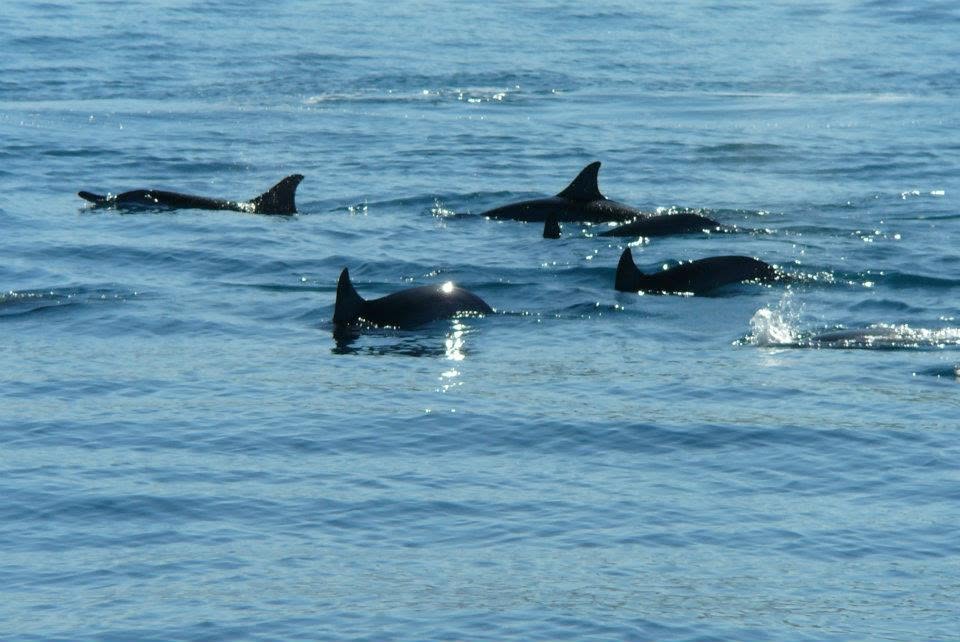
One famous example is the group of four male dolphins affectionately known as “The Beatles,” which are regularly seen around Lemon Tree Passage. These males have formed a long-term alliance, working together to find food, defend territory and interact with females—a remarkable example of the sophisticated social behaviour that makes dolphins one of the most intelligent animals in the ocean.Break into subheadings.
Best Time to See Dolphins in Port Stephens
One of the great things about Port Stephens is that the resident bottlenose dolphins live here all year, so there’s no “dolphin season.” Whether you visit in summer or winter, you have a good chance of spotting them.
That said, some times and conditions can improve your chances.
Early Morning
The best time of day is usually early morning. The water is often calmer, making it much easier to spot a dorsal fin or the telltale ripple as dolphins surface to breathe. The softer morning light is also ideal for photography.
Calm Weather
Light winds and calm seas make dolphins easier to see, whether you’re on a cruise, kayaking or watching from shore. In rough conditions, they can be harder to spot as the waves hide their movements.
Around High Tide
Dolphins often follow schools of fish into the estuaries and shallower parts of the harbour as the tide rises. Places like the Nelson Bay Marina breakwall, Lemon Tree Passage and the Myall River near Tea Gardens can be particularly productive around a rising or high tide.
During Whale Season
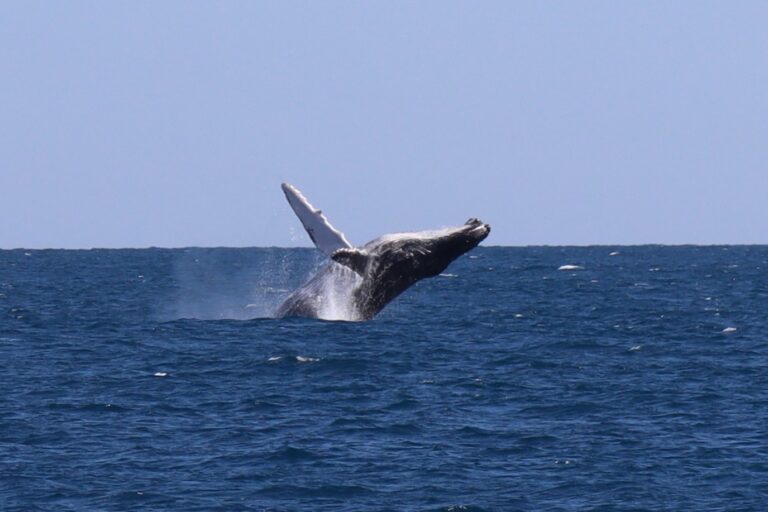
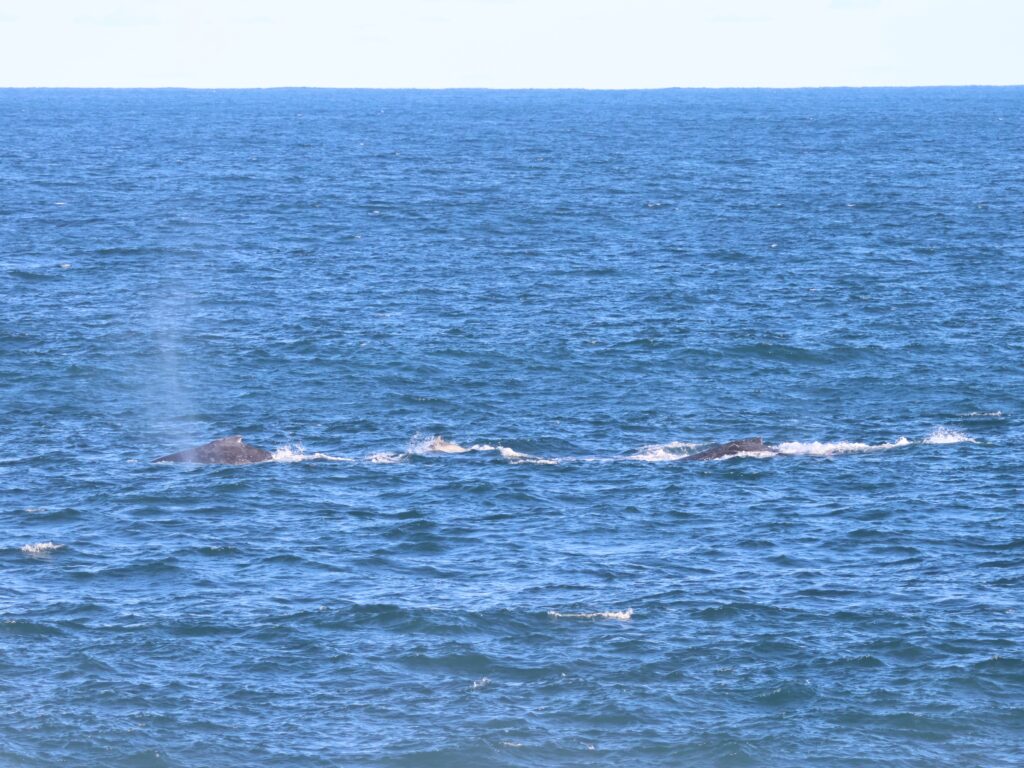
If you’re visiting between May and November, you might be lucky enough to see dolphins and migrating humpback whales on the same trip. Dolphins are often spotted around the whale watching boats, and I’ve even watched them swimming alongside whales off Boat Harbour Lookout—a truly unforgettable sight.
Local Tip
If you’re walking near the water, keep your ears open as well as your eyes. Dolphins make a distinctive “pfff” sound each time they surface to breathe. More than once I’ve heard them before I’ve spotted them.
Swim with Dolphins
If simply watching dolphins isn’t enough, you can actually swim alongside them.
Dolphin Swim Australia offers one of Australia’s few wild dolphin swim experiences.
Rather than a captive encounter, you’ll enter the water with wild dolphins if conditions and dolphin behaviour allow.
Every experience is different, making each trip completely unique.
The dolphin swim season operates from October to April (when the water is warmer for humans). Dolphins swim all year round.
Dolphin Cruises
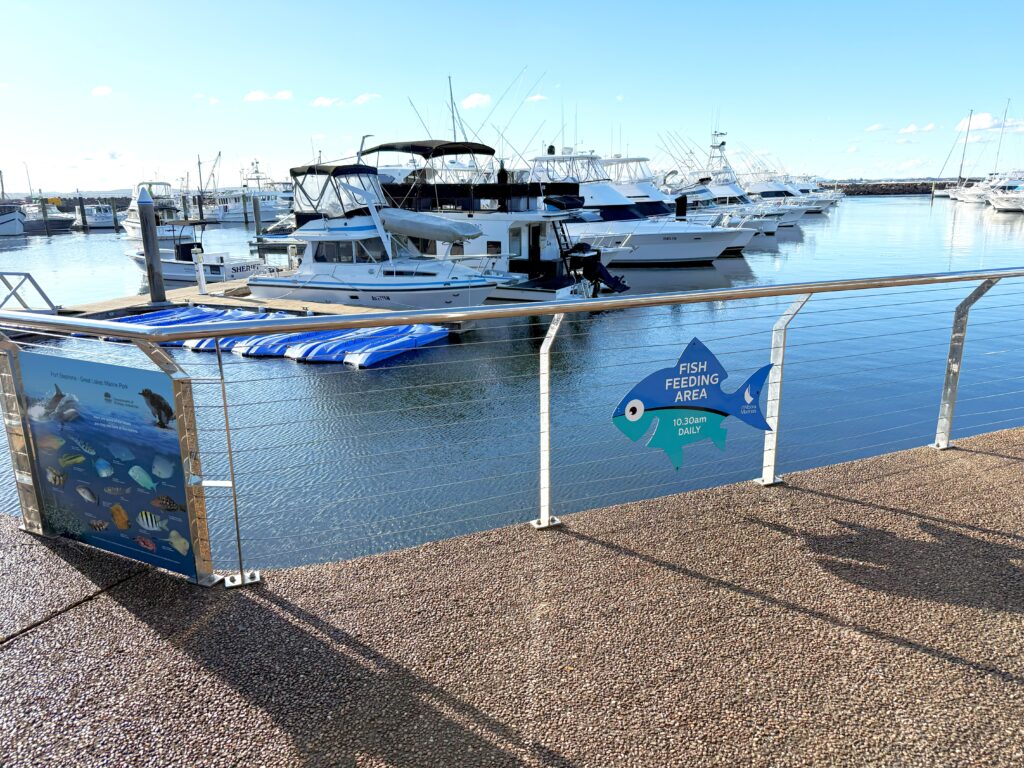
Joining a dolphin cruise remains one of the easiest ways to see dolphins. Experienced skippers know where dolphins regularly feed, socialise and travel around the harbour. All cruises depart from the D’Albora Marina, Nelson Bay.
For more ideas of things to do around Nelson Bay, read my Nelson Bay Local Guide.
Dolphin Discovery Cruise
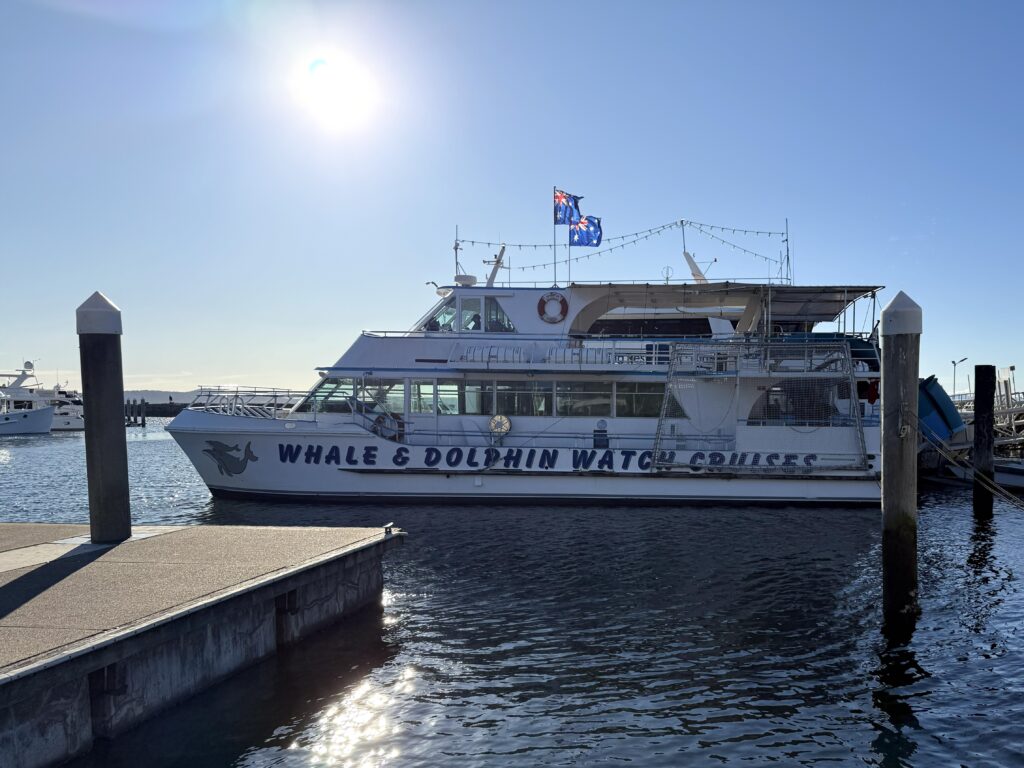
Moonshadow is the largest of the dolphin watch boats in Port Stephens. They offer a 1.5hr cruise around the eastern harbour and out to the heads. If you want to get wet, cool off in the boom net. Alternatively, there is a licensed bar on board so you can enjoy a beverage as you listen to the informative and entertaining commentary.
Book your Dolphin Watch Cruise on Moonshadow.
Dolphin Watch Cruise and Sail
Imagine is a 52ft catamaran with a spacious deck providing 360-degree views, so no matter which direction the dolphins are, you are sure to see them. You’ll cruise the harbour for 1.5 hours looking for dolphins with the opportunity to get wet boom-netting. If conditions allow, the sails are hoisted and the engines turned off for a peaceful return to Nelson Bay.
Book your Dolphin Watch Cruise and Sail on Imagine.
Dolphin Watch Express
Envision is the smallest dolphin watch boat in Port Stephens operated by Aquamarine Adventures. The smaller size provides a more intimate experience as you are closer to the water than the larger vessels. Furthermore, there are less people on board so less time boarding and more time watching dolphins.
Book my Dolphin Watch Express Cruise.
Local Tip
If you notice several dolphin cruise boats gathered together, you’ve almost certainly found where the dolphins are.
The skippers constantly communicate and share sightings.
Best Free Places to See Dolphins in Port Stephens
One of the best things about Port Stephens is that you don’t always need a boat.
Tomaree Headland
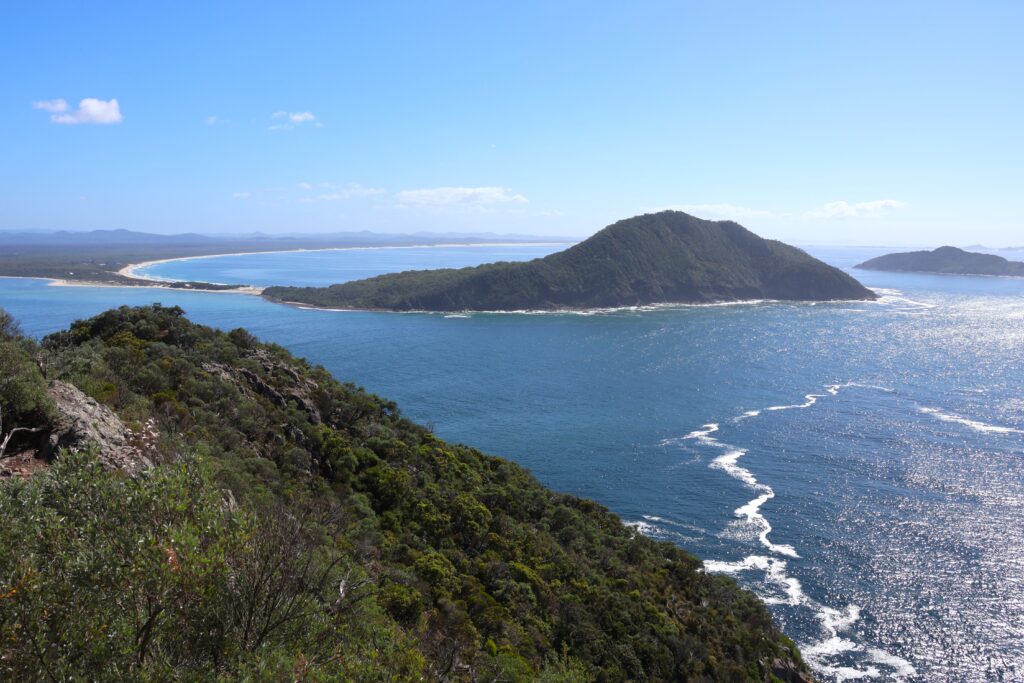
The lookout between the heads is one of my favourite places to watch dolphins but it is a long way down. To get closer to the action, walk along the base of Tomaree Headland past the old mental hospital to the grassy picnic area at the end. Enjoy the action.
Dolphins often play in the ocean swell just outside the entrance to Port Stephens. It seems, the bigger the swell, the more fun they have.
If you’re lucky, you might even see whales at the same time during migration season.
Zenith Beach
The best place to see dolphins surfing at Zenith Beach is not from the beach, it’s from the lookout overlooking Zenith Beach. You can watch them surfing the break from above.
Nelson Bay Marina Breakwall
One of the most reliable locations. Dolphins frequently cruise along the breakwall while hunting fish. Well, why not? It’s a great fishing spot for humans too.
I’ve seen them here many times quietly working the edge of the rocks.
Singing Bridge, Tea Gardens
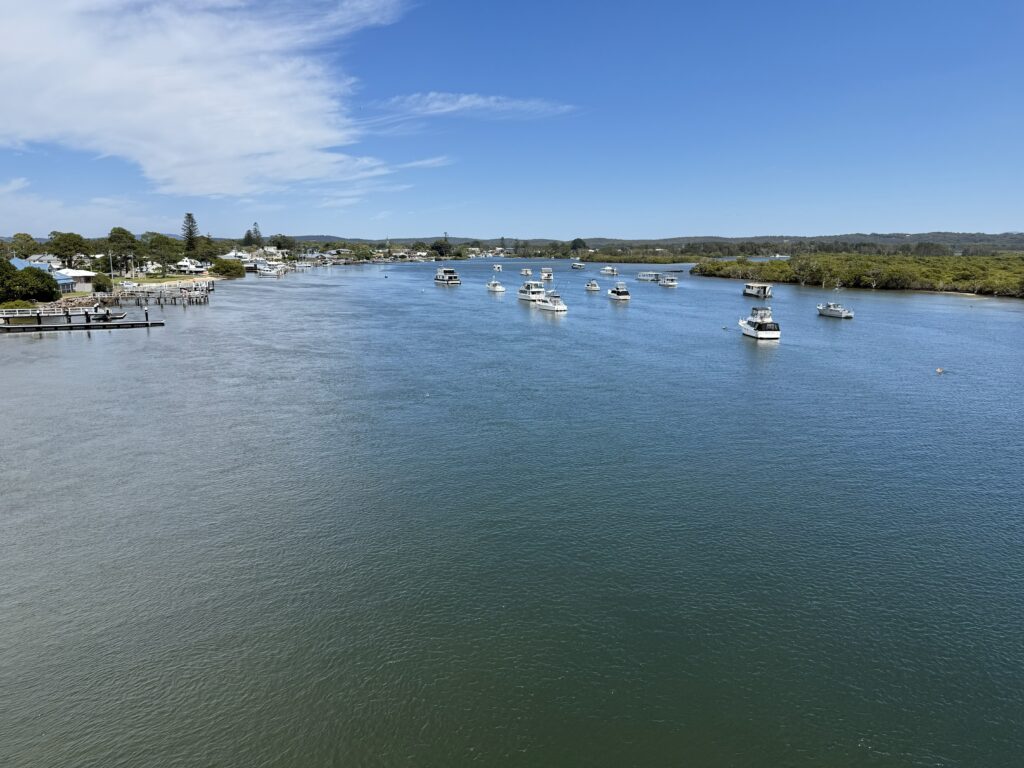
Stand on the Singing Bridge crossing the Myall River.
Dolphins regularly travel through here, especially on a rising tide. They are easy to see as they swim over the sand bars downstream of the bridge.
If you’re visiting this area, don’t miss my complete Tea Gardens & Hawks Nest Guide.
Lemon Tree Passage
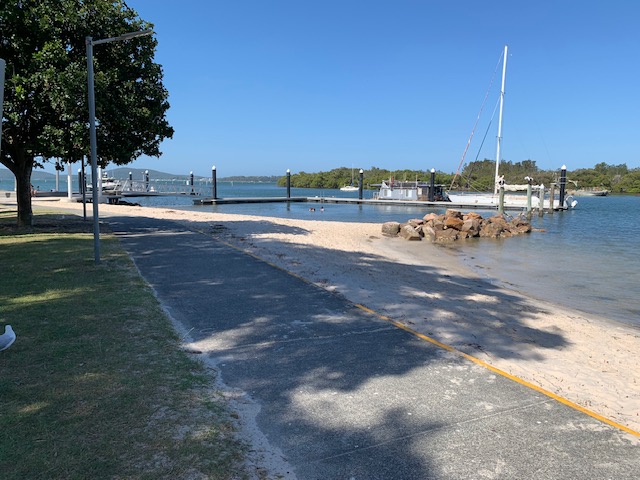
A famous male alliance of four dolphins known locally as The Beatles is regularly seen cruising along the waterfront.
This is one of my favourite places for relaxed dolphin watching.
If you’re exploring this quieter side of Port Stephens, you’ll love my guide to the Tilligerry Peninsula – Port Stephens’ Best Kept Secret.
Accessibility Table
| Location | Wheelchair Friendly | Walk Required | Toilets | Parking | Best For |
|---|---|---|---|---|---|
| Nelson Bay Marina Breakwall | ✅ Excellent | Easy | ✅ | Large carpark | Families |
| Lemon Tree Passage Foreshore | ✅ Excellent | Easy | ✅ | Close | Everyone |
| Singing Bridge | ✅ Good | Very easy | Nearby | Easy | Families |
| Tomaree Head Lower Lookout | Partial | Moderate | Base only | Large | Most visitors |
| Tomaree Summit | ❌ | Steep | No | Base | Active walkers |
| Boat Harbour Lookout | Partial | Short | No | Small | Photography |
Dolphin Behaviour to Look Out For
One of the joys of dolphin watching is that no two encounters are ever the same. Sometimes you’ll only catch a glimpse of a dorsal fin before it disappears beneath the surface. Other times, you’ll be treated to an incredible display of acrobatics, playful behaviour or cooperative hunting.
Here are some of the fascinating behaviours you might be lucky enough to witness in Port Stephens.
Bow Riding
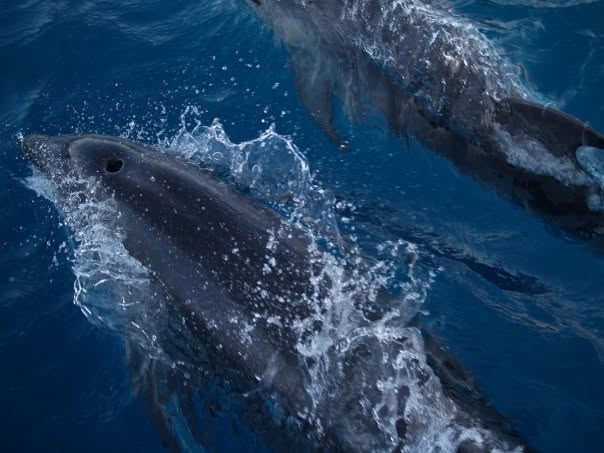
One of the most exciting sights is watching dolphins riding the bow wave at the front of a moving boat. Rather than swimming under their own power, they use the pressure wave created by the boat to glide effortlessly through the water, often just metres away.
Young dolphins seem especially playful and may weave around each other, roll onto their sides or make eye contact with passengers as they surf the wave.
Wake Surfing
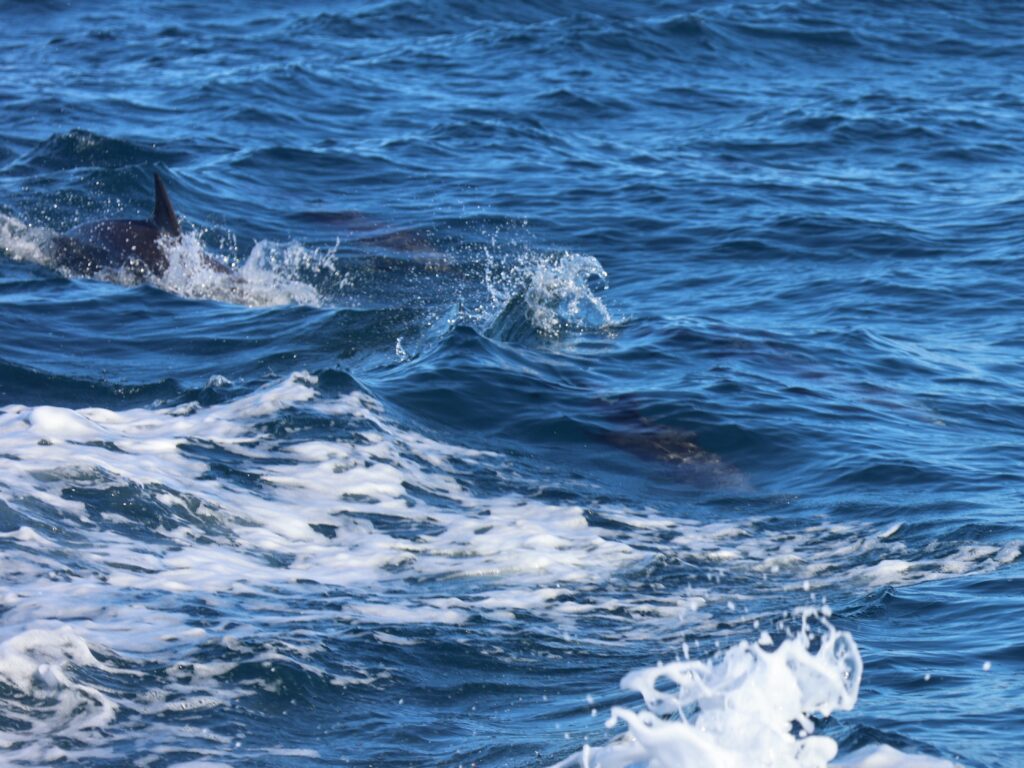
Dolphins don’t just ride at the front of boats—they also love surfing in the wake behind them. Like surfers catching an ocean wave, they use the energy of the water to propel themselves with very little effort.
Watching a dolphin accelerate through the wake before leaping clear of the water is one of the highlights of any cruise.
Spy Hopping
Occasionally, a dolphin will lift its head vertically out of the water in a behaviour known as spy hopping.
Scientists believe this allows dolphins to get a better look at their surroundings, whether they’re checking out a boat, looking for other dolphins or investigating activity above the surface.
If you’re lucky enough to witness a spy hop, have your camera ready—it usually only lasts a few seconds.
Tail Slaps and Fin Slaps
A loud slap on the surface of the water can often be heard before it’s seen.
Dolphins sometimes slap their tails or pectoral fins against the water as a form of communication. It may help signal to other dolphins, warn off rivals, express excitement or even assist during feeding.
While scientists are still learning exactly what each behaviour means, it’s another reminder of how intelligent and social these animals are.
Feeding Together
Dolphins are skilled hunters and often work as a team to catch fish.
You may see them circling schools of baitfish, taking turns to dart through the school or driving fish towards shallow water where they’re easier to catch.
A great clue that dolphins are feeding is the presence of diving seabirds. Gulls and terns are often attracted to the same baitfish, so if you see birds repeatedly diving into the water, take a closer look—you may find dolphins feeding beneath them.
I’ve watched dolphins hunting along the Nelson Bay Marina breakwall, using the rocky edge to help trap fish before making a quick dash through the school.
Mothers Teaching Their Calves
Some of the most rewarding dolphin encounters involve mothers and their calves.
Young dolphins spend several years learning from their mothers, gradually developing the skills they’ll need to survive, including hunting techniques, navigation and social behaviour.
If you see a mother with a calf, it’s especially important to observe quietly and give them plenty of space.
Socialising and Play
Dolphins are incredibly social animals, and not every interaction is about feeding.
You may see them swimming side by side, gently touching each other with their fins, rolling together at the surface or chasing one another in what appears to be play.
Scientists believe these interactions help strengthen social bonds within the pod. Young dolphins, in particular, are often full of energy and seem to delight in jumping, splashing and surfing waves simply for fun.
One well-known example in Port Stephens is the alliance of four male dolphins known as “The Beatles,” which are regularly seen around Lemon Tree Passage. These long-term companions are often spotted travelling and socialising together.
Breaching and Leaping
Although not as common as with whales, dolphins sometimes launch themselves completely clear of the water in spectacular leaps.
Researchers aren’t entirely sure why they do this. It may help remove parasites, communicate with other dolphins, gain a better view of their surroundings or simply be part of their playful nature.
Whatever the reason, it’s one of the most thrilling sights you’ll experience.
Listen as Well as Look
Dolphins don’t always announce themselves with a leap.
If you’re standing quietly near the water’s edge, you may hear a loud “pfff” as they exhale through their blowhole before taking another breath. More than once, I’ve heard dolphins before spotting them.
And if you’re incredibly lucky enough to be in the water nearby—as I was while snorkelling at Fly Point—you might even hear their whistles and rapid clicking sounds echoing underwater as they communicate and use echolocation to navigate and hunt. Even without seeing them clearly, it’s an unforgettable experience.
My Favourite Dolphin Encounters
One of the reasons I never get tired of dolphins is that every encounter is different.
Some moments I’ll never forget include:
- Watching dolphins cruise through Lemon Tree Passage past the marina.
- Seeing a mother patiently teaching her calf how to fish in the shallow waters of Tanilba Bay.
- Watching dolphins feeding along the Nelson Bay Marina breakwall.
- Just a few days ago, seeing dolphins swimming alongside migrating humpback whales off Boat Harbour Lookout—and yes, I have the photo to prove it.
One of my most memorable encounters happened while snorkelling at Fly Point.
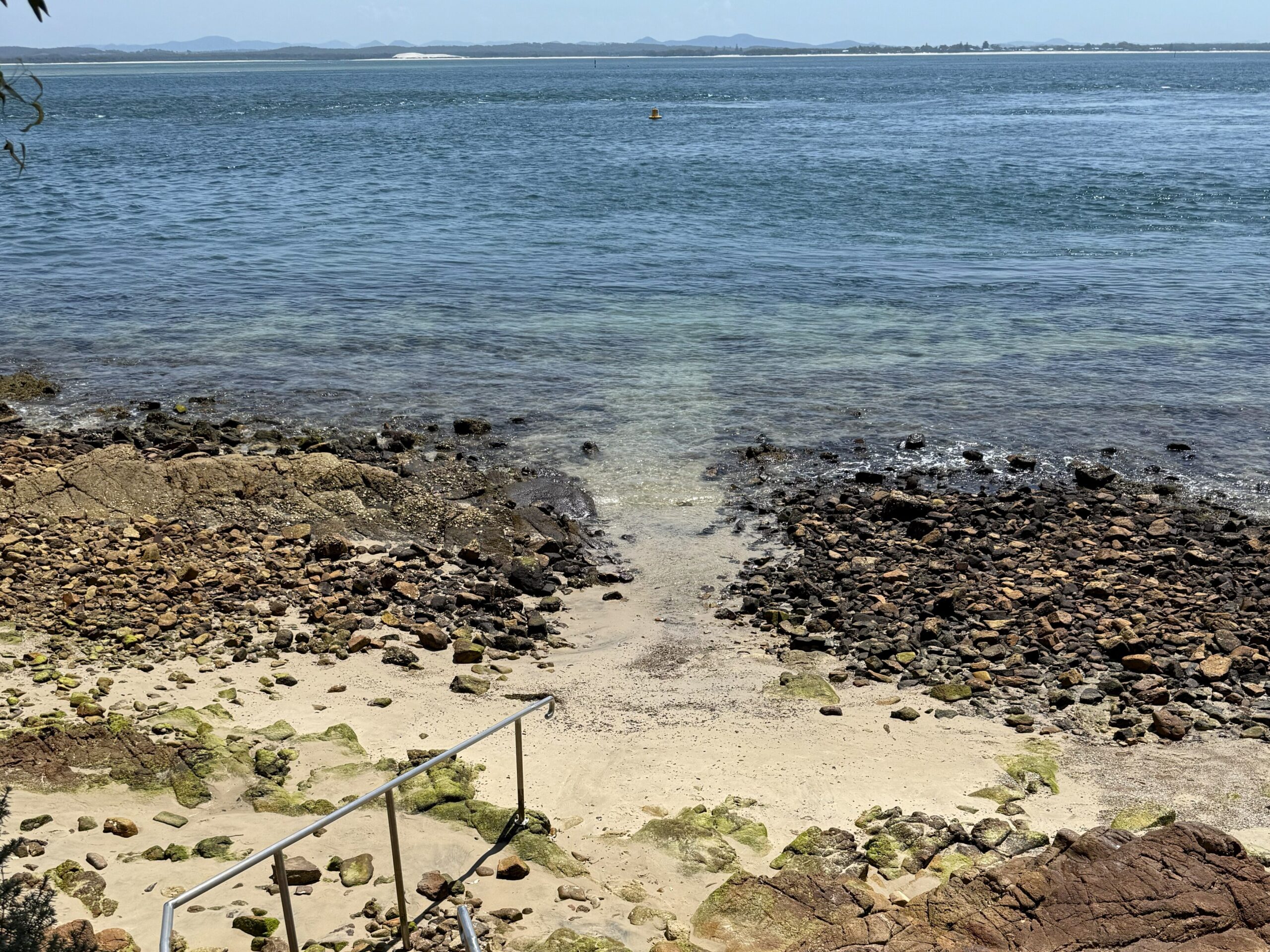
We noticed several dolphin cruise boats nearby, so we knew dolphins couldn’t be far away.
We swam out hoping for a closer look.
The visibility wasn’t good enough to actually see them underwater, but suddenly we could hear them.
Their whistles echoed through the water, along with the unmistakable clicking sounds they use for echolocation.
Even without seeing them, it was one of the most incredible underwater experiences I’ve had.
Common Dolphins: When Hundreds Visit Port Stephens
Every now and then something extraordinary happens.
Large pods of common dolphins, sometimes numbering 500 or more, visit the waters outside Port Stephens. They are distinctly different to our locals and so pretty.
We were lucky enough to encounter one of these super pods.
As we gently changed direction in the boat, the dolphins changed direction with us.
They surrounded us on every side.
Some swam so close alongside the boat that we almost could have reached down and touched them.
It remains one of the most unforgettable wildlife experiences I’ve ever had.
Dolphin Photography Tips
Photographing dolphins can be surprisingly challenging.
They can swim at speeds of around 35 km/h, surface for only a second or two, then generally disappear again for 1-4 minutes. Though they can stay under for 20 minutes.
A few tips that have helped me:
Choose a stable platform
Larger boats move less, making it much easier to balance and keep your camera steady. You’re generally higher above the water, so it’s easier to spot dolphins.
Use a fast shutter speed
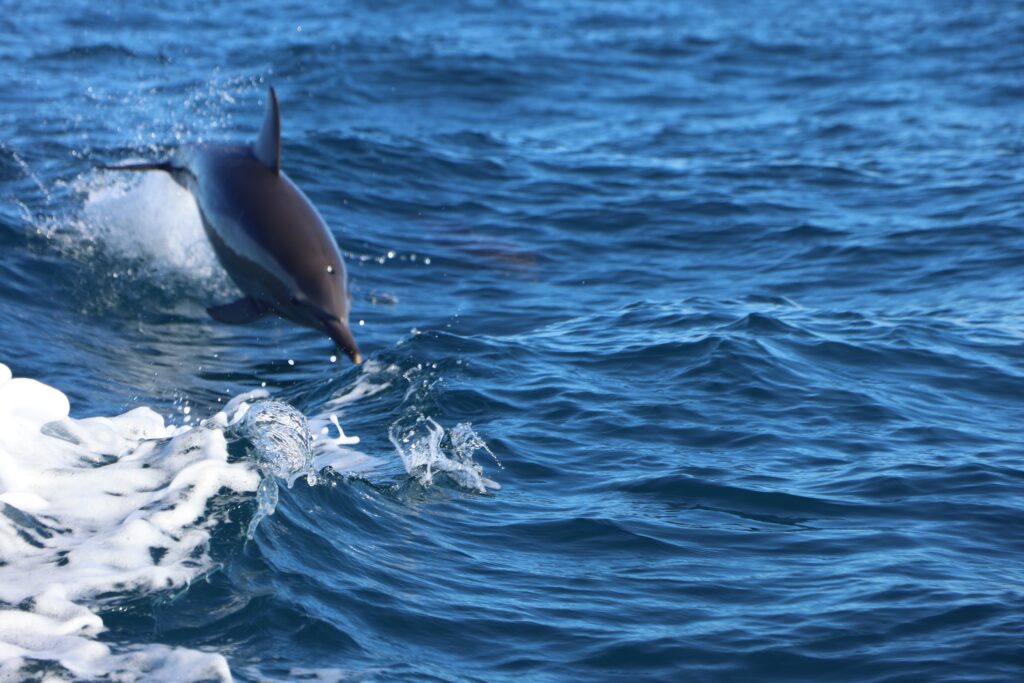
A fast shutter speed helps freeze fast-moving dolphins and reduce blur from both the boat and the dolphins. Go for at least 1/1000sec but preferrably 1/1600+. Set your camera to continuous auto-focus if possible and shoot in burst mode. And then – cross your fingers.
Anticipate
Rather than chasing dolphins with your camera, watch where they’re travelling. Anticipate where they’ll surface next.
Dolphins love riding the bow wave at the front of the boat. If you’re on a big boat, you can get great photos looking down from above. They also enjoy surfing in the boat’s wake.
Go early
Morning trips often have calmer water, making dolphins much easier to spot.
Responsible Dolphin Watching
Seeing dolphins in the wild is a privilege, and giving them the space they need helps keep Port Stephens’ resident population healthy for future generations.
If you’re watching from a boat, always follow the skipper’s instructions. Licensed dolphin cruise operators follow strict guidelines designed to minimise disturbance to the animals, including maintaining appropriate distances and avoiding sudden changes in speed or direction.
If you’re out on your own boat, kayak or stand-up paddleboard, resist the temptation to chase dolphins. Let them decide whether they want to approach you. Dolphins are naturally curious and may choose to swim alongside a vessel, but it’s important not to block their path, separate mothers from calves or try to touch them.
If you’re lucky enough to encounter dolphins while snorkelling or swimming, enjoy the moment quietly. Avoid diving towards them or trying to follow them. The best wildlife encounters happen when we let animals behave naturally.
From shore, remember that binoculars or a camera with a zoom lens often provide the best views without disturbing the dolphins at all.
By watching responsibly, we can all help protect the resident dolphins that make Port Stephens such a special place to visit.
For more information on responsible dolphin watching, read the NSW marine wildlife watching guidelines.
Listen for Them
If you’re standing close to the water, stop talking for a moment.
You might hear a loud “pfff” as a dolphin surfaces to breathe.
Often you’ll hear them before you actually see them.
What to Bring
A checklist works perfectly.
☐ Binoculars
☐ Polarised sunglasses
☐ Camera
☐ Spare battery
☐ Telephoto lens (if you have one)
☐ Hat
☐ Sunscreen
☐ Water bottle
☐ Windproof jacket (it always feels cooler on the water)
☐ Motion sickness tablets (if needed)
If you’re out on the water, preparation is key to avoiding seasickness. Read How to Avoid Seasickness for useful tips and tricks.
Map of Dolphin Viewing Locations
Map showing my favourite places to watch dolphins in Port Stephens, including free shore-based viewing locations and cruise departure points.
Planning Your Dolphin Adventure
If you’re visiting during whale season, consider combining your trip with my guide to Whale Watching in Port Stephens, as it’s not unusual to see both species on the same outing.
If you’re looking for more places to explore afterwards, check out my guides to the Best Beaches in Port Stephens and Free Things to Do in Port Stephens.
If you’re prone to motion sickness before booking a cruise, read my guide on How to Avoid Seasickness.
Interested in seeing dolphins elsewhere around the country? Check out my guide to Where to See Dolphins in Australia in the Wild.
Frequently Asked Questions
Are dolphins guaranteed in Port Stephens?
No wildlife sighting can ever be guaranteed, but Port Stephens has a resident population of around 150 bottlenose dolphins, making sightings very common.
What is the best time of day to see dolphins?
Early morning generally offers calmer conditions, making dolphins easier to spot.
Can you see dolphins without paying for a cruise?
Absolutely. Tomaree Headland, Nelson Bay Marina breakwall, Lemon Tree Passage and the Singing Bridge at Tea Gardens are all excellent free viewing locations.
Can you swim with dolphins?
Yes. Dolphin Swim Australia offers wild dolphin swim experiences when conditions and dolphin behaviour allow.
What are the Beatles?
The Beatles are a well-known alliance of four male bottlenose dolphins regularly seen around Lemon Tree Passage.
When is the best season?
Dolphins live in Port Stephens all year, so every season offers excellent opportunities.
Share the Magic
Have you spotted dolphins in Port Stephens?
I’d love to hear where you saw them—or if you captured an amazing photo.
Share this guide with your travel buddies and help more people discover one of Australia’s best places to see dolphins in the wild.