Shark Bay Western Australia: Travel Guide & Top Things to Do
At the far edge of Western Australia, where red desert cliffs tumble into impossibly turquoise water, Shark Bay feels like the end of the road in the very best way. This wild and remote corner of the country is a place where dolphins cruise shallow bays, turtles glide through crystal-clear water, and dugongs feed in seagrass meadows just offshore. It’s raw, quiet, and spectacular — the kind of destination that rewards travellers willing to go a little further.
Recognised as a UNESCO World Heritage Area, Shark Bay is one of Australia’s most extraordinary natural landscapes. Here, blinding white sandy beaches stretch for kilometres without another soul in sight, ancient coastlines meet vibrant marine ecosystems, and the sense of isolation is part of the magic. It’s also home to Steep Point, the most westerly point on mainland Australia, where endless ocean views make the long drive feel completely worth it.
If you’re craving wide-open spaces, unforgettable wildlife encounters, and an adventure that feels truly off the beaten path, discovering Shark Bay is an experience that stays with you long after the dust has settled.
Some links in this post are affiliate links, which means I may earn a small commission if you choose to make a purchase. It helps support Roam with No Regrets at no extra cost to you — thank you for your support!
Where is Shark Bay?
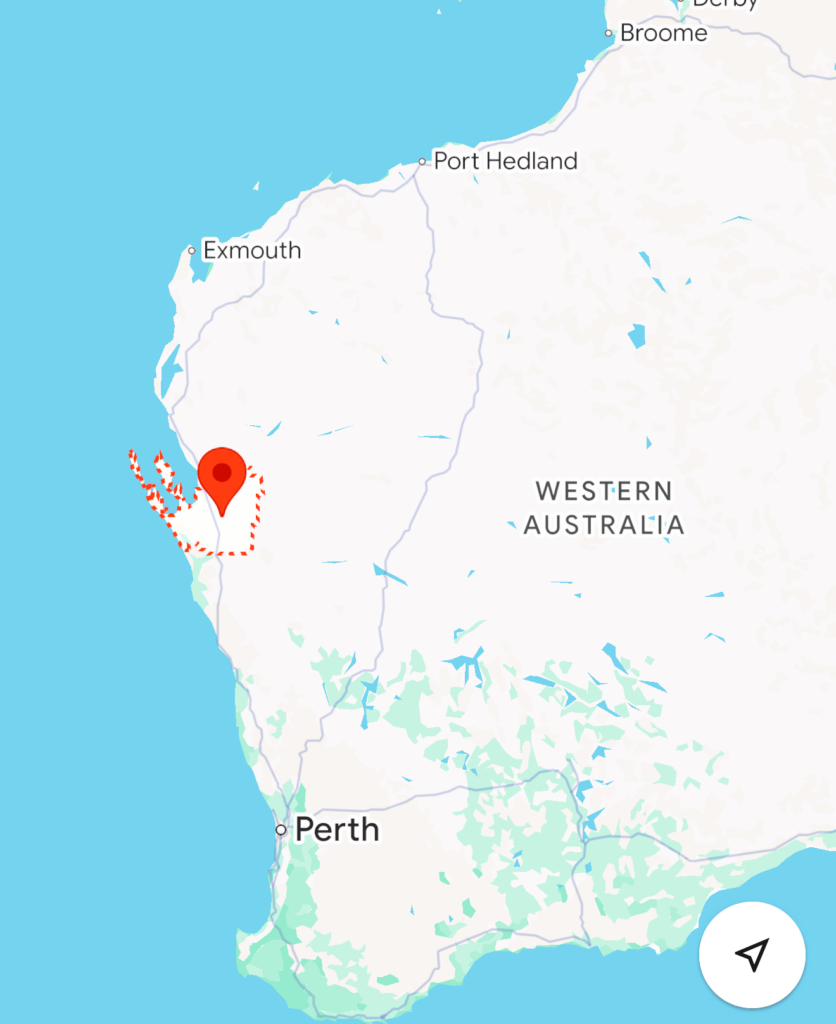
Shark Bay is located on the most westerly coast of Western Australia, 820km km north of Perth. It claims the title for
- the last place the sun sets in Australia
- the most westerly point in Australia – Steep Point
- the most westerly town in Australia – Denham and
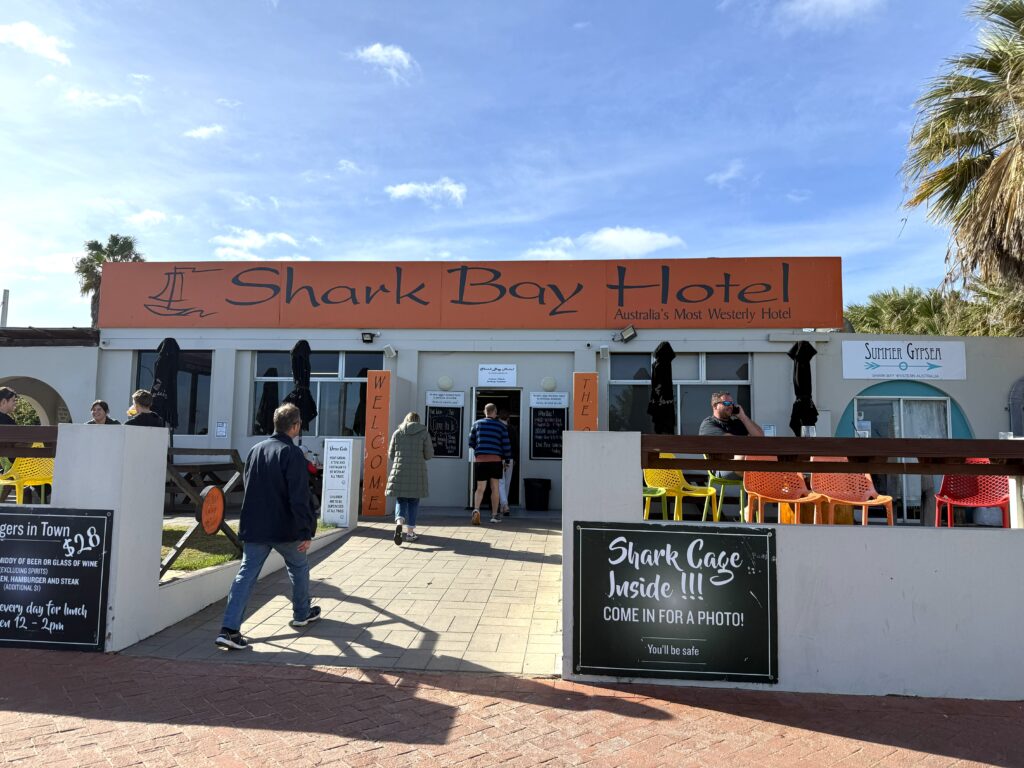
- the most westerly hotel in Australia – Shark Bay Hotel
Shark Bay is not a single destination but a 2.2-million-hectare UNESCO World Heritage Area in the Gascoyne region of Western Australia.
Best Time to Visit
The best time to visit Shark Bay is between April and October, when the weather is mild, dry, and ideal for exploring the region’s unique landscapes and marine life. During these months, daytime temperatures are comfortable, humidity is low, and access to key attractions such as Monkey Mia, Shell Beach, and François Peron National Park is at its best. This period also aligns perfectly with a Coral Coast road trip from Perth to Exmouth.
April to June is an excellent shoulder season for visiting Shark Bay. Autumn brings warm days without the extreme heat of summer, making it ideal for beach walks, scenic lookouts, and 4WD adventures in François Peron National Park. Water temperatures remain pleasant, and crowds are generally smaller than during the peak winter months.
July to September is peak season in Shark Bay and one of the most popular times to visit. Winter days are sunny and mild, while nights can be cool. This is also prime time for wildlife experiences, with increased chances of seeing migrating humpback whales offshore. Due to higher demand, accommodation and tours—especially dolphin experiences at Monkey Mia—should be booked well in advance.
Visiting November to March is possible but not recommended for most travellers. Summer temperatures regularly exceed 40°C, and the risk of cyclones can impact road access and park closures. While fewer visitors and lower prices can be appealing, the heat can limit outdoor activities and overall comfort, particularly for those travelling as part of a longer Coral Coast itinerary.
Don’t miss out on that bucket list wildlife encounter.
Shark Bay Wildlife Quick Reference
| Wildlife | Best Time to See | Notes |
|---|---|---|
| Bottlenose Dolphins | Year-round | Resident dolphins at Monkey Mia; calm winter mornings often offer the best viewing conditions |
| Humpback Whales | July – October | Peak sightings typically August–September during migration |
| Dugongs | Year-round | One of the world’s largest populations; best seen in clear, calm conditions |
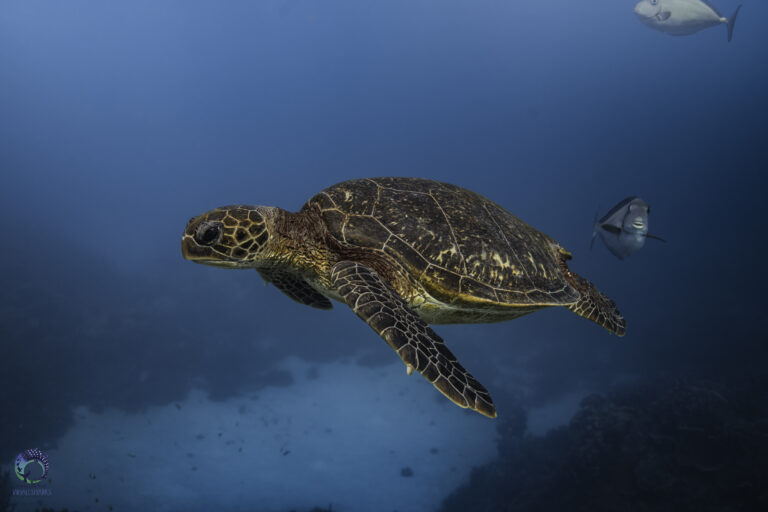
| Green & Loggerhead Turtles | October – March | More active in warmer months, especially in shallow bays |
| Manta Rays | Year-round (best in winter) | Higher visibility during cooler months improves sighting chances |
Where to Stay
RAC Monkey Mia Dolphin Resort – A beachfront resort offering hotel rooms, villas, and campground options, best known for its famous wild dolphin encounters and relaxed coastal setting.
Tasman Holiday Parks – Denham Seaside – A beachfront holiday park with cabins, villas, and powered sites, perfect for campervans, families, and travellers wanting ocean views and self-contained stays.
Bay Lodge – Comfortable motel-style accommodation in the heart of Denham, ideal for travellers wanting a central location, easy town access, and great value.
There is NO free camping in Shark Bay. The rangers are very active enforcing this, making travellers move on and issuing fines. Book your accommodation in advance, particularly during peak holiday periods.
Getting to Denham, Shark Bay
By Car (Best Option)
Driving from Perth to Denham is the most flexible and popular way to visit Shark Bay, especially if you’re travelling as part of a Coral Coast road trip. The drive is approximately 820 km and takes 9–10 hours without long stops. Most travellers break the journey over one or two nights, commonly stopping in Geraldton or Kalbarri along the way. Having a car also makes it much easier to explore Shark Bay’s beaches, lookouts, and national parks once you arrive.
By Plane
You can fly from Perth to Shark Bay Airport (also known as Monkey Mia Airport), with flights operating several times per week depending on the season. Flight time is approximately 2 hours. From the airport, Denham is about a 10-minute drive, making this the fastest way to reach the region if you’re short on time. Flights are limited and can sell out quickly, so booking in advance is recommended.
By Public Transport (Bus)
Public transport to Denham is limited but possible. Integrity Coach Lines operates bus services from Perth to Geraldton and onward to Denham approximately 2–3 times per week. Travel time is long, typically 12–14 hours, and services do not run daily. This option suits budget travellers with flexible schedules, but it’s not ideal if you want to explore Shark Bay independently, as local transport options are very limited.
Getting from Denham to Monkey Mia
Monkey Mia is located just 25 minutes’ drive from Denham, with the easiest access by car. There is no regular public transport between the two, so having your own vehicle or joining a tour is essential.
Things to Do
Hamelin Pools
Discover ancient living fossils of Stromatolites at Hamelin Pool. Stromatolites date back 3.5 billion years and represent the earliest life forms on Earth. They live in water twice the salinity of sea water. The boardwalk was seriously damaged by Cyclone Seroja in 2021 and as of 2025, had still not been repaired. Best viewing is at low tide. There is also a small cafe and souvenir shop where you can grab a drink and stretch your legs.
Swim at Shell Beach
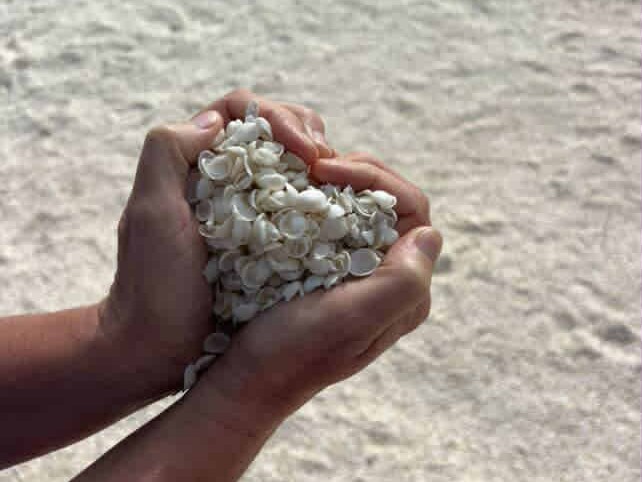
Shell Beach is made entirely of billions of tiny white Fragum Cockle shells reaching depths of 10m! The water is crystal clear and perfect for a swim. The water here is saltier than the ocean, so you’ll float higher than normal.
Walk the Stunning Clifftop Boardwalk at Eagle Bluff
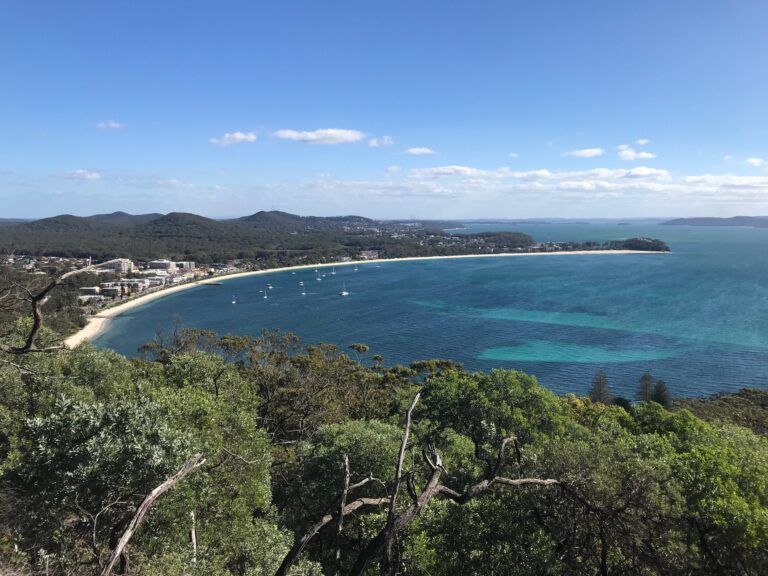
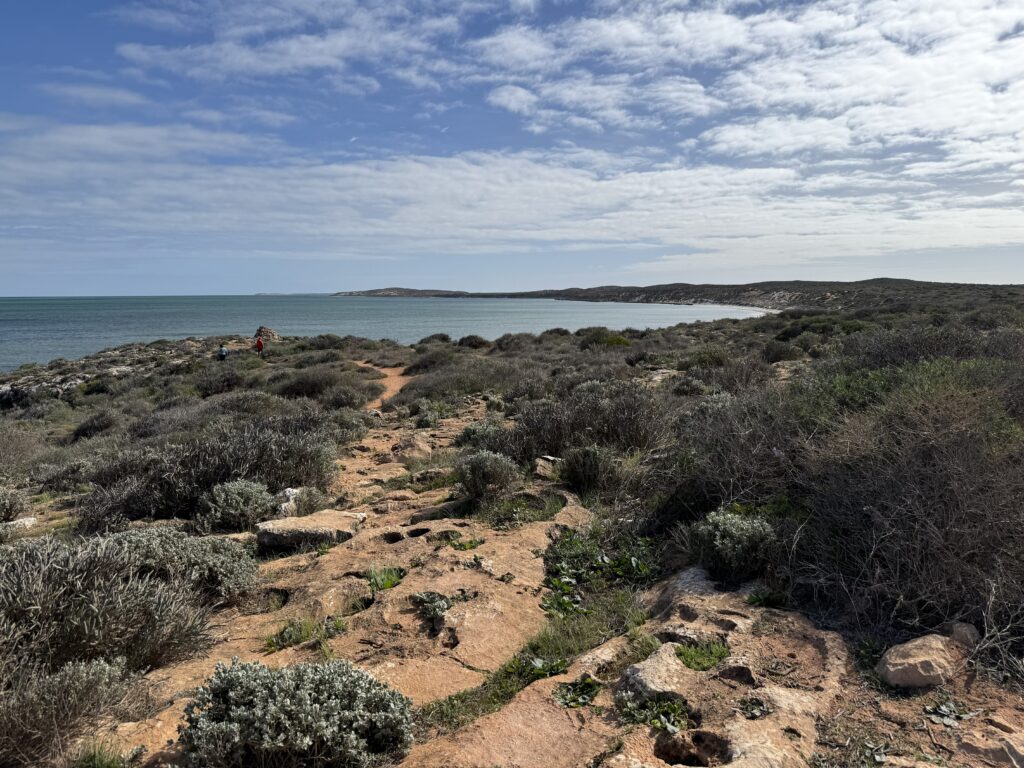
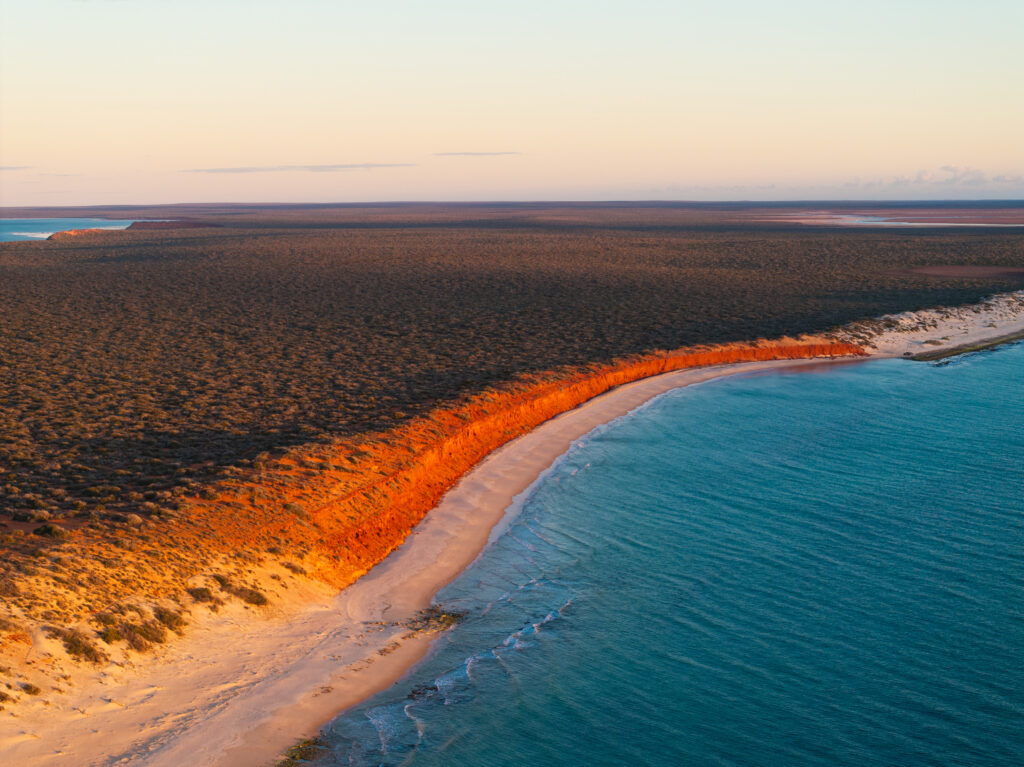
Stop at Eagle Bluff before you get to Denham. The view of the red cliffs contrasting with the vivid blue water is spectacular from the cliff top boardwalk. You may even see migrating whales or if you are very lucky, a dugong.
Denham
Denham was originally a pearling town. In 1854, Lieutenant Helpman discovered the first pearls in Western Australia. Now, with a population of 750, it is the gateway to Monkey Mia with an influx of 110,000 visitors from April to September each year.
Visit the Shark Bay World Heritage Discovery and Visitor Centre and learn all about the fascinating history, amazing wildlife and ancient indigenous culture.
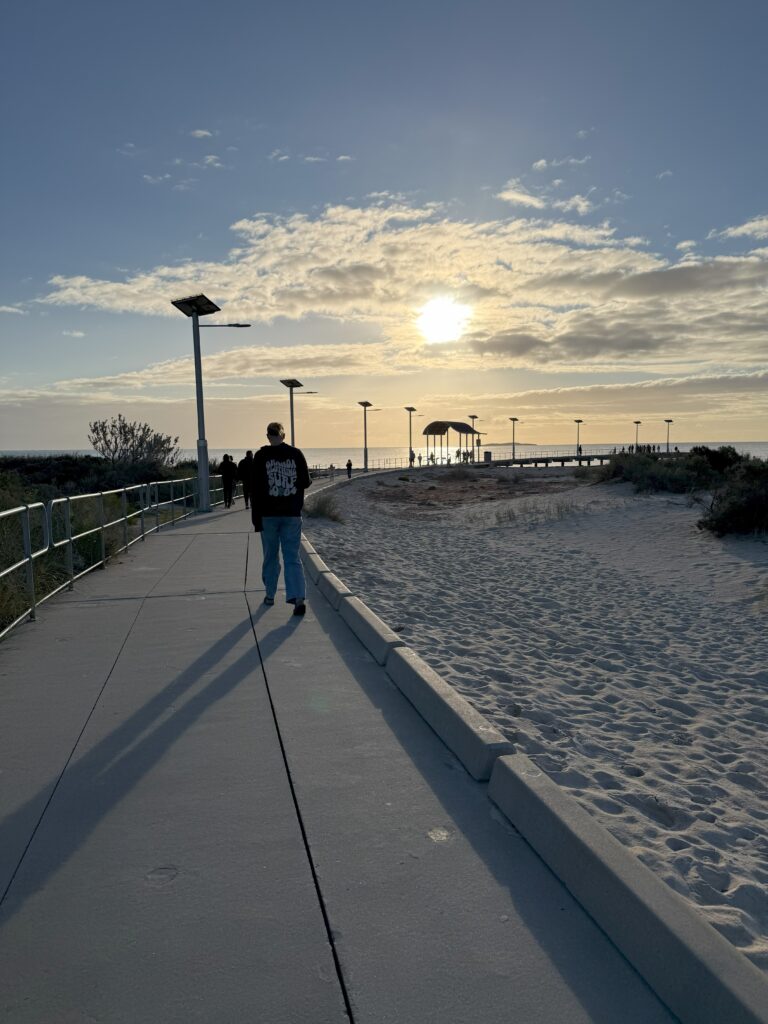
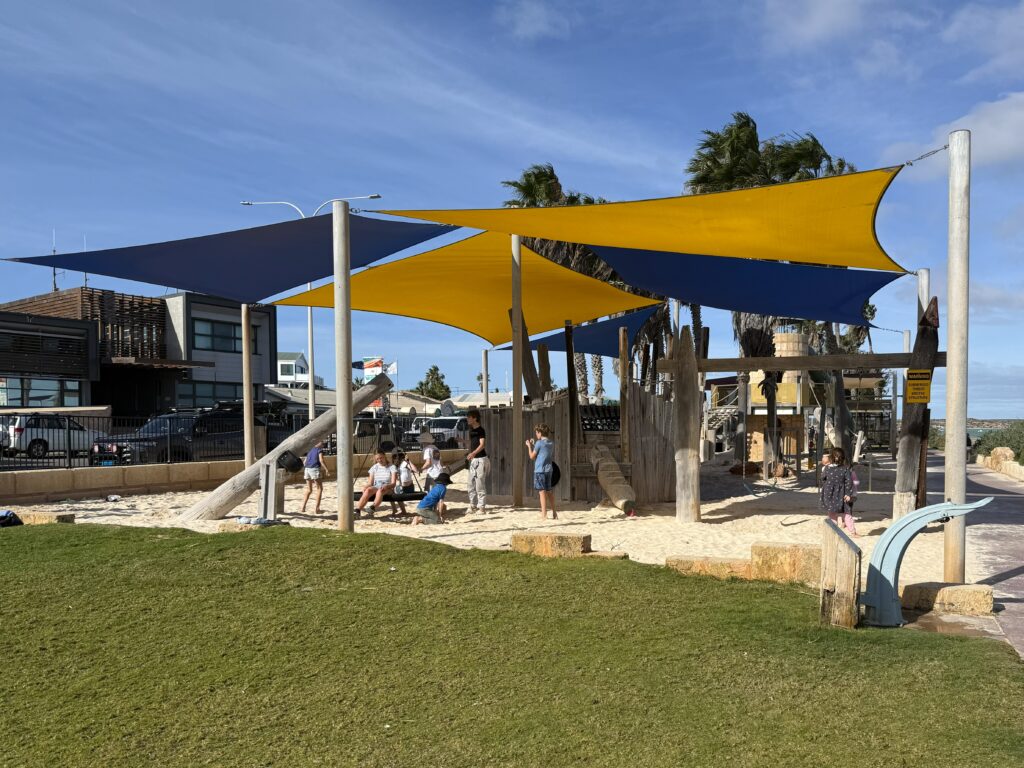
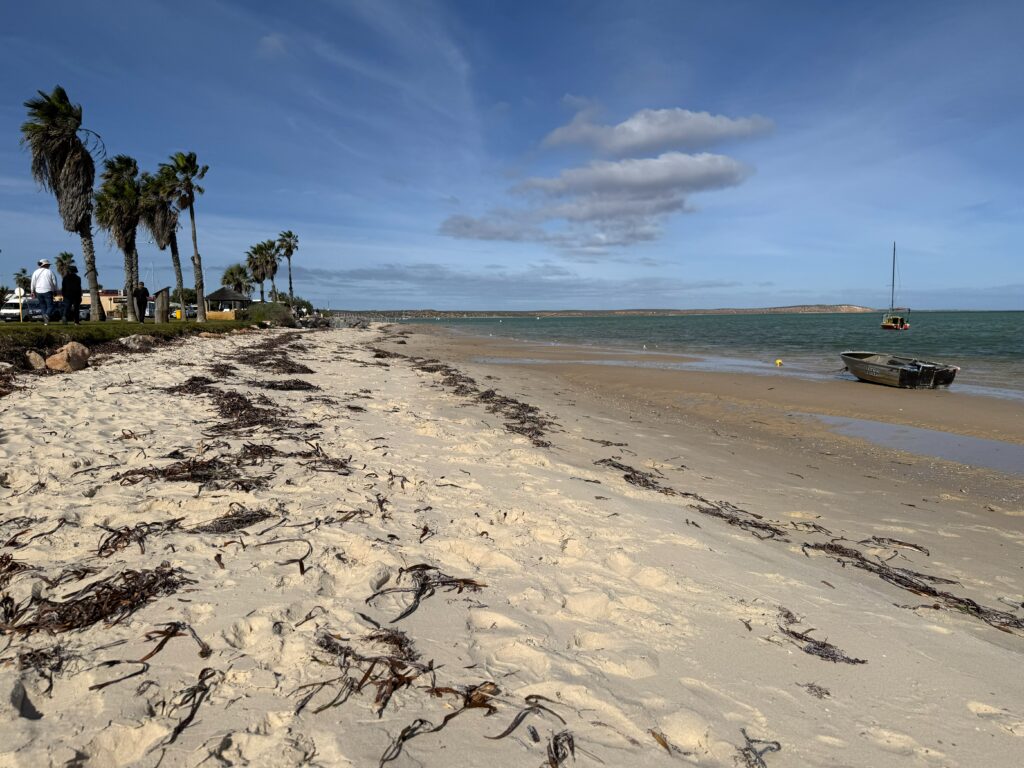
Take a stroll along the foreshore. Kids will love the shipwreck themed playground and there is a pontoon to jump off and swim in the bay. Settle in for the afternoon at Australia’s most westerly hotel, the friendly Shark Bay Hotel whilst watching the sun set over the water and enjoying a beer and a burger.
Meet the Dolphins at Monkey Mia
Monkey Mia is a 15-minute drive (25km) from Denham. There are entry fees to enter the Monkey Mia Conservation Park that goes to supporting conservation efforts. Fees are $15/adult, $10/concession and $5/child. Children under 5 are free. The facilities are quite commercialised, with souvenir shops, restaurant and coffee shop with inflated prices. That being said, it is very well designed.
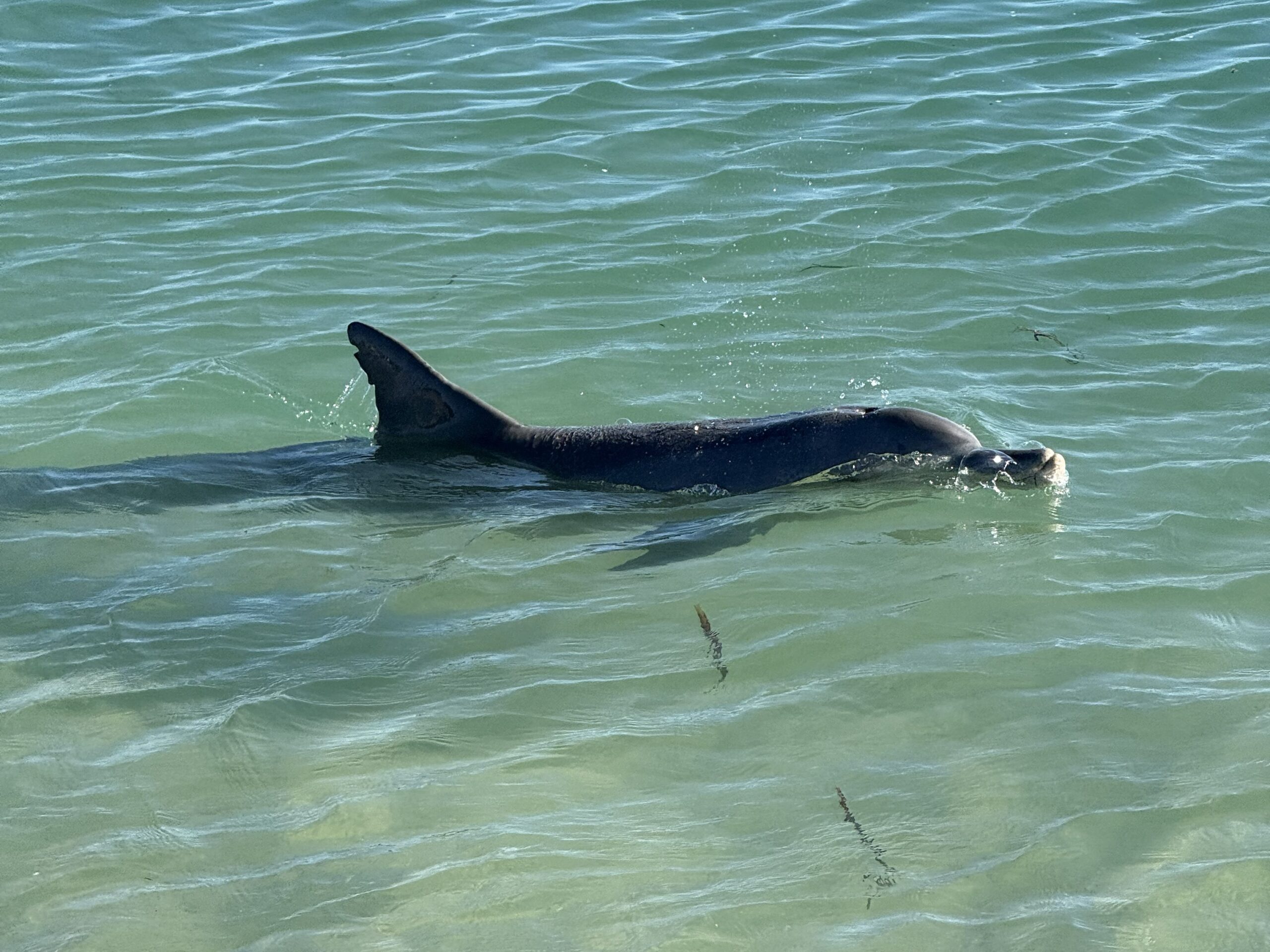
The wild dolphins come to the beach in the crystal-clear water between 7.45am and noon to get their free breakfast. They like an early breakfast so come early for a reliable sighting. It’s really cool to see how fast they can swim and turn very quickly. Rangers provide detailed information about the individual dolphins that visit, and how they interact with others in the wild.
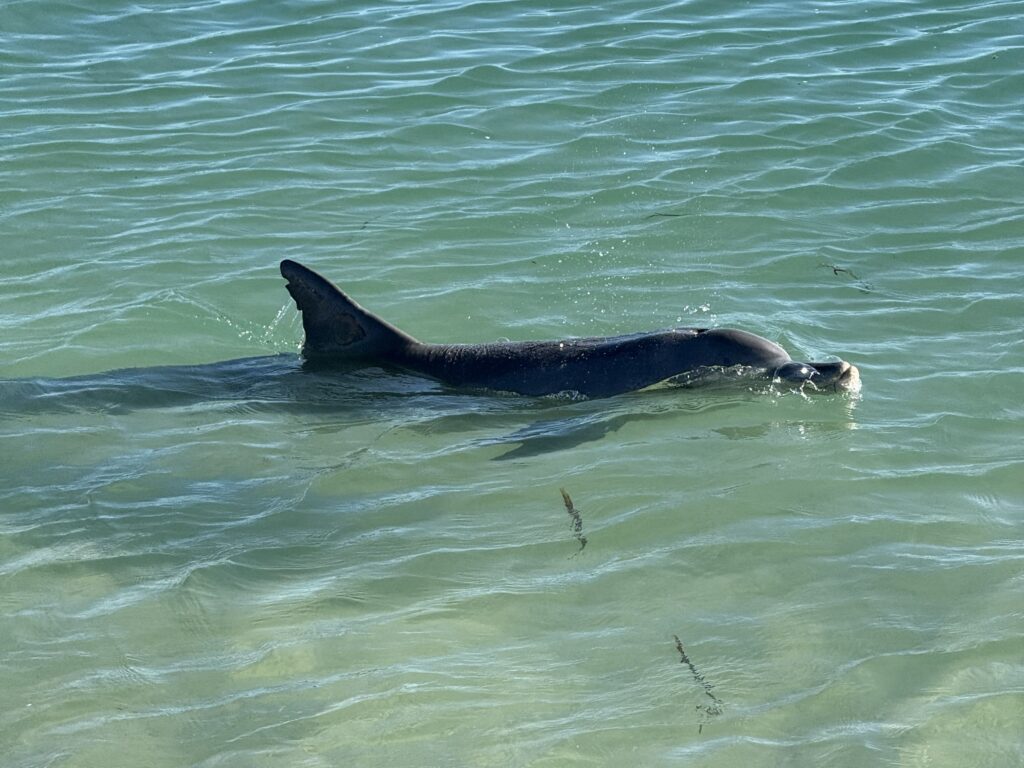
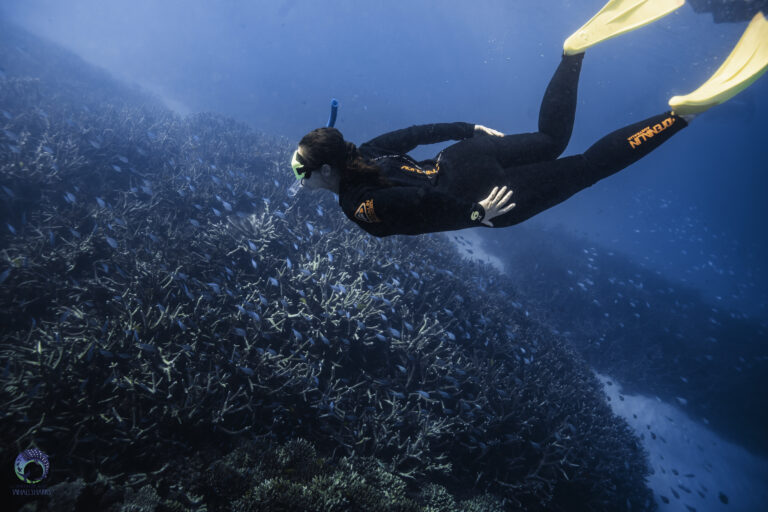
Monkey Mia also offers other activities like snorkeling or kayaking with turtles or hop aboard a boat cruise to see more dolphins, dugongs and manta rays. It was very windy and cold when we visited so opted out of the additional activities, but all agreed, had the weather been warmer that we would have stayed longer.
If you have extra time, spend a day exploring Francois Peron National Park or discover Steep Point, Australia’s most western point for Instagram fame. You will need a 4WD and national parks pass or join a 4WD day tour.
Ocean Park Aquarium
Ocean Park Aquarium is an award-winning ecofriendly aquarium located just outside of Denham. Spend a couple of hours exploring the underwater world and join a guided tour by marine scientists and get up close to the fish, turtles and sharks. Treat yourself to an ice cream or settle down to a meal at the Oceans Restaurant overlooking the bay. Travelling with your furry friends? Dogs are welcome at the aquarium!
Little Lagoon
Denham’s Little Lagoon is a magnificent stretch of calm water ideal for swimming, fishing and frolicking in the clear shallow pools. Small children will delight in the lovely calm waters making the lagoon a perfect day out for the whole family.
The stunning tidal creek, with its mangroves, red dirt and crystal clear turquoise water can be accessed via the 2WD friendly Lagoon Creek Road. The Creek is perfect for bird watching, stand-up paddle boarding, spotting marine life from the lookout huts or while you snorkel*.
*Caution: stone fish in the Lagoon Creek. It is recommended to wear shoes in the water.
You can drive to Little Lagoon or follow the 5km Nicholson Point walking trail from Denham across shrublands to Little Lagoon.
Visit Steep Point
Steep Point is the most westerly and north westerly point on mainland Australia. You will need a 4WD to get there or join a tour. There is a sign there so you can get that Inst photo!
Dirk Hartog Island
Dirk Hartog Island is an 80km long island renowned as the first recorded European landing in 1616 by Dirk Hartog. At 620km2 , Dirk Hartog is the largest island in Western Australia and the 14th largest in Australia. It offers rugged cliffs, white sandy beaches and diverse marine life. It is accessible by boat, plane or 4WD via a barge from Steep Point.
Adventure enthusiasts seeking the ultimate off-road experience can embark on a memorable journey to Dirk Hartog Island with their own 4WD vehicle, utilising the island barge for a seamless transportation direct from Steep Point to DHI. Renowned for its pristine landscapes and rich history, the island is the perfect destination for a family camping expedition.
If you don’t have a 4WD, join the Day at Dirk 4WD tour for a memorable day exploring the island, kayaking, snorkelling and swimming and tasting the local gin.
Francois Peron National Park
Francois Peron National Park is a 52,000 hectare, world heritage listed area, 4WD-only destination known for its stark, vibrant red cliffs, white sandy beaches and turquoise waters.
Cape Peron and Skip Jack Point provide fabulous views and walking trails. At Cape Peron, you can see where two ocean currents collide making it unsafe to swim.
Why Shark Bay Is Worth the Journey
Shark Bay is the kind of place that quietly gets under your skin. Wild, remote, and impossibly beautiful, it’s where unforgettable wildlife encounters meet vast landscapes and a sense of space that’s becoming harder to find. From watching dolphins glide through the shallows to standing at the edge of the continent at Steep Point, this World Heritage region proves that some of Western Australia’s most powerful experiences happen far from the crowds.
If Shark Bay has sparked your sense of adventure, save this guide for later and share it with your travel friends who love remote road trips and untamed coastlines. And if you’re not ready for the journey to end, keep heading north — because the Coral Coast only gets better. Ningaloo Reef is waiting with vibrant coral, turquoise lagoons, and some of the best snorkelling and marine encounters in Australia.
This is travel for those who go further, stay curious, and roam with no regrets.