Coral Coast WA Road Trip – the Ultimate 14 day Itinerary
Red dirt under your tyres, salt on your skin, and the kind of coastline that makes you pull over “just one more time.” A Coral Coast Western Australia road trip isn’t about ticking boxes — it’s about chasing the moments that make you feel wildly alive. Over 14 unforgettable days, this Perth to Exmouth return journey takes you deep into one of Australia’s most underrated adventure corridors, where turquoise water meets ancient landscapes and the next jaw-dropping stop is always closer than you think.
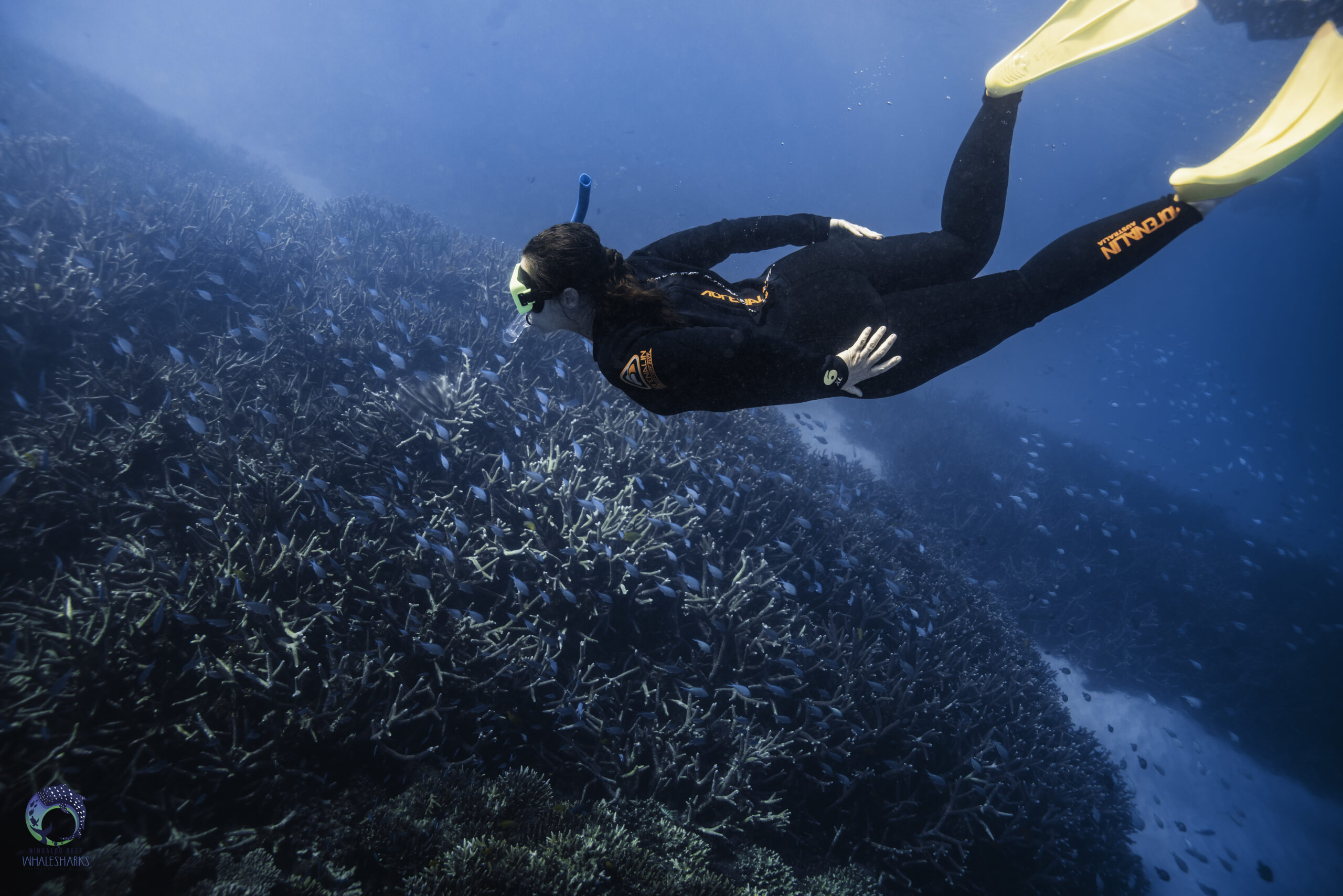
This ultimate 14-day Coral Coast road trip itinerary follows the coast north from Perth to Exmouth and back again, stopping at icons like the Pinnacles Desert, Cervantes and Jurien Bay, and the dramatic cliffs and river gorges of Kalbarri National Park. Along the way, you’ll sandboard towering dunes, swim with playful sea lions, and chase some of the world’s most extraordinary marine encounters — from whale sharks and humpback whales to manta rays on Ningaloo Reef.
But what makes this road trip truly special are the hidden gems between the highlights. Remote lookouts, quiet beaches, short hikes with ridiculous views, and small coastal towns that reward curiosity. Whether you’re snorkelling vibrant reefs, hiking above winding river gorges, or watching the sun melt into the Indian Ocean at the end of a long drive, this is a Western Australia adventure that proves the best trips are the ones where you roam with no regrets.
Some links in this post are affiliate links, which means I may earn a small commission if you choose to make a purchase. It helps support Roam with No Regrets at no extra cost to you — thank you for your support!
Perth to Exmouth 14-day Itinerary
Explore Perth to Exmouth on a 2-week road trip up the Western Australia Coast. If you are short on time, consider a 3-day long weekend discovering the Turquoise Coast or take a week exploring Perth to Kalbarri.
Whichever way you choose to explore, I recommend you self-drive. We explored in a 6-berth motorhome with the kids as it was school holidays and accommodation was difficult to find. If you are travelling as a couple, I recommend you go for a 4WD with roof top tent. It opens up a lot more opportunities to explore as you drive north of Kalbarri.
Once you leave Perth and are heading north, I dare you to turn your GPS off. There is only one road, and all the towns are signposted. You can’t get lost.
Best Time to Visit the Coral Coast
The best time to travel from Perth to Exmouth is during Western Australia’s dry season, from April to October, when days are warm, skies are clear, and road conditions are at their best. This period is ideal for a Coral Coast road trip, with comfortable driving temperatures and far less humidity than the summer months. It’s also when national parks, coastal towns, and tour operators are fully open and operating.
April to June is a sweet spot for many travellers. Autumn brings mild weather, fewer crowds, and excellent conditions for hiking in places like Kalbarri National Park and Cape Range National Park. Water temperatures are still warm enough for snorkelling, and it’s one of the best times for marine experiences including whale sharks along the Coral Coast, including reef encounters at Ningaloo.
July to September is peak season and the most popular time to drive from Perth to Exmouth. Winter days are sunny and pleasantly warm, making long driving days more comfortable, and this is prime time for wildlife experiences. It’s the best period for whale watching, and depending on the month, you may also encounter manta rays near Ningaloo Reef. Because this is the busiest time of year, accommodation and campsites should be booked well in advance.
Travelling during the summer months (November to March) is possible but requires more planning. Temperatures regularly exceed 40°C, especially inland, and the region is prone to cyclones, which can lead to road closures and limited access to national parks. While summer can be quieter and cheaper, it’s generally not recommended for a first-time Perth to Exmouth road trip unless you’re experienced with remote travel in extreme heat. The heat is so oppressive that many tour operators close down and even the locals leave for somewhere cooler.
Day 1 – Lancelin Sand Dunes and the Pinnacles
Lancelin
Lancelin in located 125km or 1 hour 50 minute drive north of Perth up the Indian Ocean Drive. It’s a sleepy seaside fishing town with a permanent population of 600 residents, however on the weekends and school holidays, the town becomes a busy holiday village with a great holiday vibe.
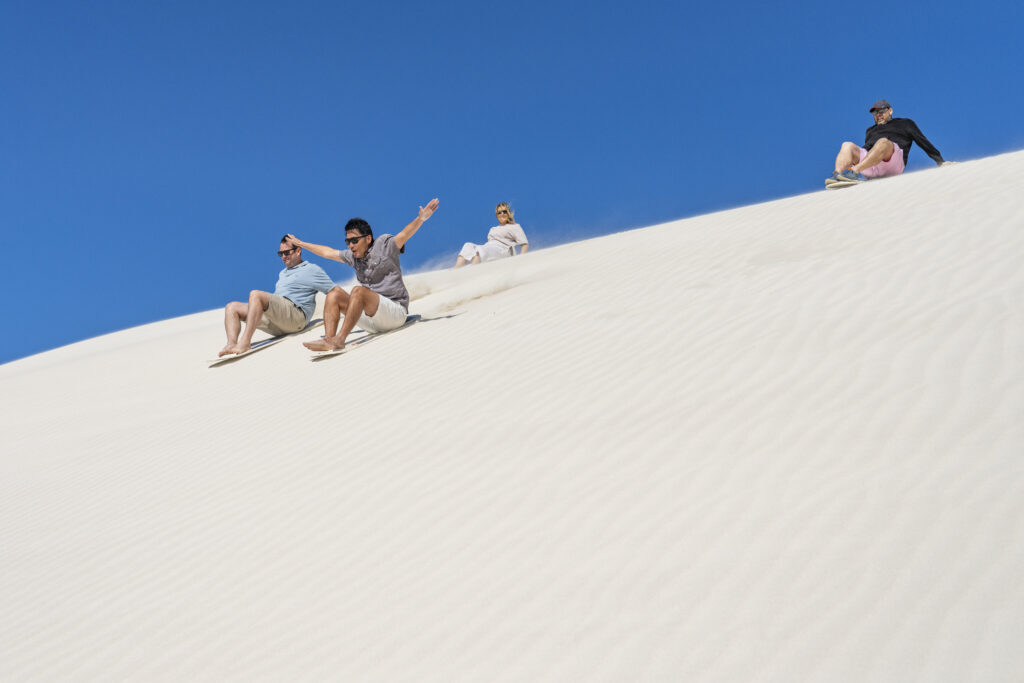
The best thing about Lancelin, is the powdery white sand dunes are right in town. You can explore the sand dunes in your 4WD or motorcross bike, hire a Quad Bike or join a Quad Bike tour or hire a sand board and surf down the dunes.
It’s best to hit the dunes early in the morning before the wind picks up. Believe me, wind and sand do NOT mix and unless you want a full body exfoliation, very unpleasant. The sand dunes can also get very hot under the blazing sun and burn your feet. Make sure you get off the dunes before 11am in summer. And finally, the sun bounces off the white sand, which becomes very glary and harsh on the eyes. Sunglasses are recommended and will help keep the sand out of your eyes too.
Sandboarding the Lancelin Sand Dunes
Step 1: Hire a sand board and make sure you know how to wax your board. Boards can be hired from
- Lancelin Surf located in the Lancelin Shops. It’s open from 9am – 4pm Monday to Saturday and 10am – 3pm Sundays.
- Lancelin Gull Roadhouse a.k.a. the Petrol Station. Who would have thought the petrol station would have sand boards for hire….
- Have a Chat General Store also does board hire.
Step 2: Drive to the Sandboarding Carpark off Bootoo Street. This is suitable for 2WD cars. It’s an easy 300m walk to the sand dunes from the carpark. Please note that there are no facilities at the sand dunes so make sure you have your wax, drinking water, hat and sunglasses.
Step 3: Start climbing the dunes with your board, feel the burn – best cardio workout ever. The steeper the dune, the faster you will go. Start off by sitting on your board, as you become more confident, you can progress to standing if your board is suitable. Don’t worry about falling, everyone does. You’ll just get sandy. Real sandy. Just shake it off and climb again. Kids will keep going and going and going. They love it!
The Pinnacles
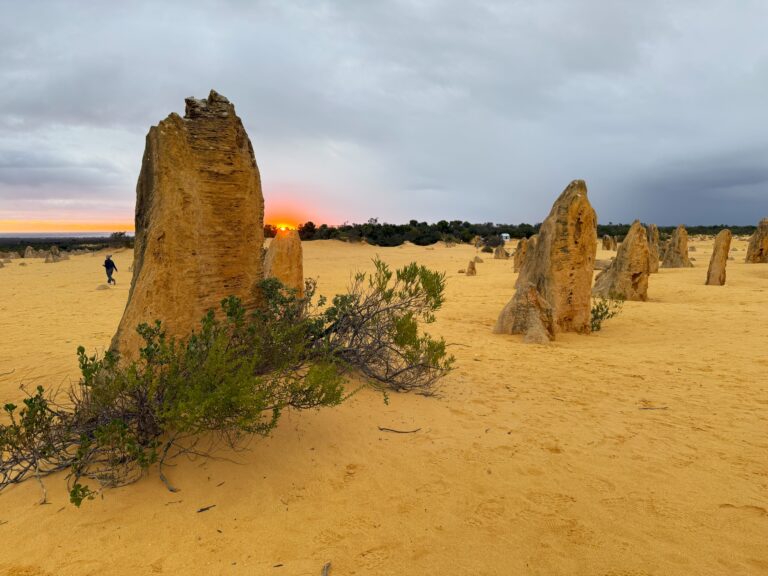
The Pinnacles are located 30 minutes south of Jurien Bay down the Indian Ocean Drive. The amazing limestone structures were formed between 25,000 – 30,000 years ago when the sea receded and left deposits of shells. Over time, coastal winds have removed the surrounding sand, leaving exposed pillars. Some stand as high as 3.5m.
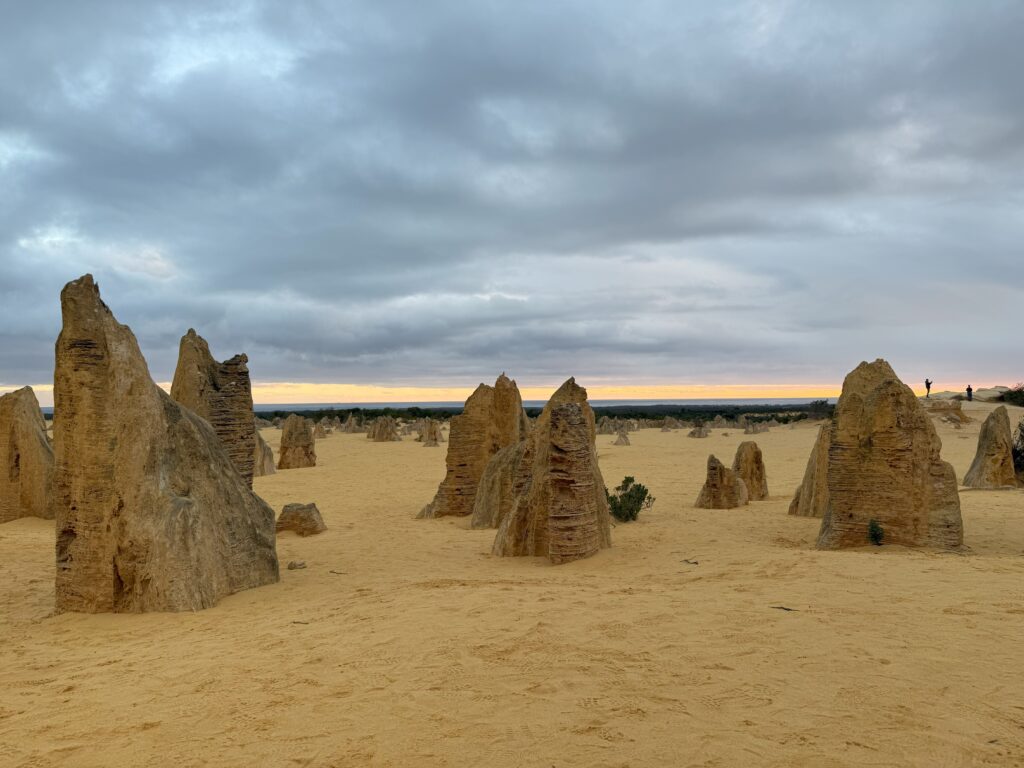
There is a 4.5km self-drive trail suitable for 2WD vehicles with parking bays allowing you to get out and stroll through the limestone pillars. Note that the track gets very narrow in spots and is not suitable for motorhomes.
There is parking at the main entry, education centre and toilets. From there, it is possible to walk through the limestone spires.
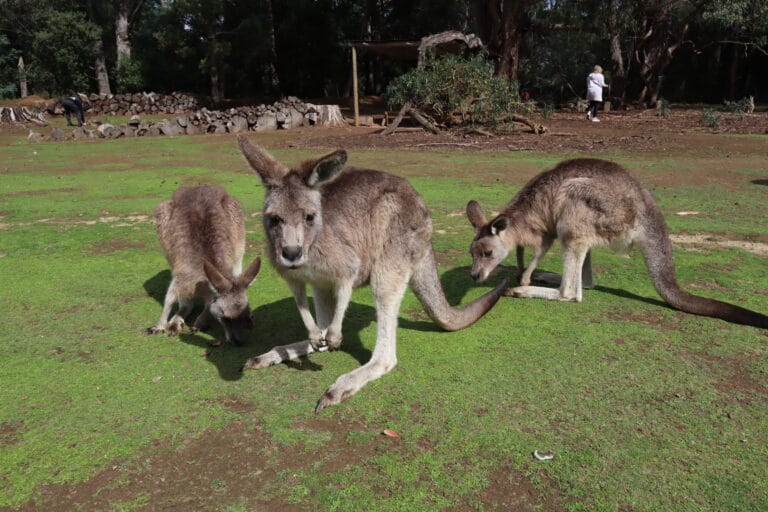
We met up with Lumineer Adventure Tours for a journey through the Pinnacles, sunset dinner and star gazing. The sky was so clear (when the clouds cleared) and we could see the Emu in the Sky lying down in the Milky Way. We also saw constellations through the telescope that you can’t see with the naked eye. So beautiful. We even found emu tracks and my daughters came face to face with a couple of Western Grey Kangaroos. A truly unforgettable way to experience the Pinnacles.
Read more about our Pinnacles Adventure
Mysteries of the Pinnacles: A Desert Night Adventure
A National Parks pass is required to enter the park or you can obtain a 1-day pass for $17 at the gate. As you will be visiting several national parks, purchase a 14-day holiday pass online from $30 to save money.
If you are short on time, Day 1 can be done as a long day trip from Perth.
Day 2 – Lobsters and Ancient Creatures
Day 2 is based around Cervantes, discovering all things lobster and the ancient creatures called Thrombolites at Lake Thetis.
Lobster Shack
Awarded WA’s best lobster restaurant 2025, The Lobster Shack is not just a seafood restaurant, it’s a pot to plate experience.
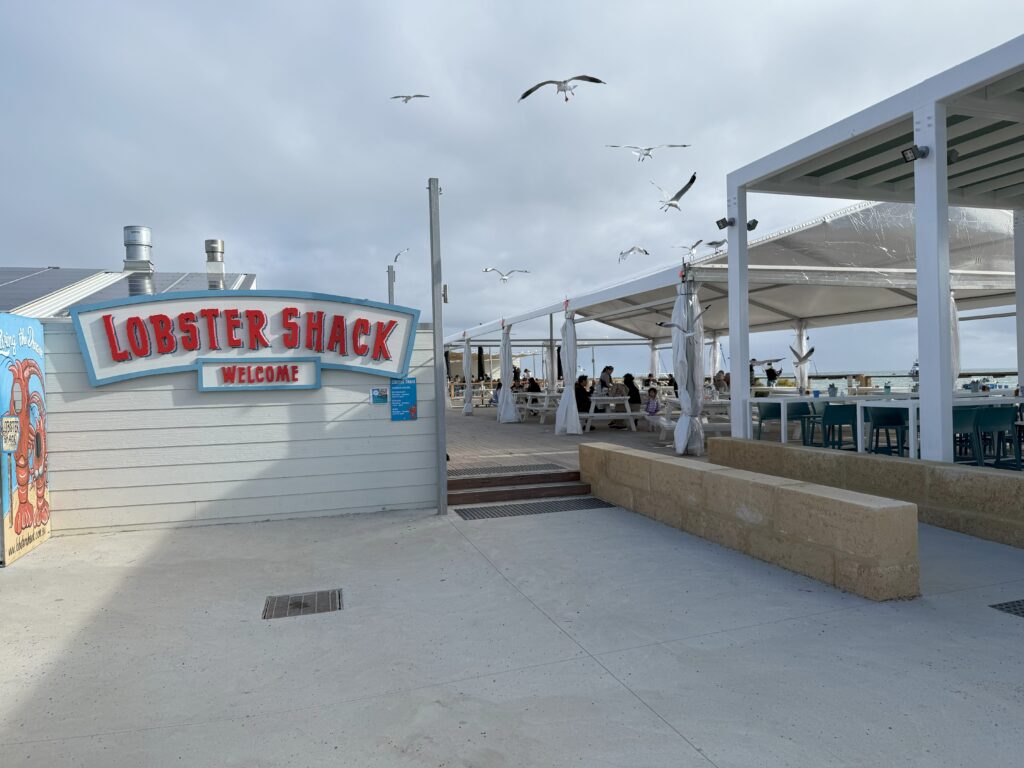
Starting at 11am, join the crew as they cruise through the gorgeous Marine Park and into the deep blue Indian Ocean and watch as they pull the lobster pots. Keep your eyes peeled, as the marine park is the playground of the endangered Australian Sea Lion. The tour takes approximately 1hour and booking are essential. Your tour price includes a lobster lunch. Seasickness bands can be purchased at the Shack if you are concerned about getting seasick.
You don’t need to go on a boat tour to enjoy the stunning views of the alfresco balcony as you sit back, relax and enjoy your Western Rock Lobster with a glass of wine or the local Lobster Shack beer.

If you want to keep your feet on terra firma, you can still get a firsthand look into the regions multi-million dollar lobster industry by taking a 30min tour of the LIVE lobster processing plant at Lobster Shack.
Starting with a video presentation on the lobster boats, find out firsthand how the elusive Western Rock Lobster is captured in the wild and transported into shore. Then trace the lobsters journey from sorting process to the Live holding lanes before they are then sent into our Live pack out room where they are prepared for their journey to destinations over the world.
Thrombolites at Lake Thetis
The rocks in the hyper-saline waters (double the salinity of the ocean) of Lake Thetis are not quite what they seem. They are actually living things. Lake Thetis is home to Stromatolites, the oldest living lifeforms on our planet believed to originate 3.5 billion years ago. But Lake Thetis is also home of Thrombolites, a close relative of the Stromatolites and believed to be 3000 years old – just a baby. The best time to see them is in summer when it is drier and they become exposed.
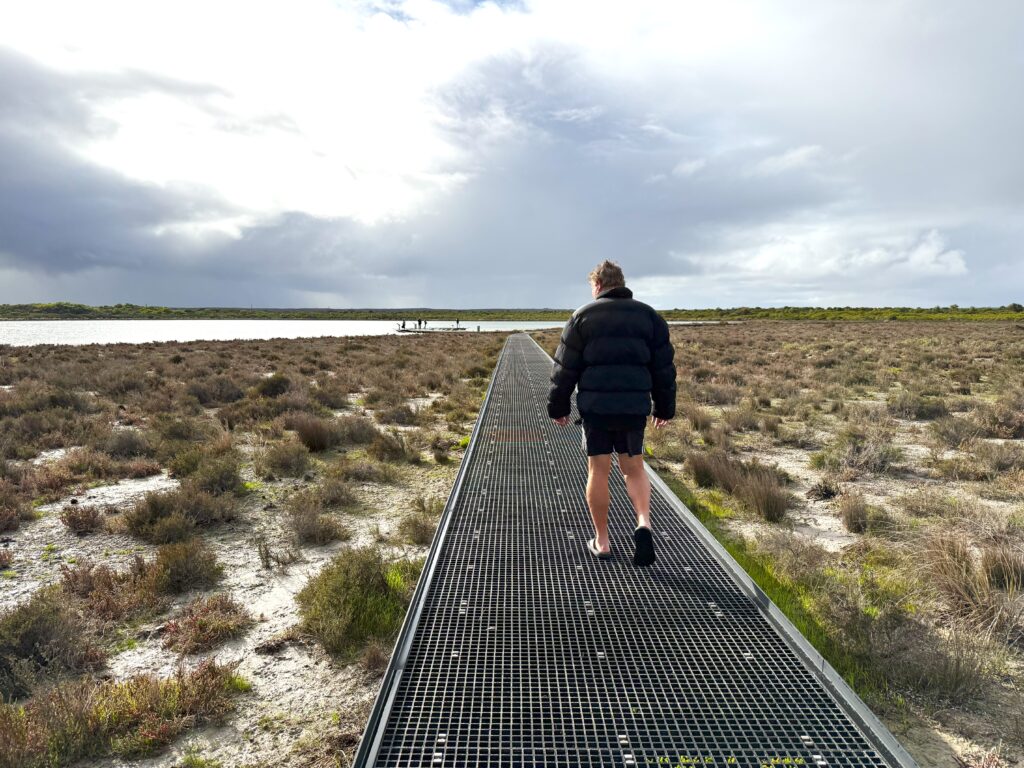
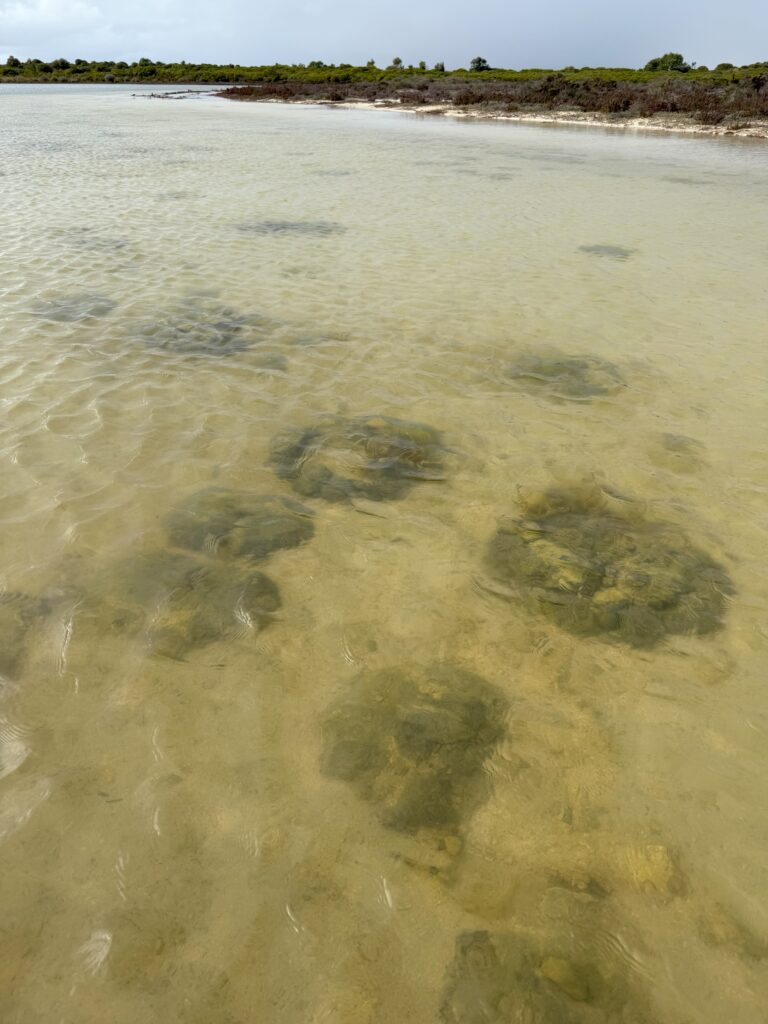
You can discover these living fossils by taking a stroll along a 300m elevated accessible walkway at Lake Thetis, one of only five locations in Western Australia where thrombolites live. There is a 1.5km trail around the lake where you can learn about the local flora, fauna, fossils, geology and local indigenous culture.
Finish your day with the sand between your toes, watching the sun slide into the Indian Ocean, the sky changing from vibrant blue to shades of orange and purples at Thirsty Point. As the sun fades and the sky turns dark, lie back and look up at the stars. The sky is so dark here the Milky Way is spectacular. You might also see a shooting star.
If you are staying in Jurien Bay, take a stroll along the jetty when it is dark and try your hand at catching squid. You will need a fishing rod and a squid jig. The squidding must be good, as the jetty is stained with black squid ink.
Want to explore Cervantes a little more, seek accommodation options and where to eat then follow the link below:-
Your Complete Guide to Cervantes, Western Australia – Roam with No Regrets
Day 3 – Sea lions, coastal cliff walks and beaches
Day 3 starts in Jurien Bay, swimming with sea lions, then follows the Indian Ocean Drive north to Green Head and Dongara/Fort Denison before returning to Perth.
For an in depth look at Jurien Bay, follow the link to
Ultimate Guide to Jurien Bay – Roam with No Regrets
Swim with Sea Lions

Credit: Tourism Western Australia
Swimming with Sea Lions is an unforgettable experience I was keen to experience again and share with my family. We chose Turquoise Safaris to take us to Essex Rocks and Sandland Islands to meet these playful creatures. Before we left the marina, we were fitted with short wetsuits, snorkels and fins then after a safety briefing we were on our way.
We arrived at the island and saw a small colony of endangered Australian sea lions sunbathing on the beach. We jumped into the water and snorkeled over to the reef, hoping they would come for a swim with us. The water was so clear, we could see for over 30m. Alas, they thought the water was too cold.
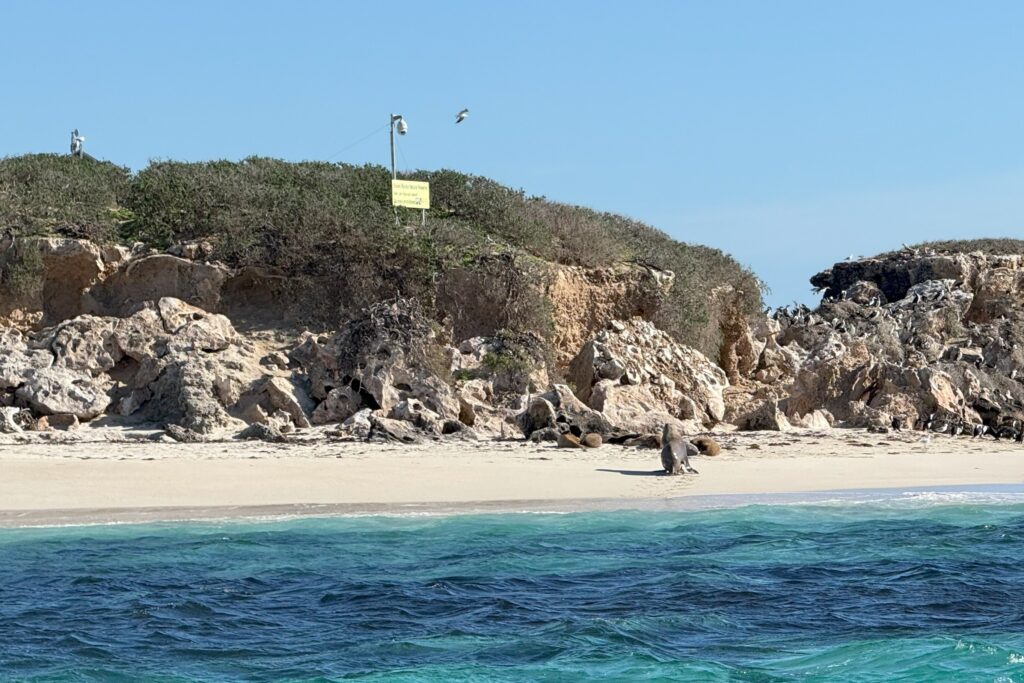
We did get to see another male arrive on the beach and there was a short scuffle between the two males before the younger male ran away.
It was disappointing that they didn’t want to play with us but there is no guarantee as they are wild and free. We still got to see them. Maybe next time……
Green Head
Travel north 20mins from Jurien Bay and you will find gorgeous Green Head, a water lover’s paradise being popular for swimming, snorkeling, surfing, water skiing, wind and kite surfing and of course fishing.
Dynamite Bay is a stunning circular-shaped beach that consistently rates in the top 20 beaches in Australia. It is sheltered from strong coastal winds by its rocky surrounds. Take a walk up to the headland lookout overlooking the bay or scan the horizon for passing whales from April to October. Continue to explore the Three Bays Walkway which connects South, Dynamite and Anchorage Bays.
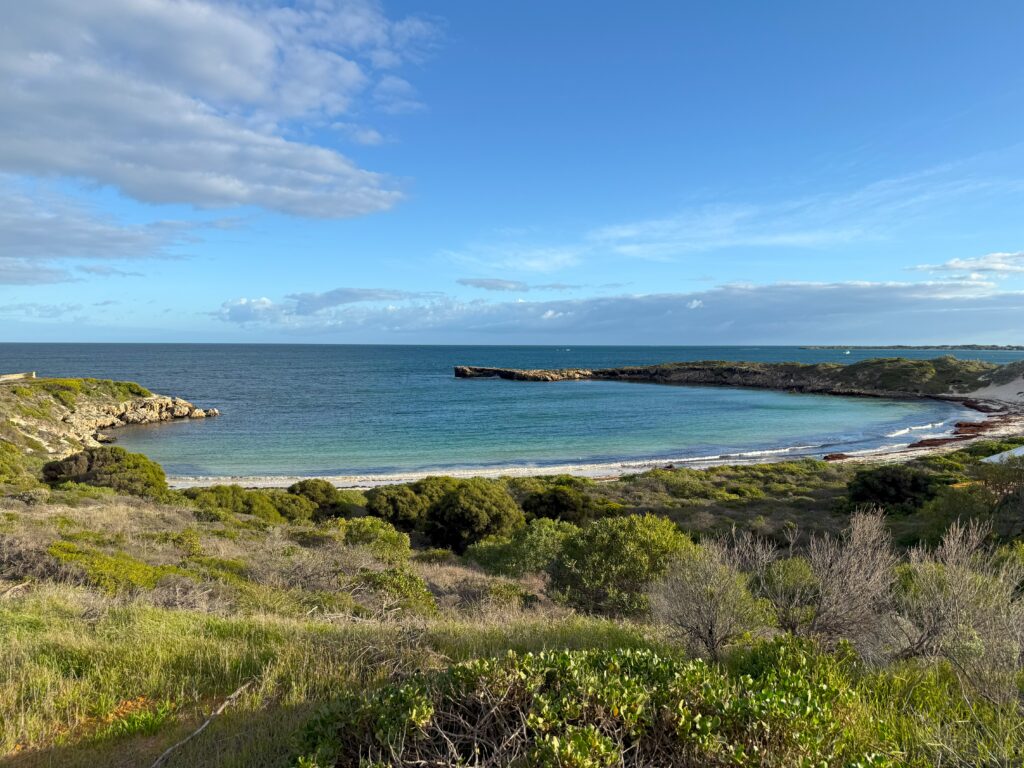
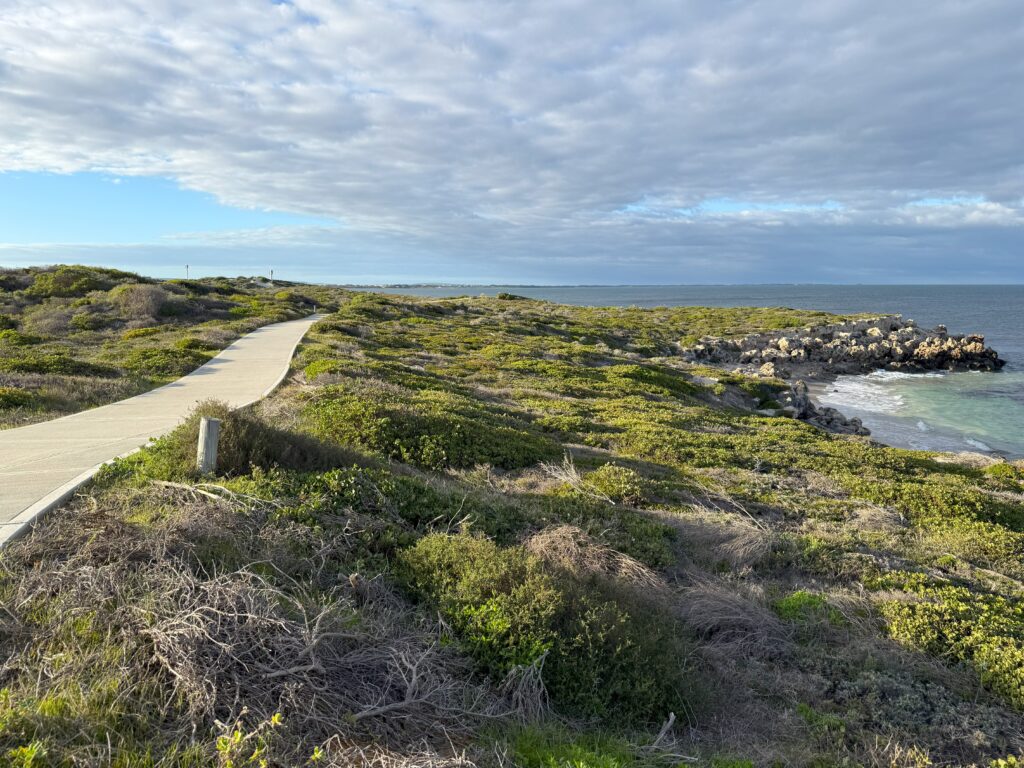
This tiny town is worth a stop for a picnic or if you have more time, set up camp for a couple of days of coastal relaxation.
Dongara
Follow the Indian Ocean Drive north for an hour and you will reach Dongara/Port Denison is the most northerly town on the Turquoise Coast.
Dongara and Port Denison, are located on the Irwin River and marketed as the Rock Lobster capital of Australia. They even have the Big Rock Lobster at the main entrance to town.
Our time in Dongara/Port Denison was brief but we did venture up to The Fishermen’s Memorial Lookout and Obelisk which provides spectacular views of the Port Denison Marina and beyond. It was built in remembrance of all fishermen’s lives lost at sea.
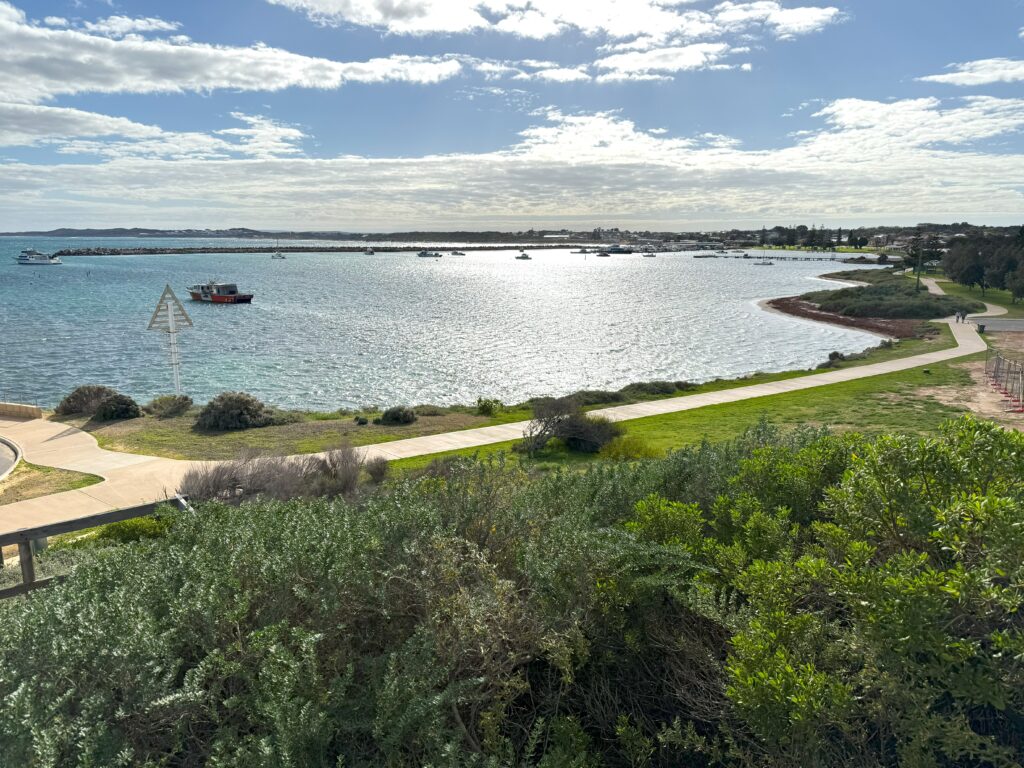
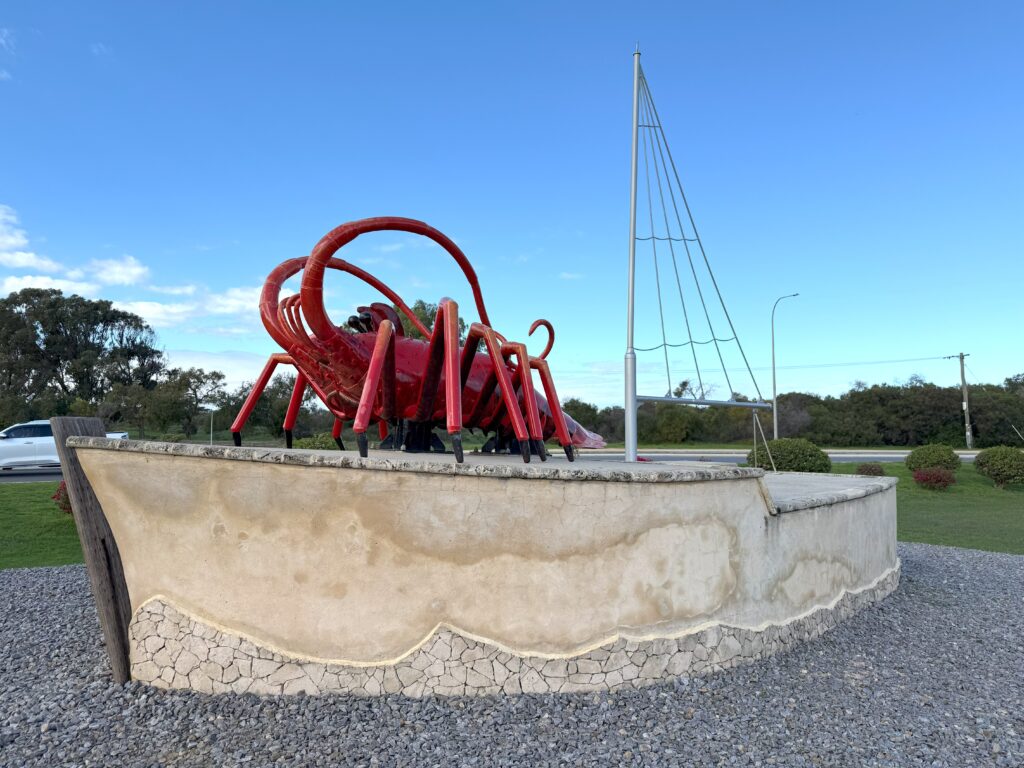
Whilst in Dongara, have a fish and chip (or lobster) picnic before continuing on to Greenough and the leaning trees!
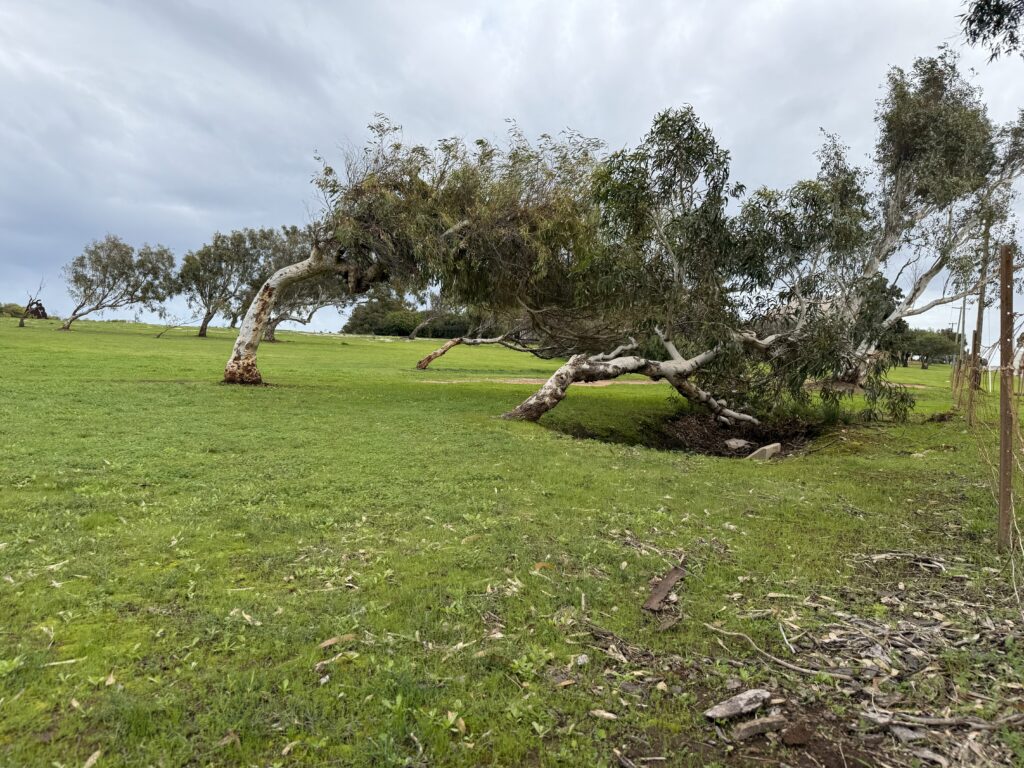
You’ll spend the next two nights in Geraldton.
Day 4 – Geraldton
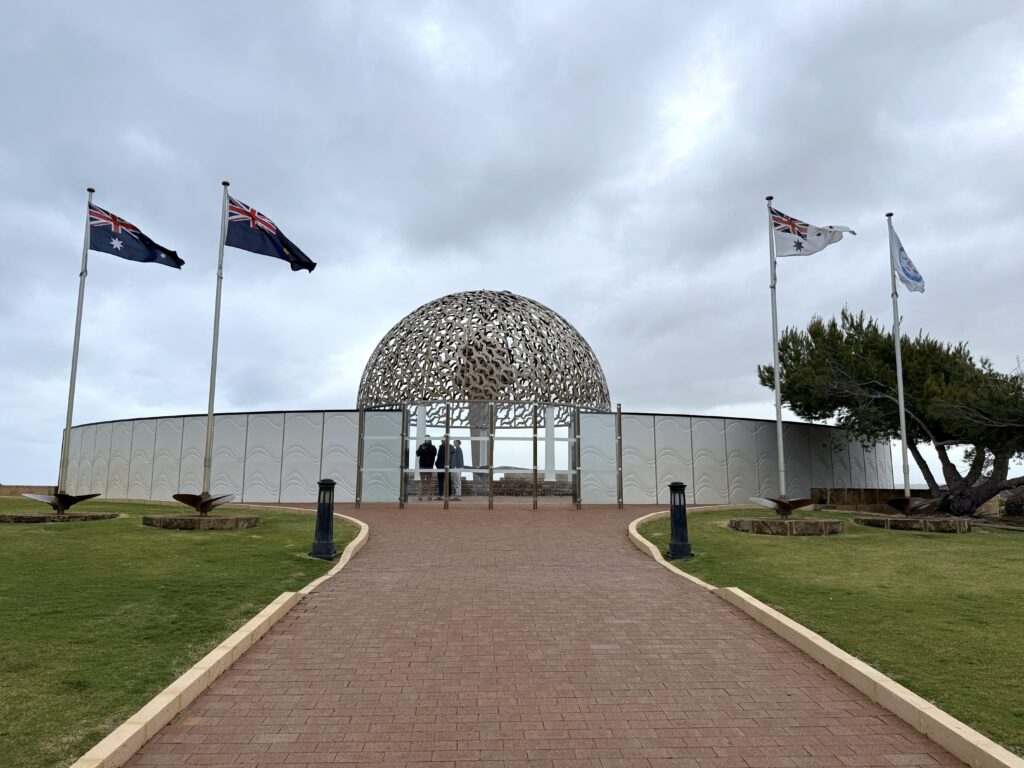
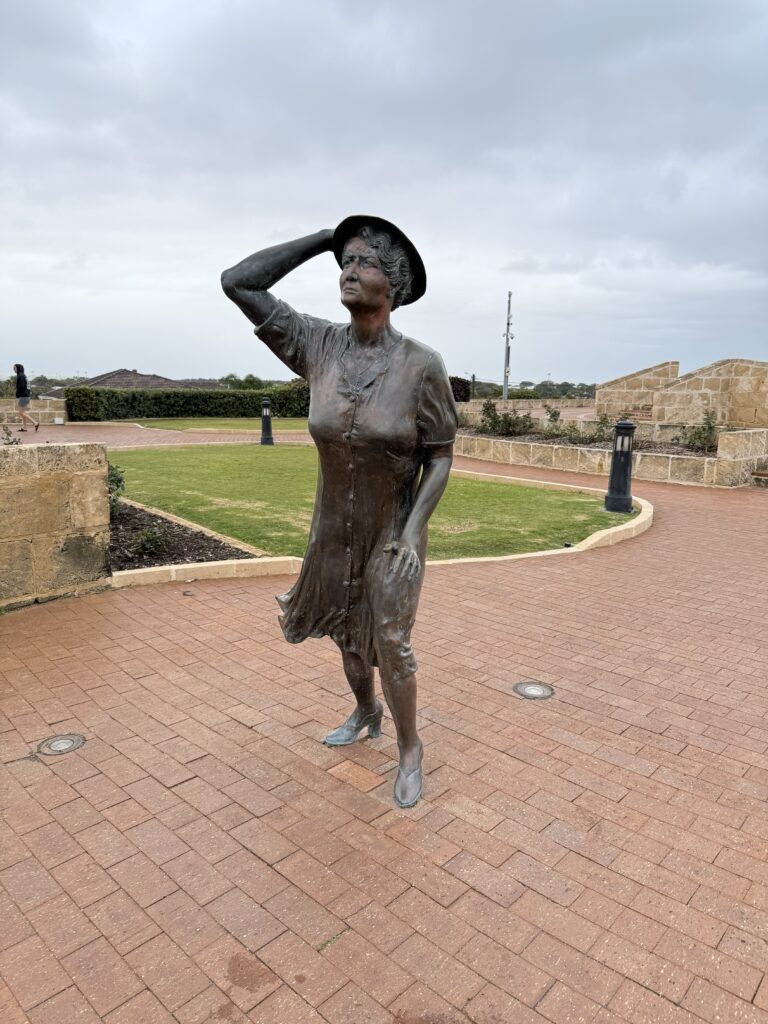
The best way to explore Geraldton is to follow the Art Trail. Following the Geraldton Public Art Trail Map you will discover all the very cool street art, the Horizon Ball, St Francois Xavier Cathedral, HMAS Sydney II Memorial with sweeping views of Geraldton and the harbour. Along the way, drop into Chimere Pearls and perhaps buy some gorgeous Albrolhos Islands Pearls.


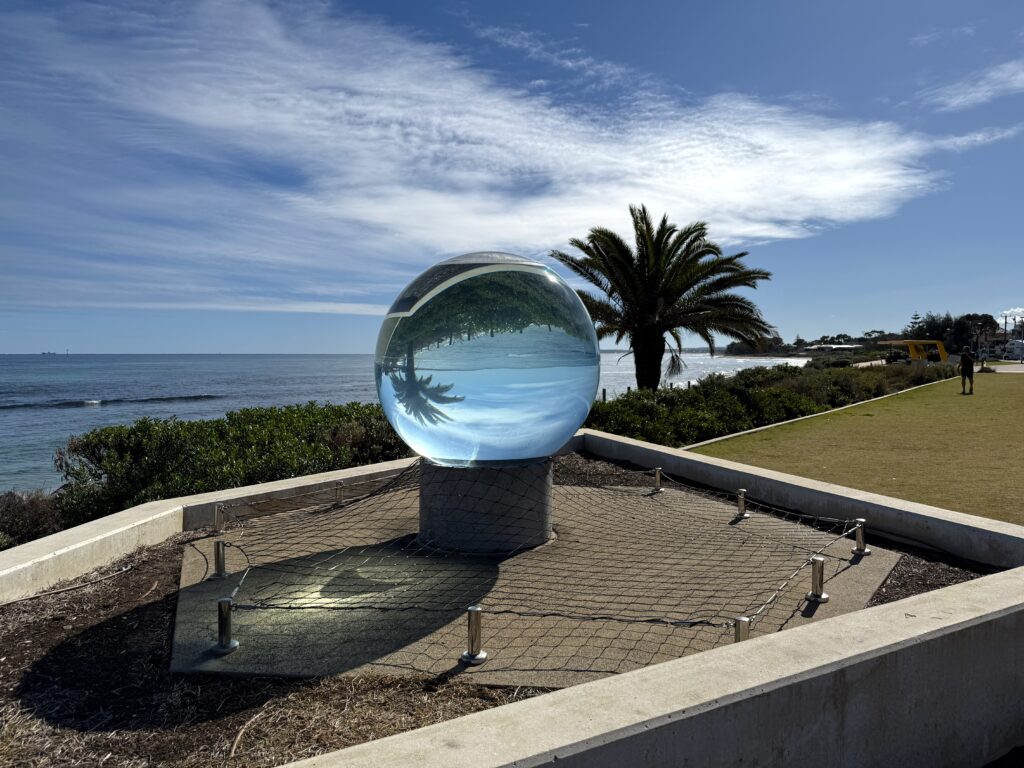
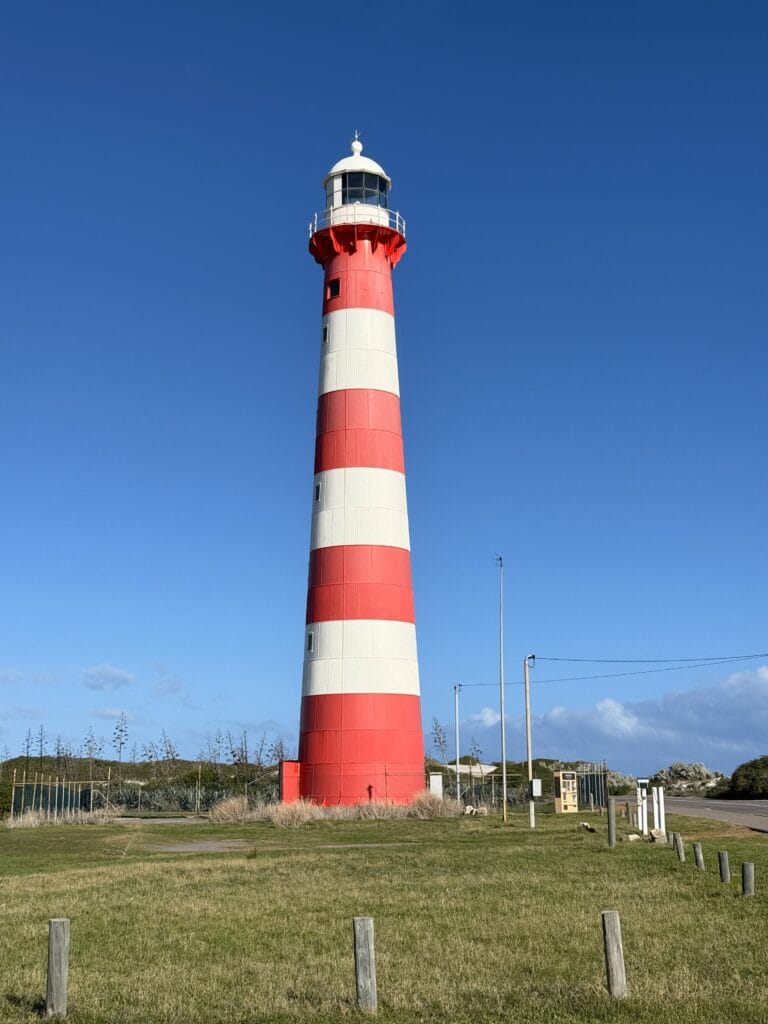
Make sure you check out the striking Point Moore Lighthouse. Can you find the Osprey Nest and the Osprey?
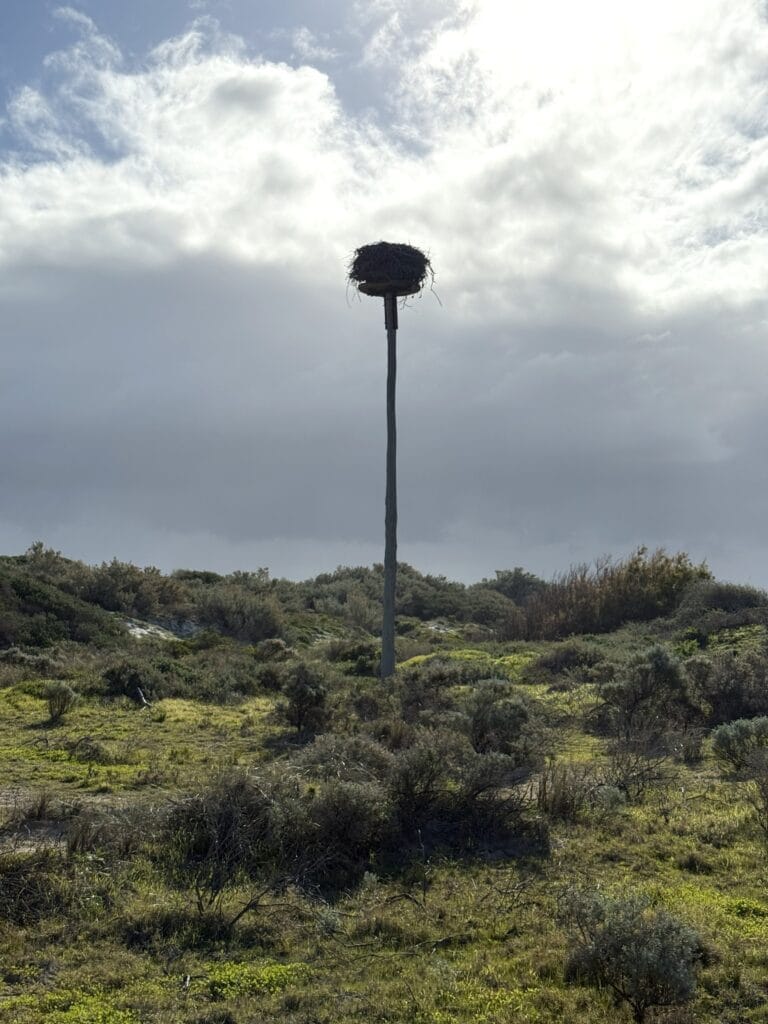
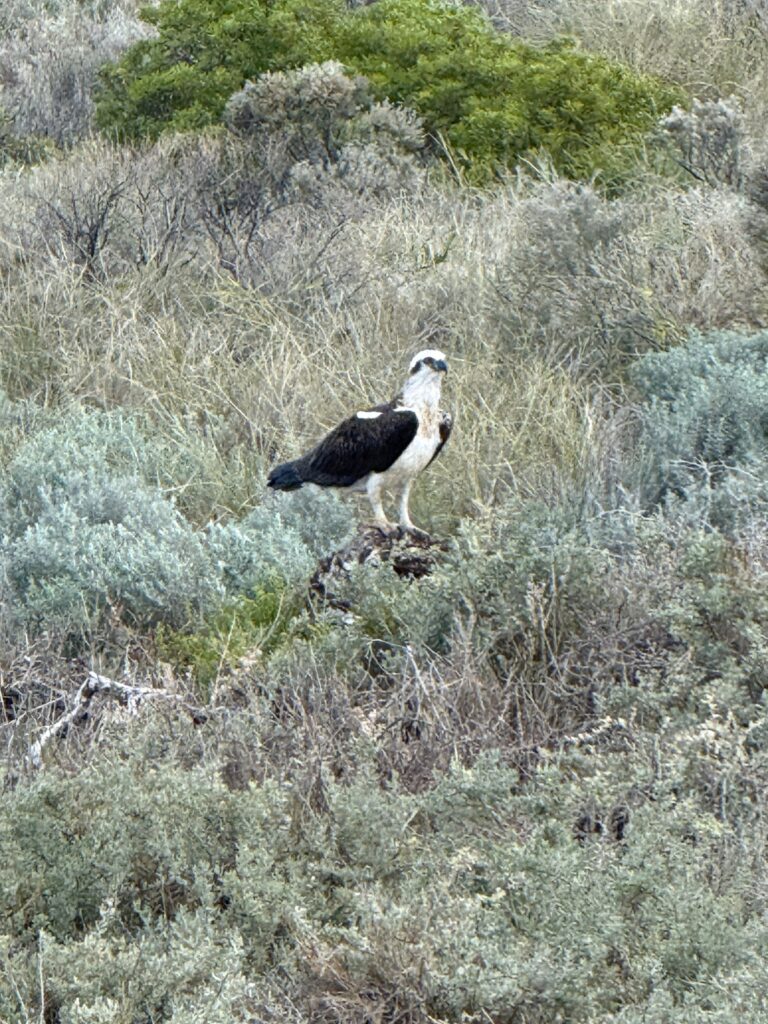
Before leaving Geraldton, stock up with food and water for the next couple of days. There is only a small supermarket in Denham. Variety is limited and prices high.
Day 5 – Shark Bay
Let’s head north to a region called Shark Bay, and a little town called Denham, a 4 1/2hour (410km) drive north of Geraldton. Shark Bay is a 2.2 million-hectare UNESCO World Heritage area renowned for its biodiversity, including dugongs and dolphins at Monkey Mia, ancient living fossils at Hamelin Pool and a seriously cool beach made entirely of tiny white shells. If you have a 4WD, you can explore Francois Peron National Park and visit Steep Point, Australia’s most western and north-western point.
If you are planning to travel north from Exmouth, journey through Kalbarri (Days 13 and 14 in reverse). We will discover this area on our return trip to break up the long drive back to Perth.
Hamelin Pools
On the way discover ancient living fossils of Stromatolites at Hamelin Pool. Stromatolites date back 3.5 billion years and represent the earliest life forms on Earth. They live in water twice the salinity of sea water. The boardwalk was seriously damaged by Cyclone Seroja in 2021 and as of 2025, had still not been repaired. Best viewing is at low tide. There is also a small cafe and souvenir shop where you can grab a drink and stretch your legs.
Swim at Shell Beach
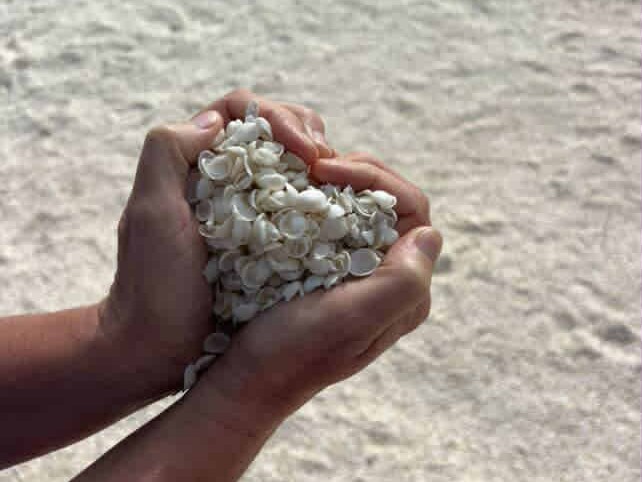
Continue your journey to Shell Beach, a beach made entirely of billions of tiny white Fragum Cockle shells reaching depths of 10m! The water is crystal clear and perfect for a swim. The water here is saltier than the ocean, so you’ll float higher than normal.
Walk the Stunning Clifftop Boardwalk at Eagle Bluff
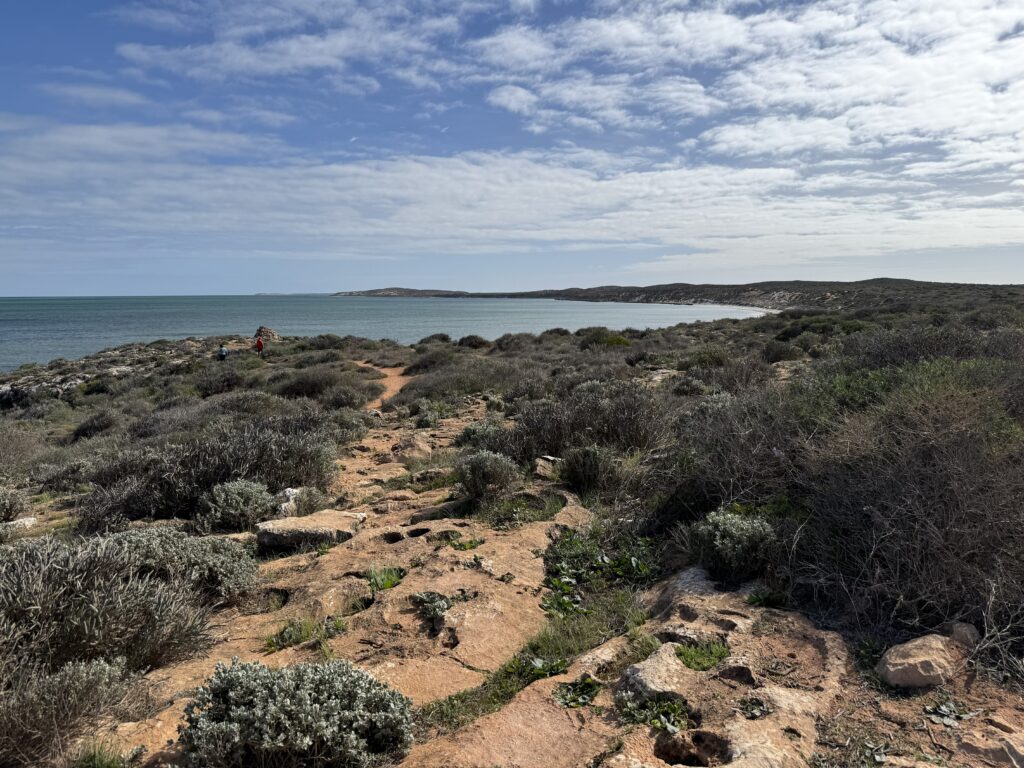
Further up the road, stop at Eagle Bluff. The views of the red cliffs contrasting with the vivid blue water is spectacular from the cliff top boardwalk. You may even see migrating whales or if you are very lucky, a dugong.
Denham
Denham will be your home for the next two nights. Make sure to book your accommodation early as there is no free camping in Shark Bay and you will be fined and moved on if you try.
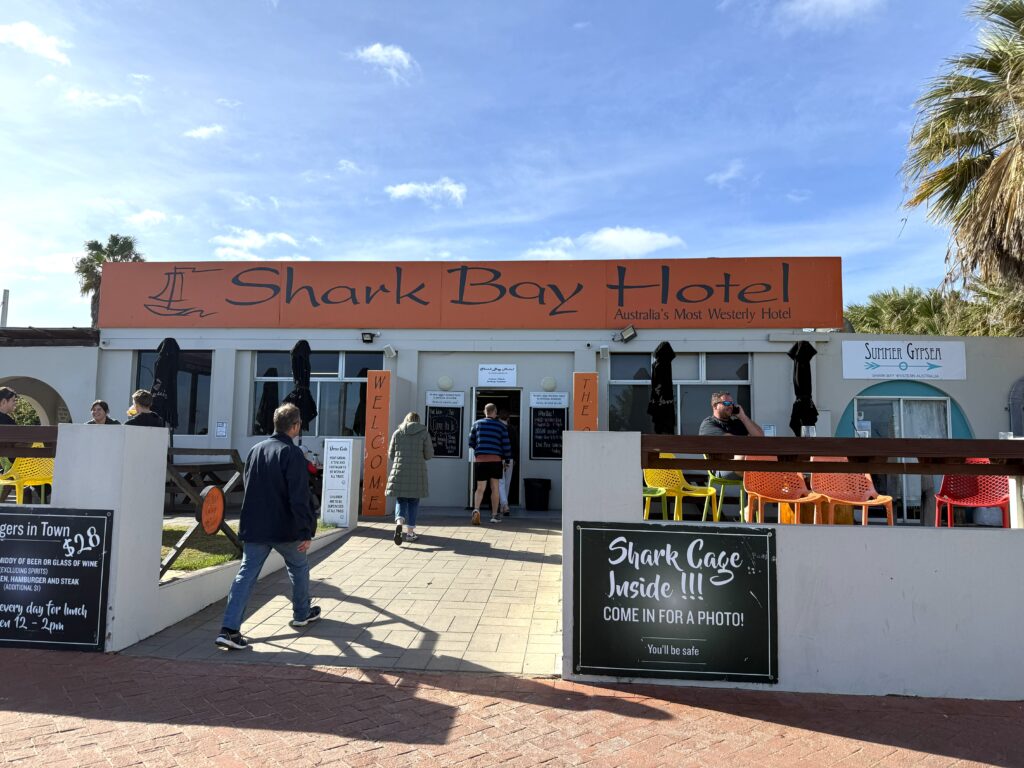
Spend the afternoon settling into your accommodation, taking a stroll along the foreshore, watch the sunset over the water and enjoy a beer and a burger at Australia’s most westerly hotel, the friendly Shark Bay Hotel.
Day 6 – Meet the Dolphins at Monkey Mia
Monkey Mia is a 15-minute drive (25km) from Denham. There are entry fees to enter the Monkey Mia Conservation Park that goes to supporting conservation efforts. Fees are $15/adult, $10/concession and $5/child. Children under 5 are free. The facilities are quite commercialised, with souvenir shops, restaurant and coffee shop with inflated prices. That being said, it is very well designed.
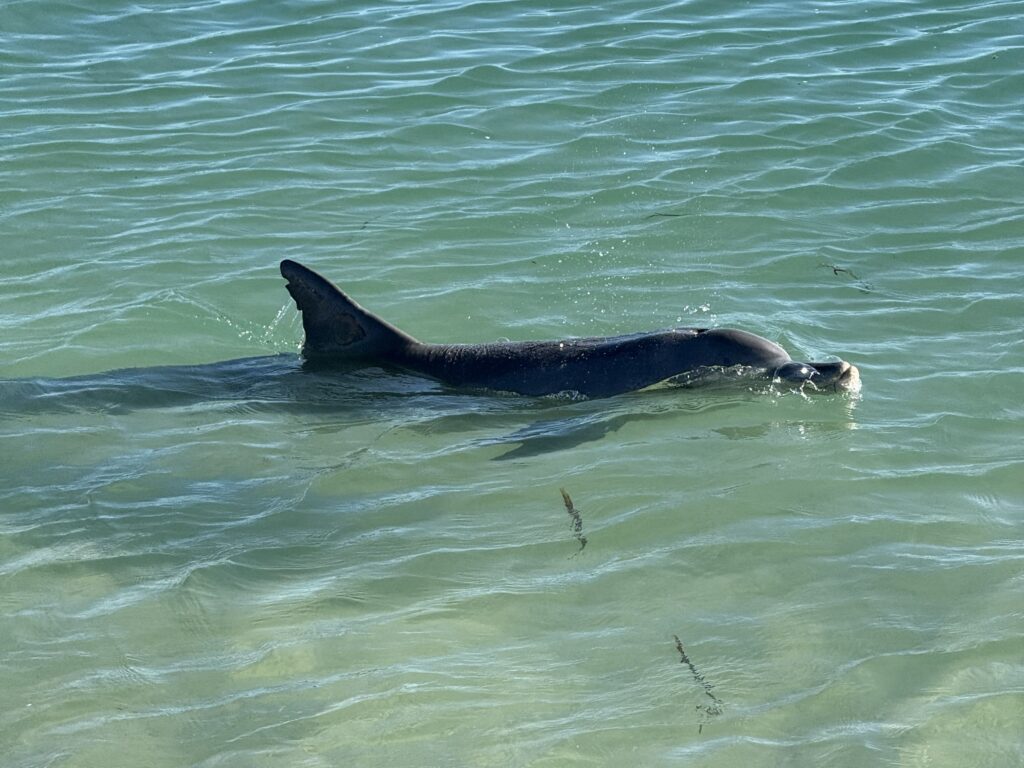
The wild dolphins come to the beach in the crystal-clear water between 7.45am and noon to get their free breakfast. They like an early breakfast so come early for a reliable sighting. It’s really cool to see how fast they can swim and turn very quickly. Rangers provide detailed information about the individual dolphins that visit, and how they interact with others in the wild.
Monkey Mia also offers other activities like snorkeling or kayaking with turtles or hop aboard a boat cruise to see more dolphins, dugongs and manta rays. It was very windy and cold when we visited so opted out of the additional activities, but all agreed, had the weather been warmer that we would have stayed longer.
If you have extra time, spend a day exploring Francois Peron National Park or discover Steep Point, Australia’s most western point for Instagram fame. You will need a 4WD and national parks pass or join a 4WD day tour.
Day 7 – Carnarvon – The Food Bowl of the West
Carnarvon is located on the banks of the Gascoyne River and produces 80% of Western Australia’s fruit and vegetables and is especially famous for its bananas and winter produce. Explore the Fruit Loop and stock up on fresh produce from roadside stalls. Stock up here with food and drinking water -especially if you plan to stay in Coral Bay.
Visit the one-mile jetty which is right next to the Heritage Precinct and Railway Museum, check out the Carnarvon Space and Technology Museum. Bet you didn’t know that this observatory was a key player in the Apollo 11 Moon landing in 1969.
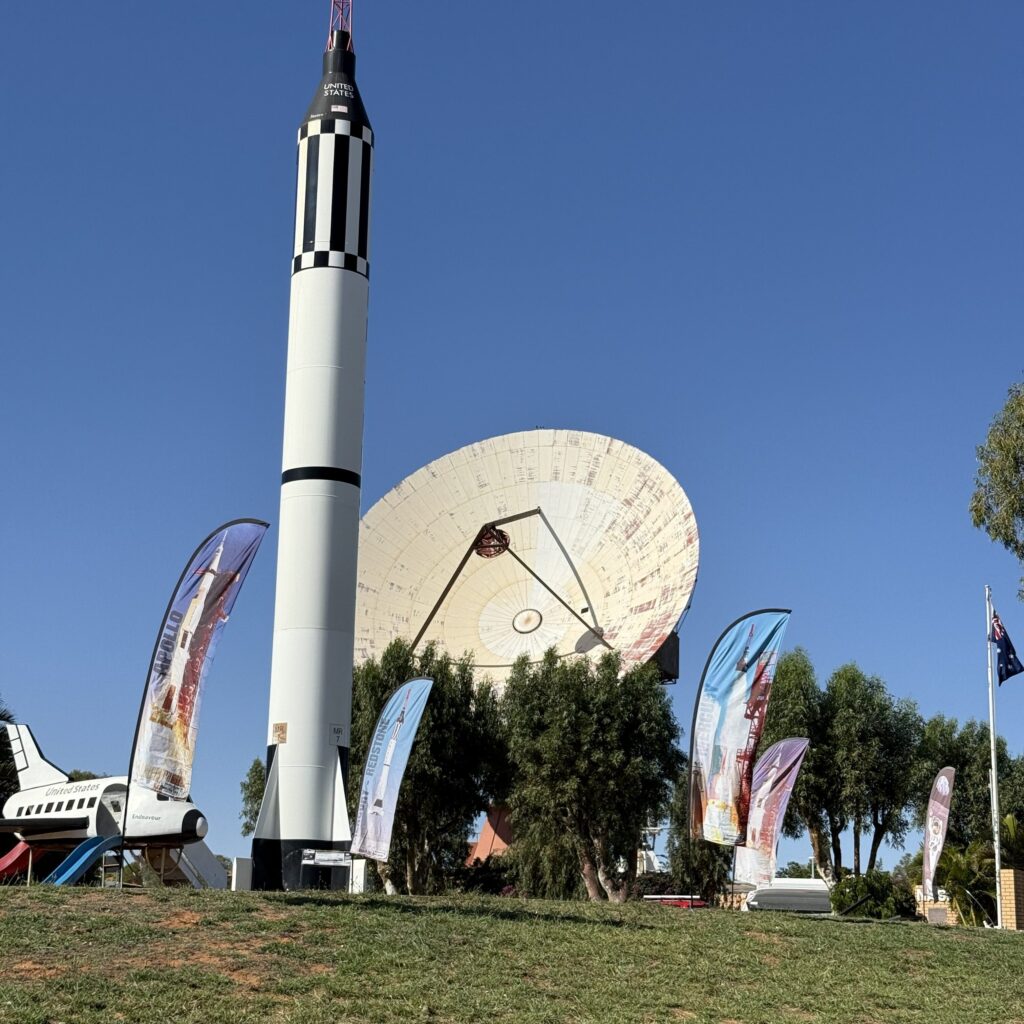
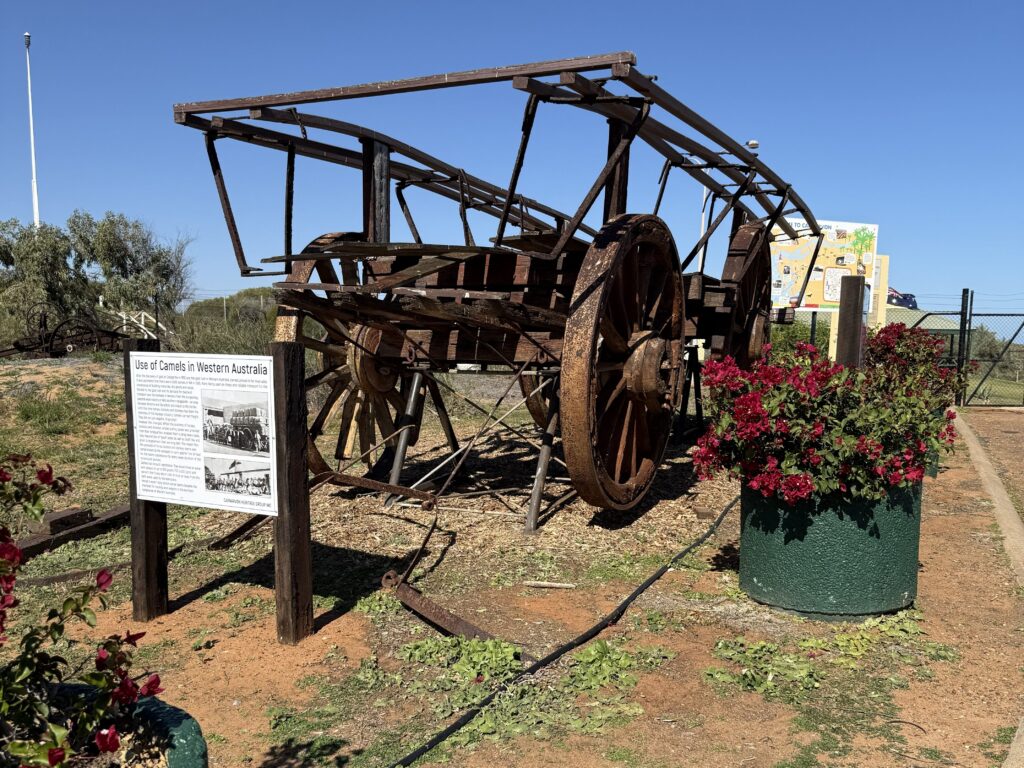
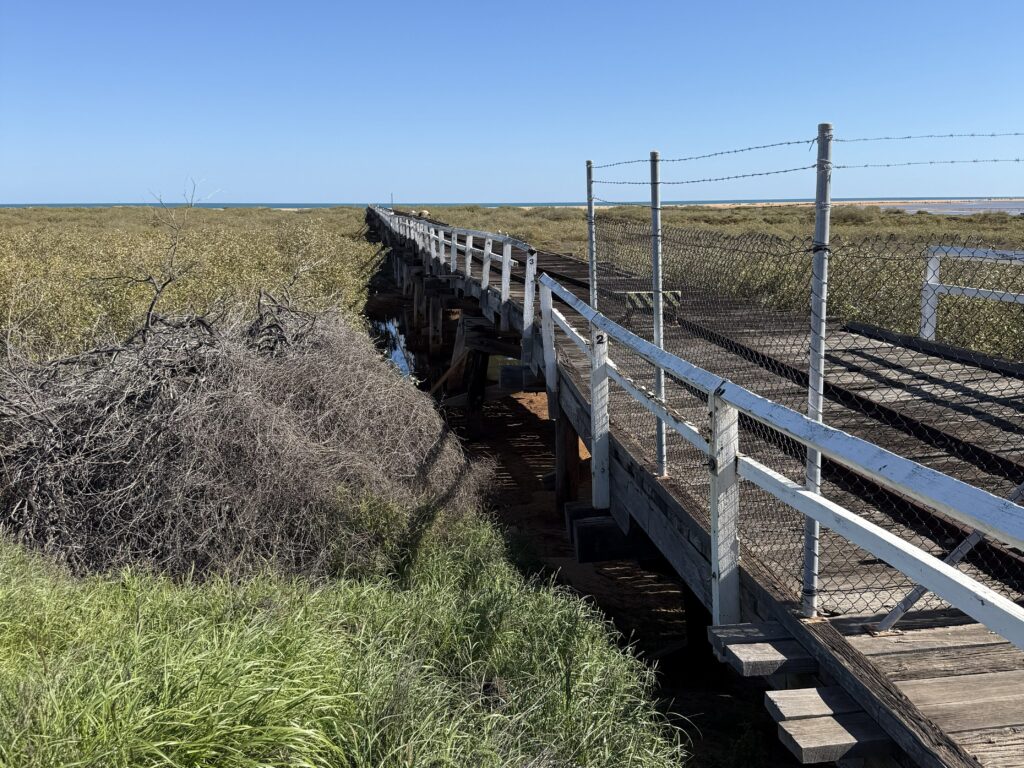
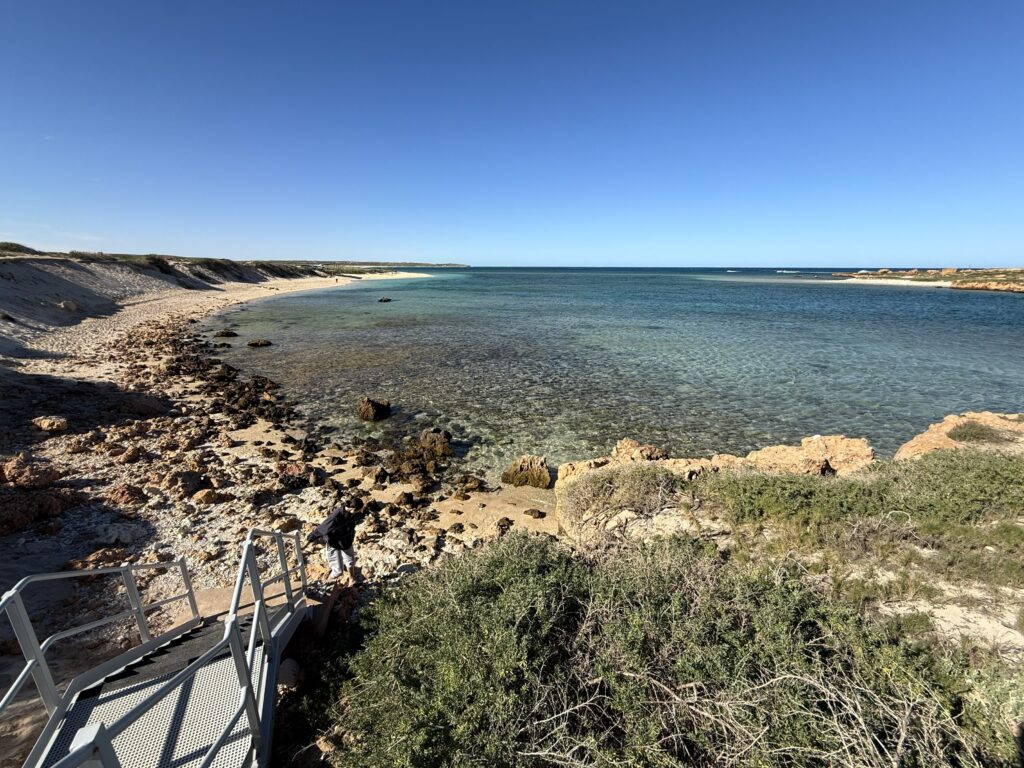
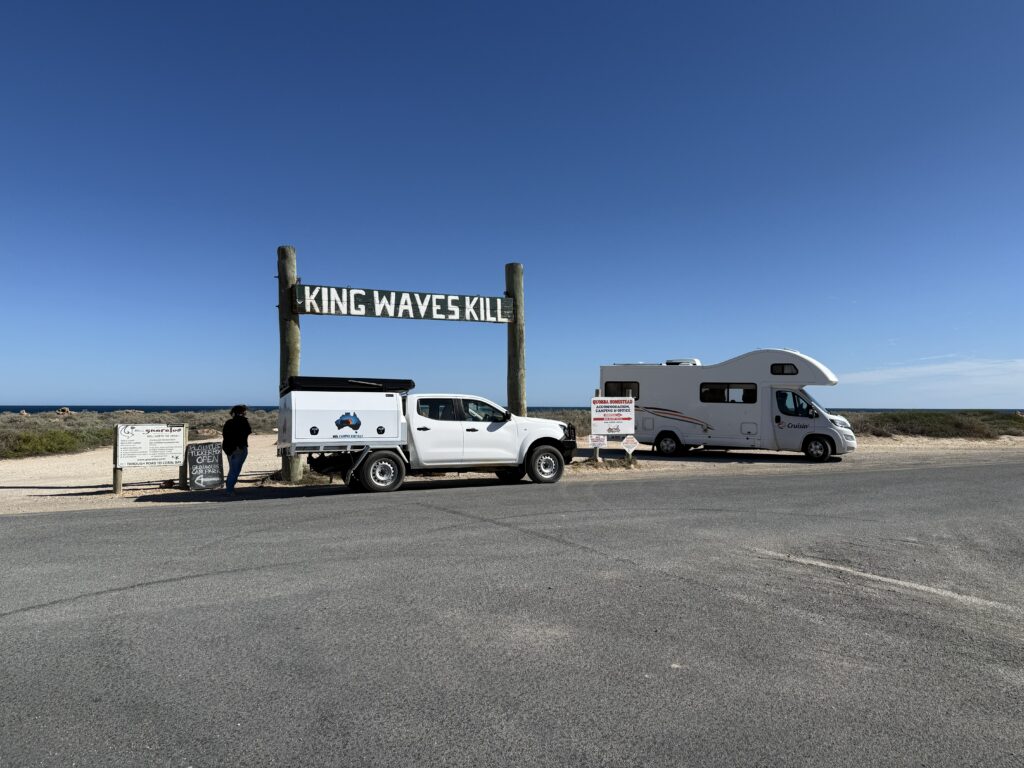
Don’t miss the Quobba Blowhole located 75km out of town but worth the drive. If you are in the mood for a swim, drive a little further to the Aquarium. It’s a protected lagoon with crystal clear water and heaps of fish. We loved it so much that we stopped here going north and then south on our return trip.
Day 8 to 11 – Ningaloo and Reef
Get up early and get the 2.5hr drive to Coral Bay or 4hrs to Exmouth. You have arrived in Ningaloo and are now in the tropics.
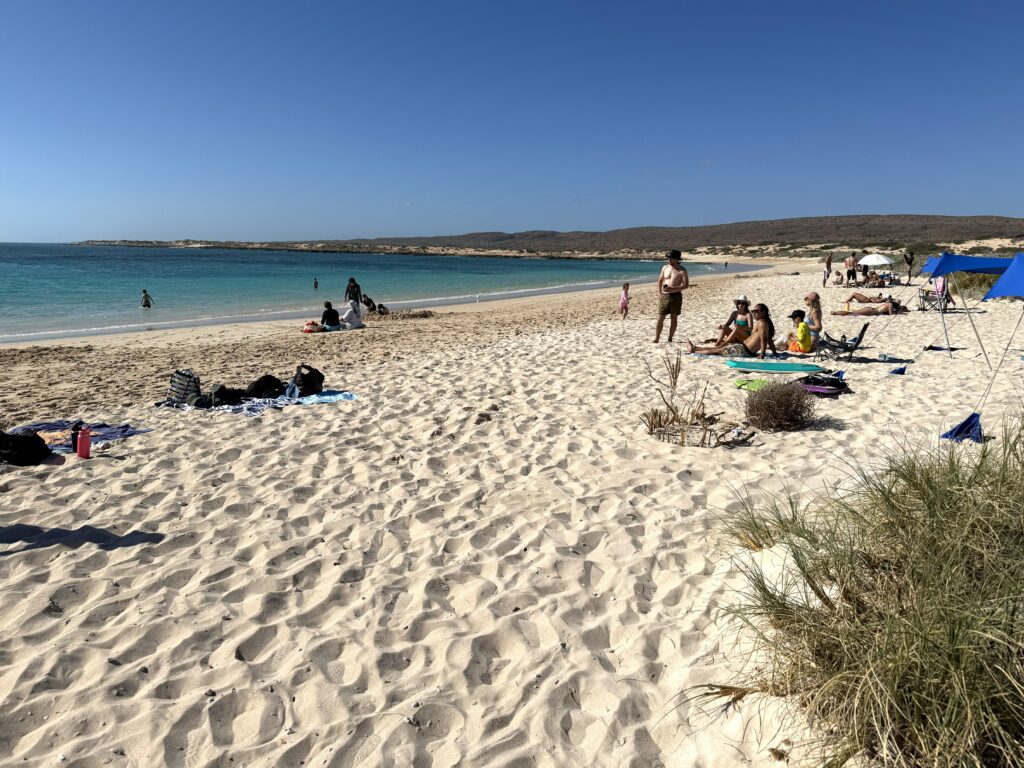
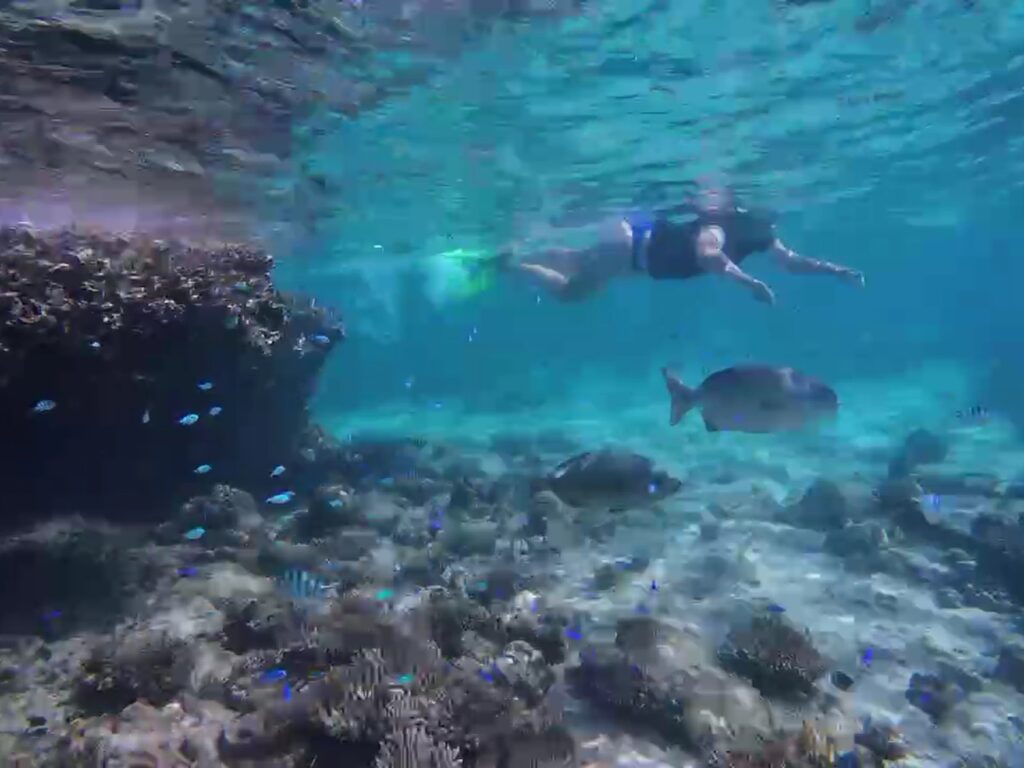
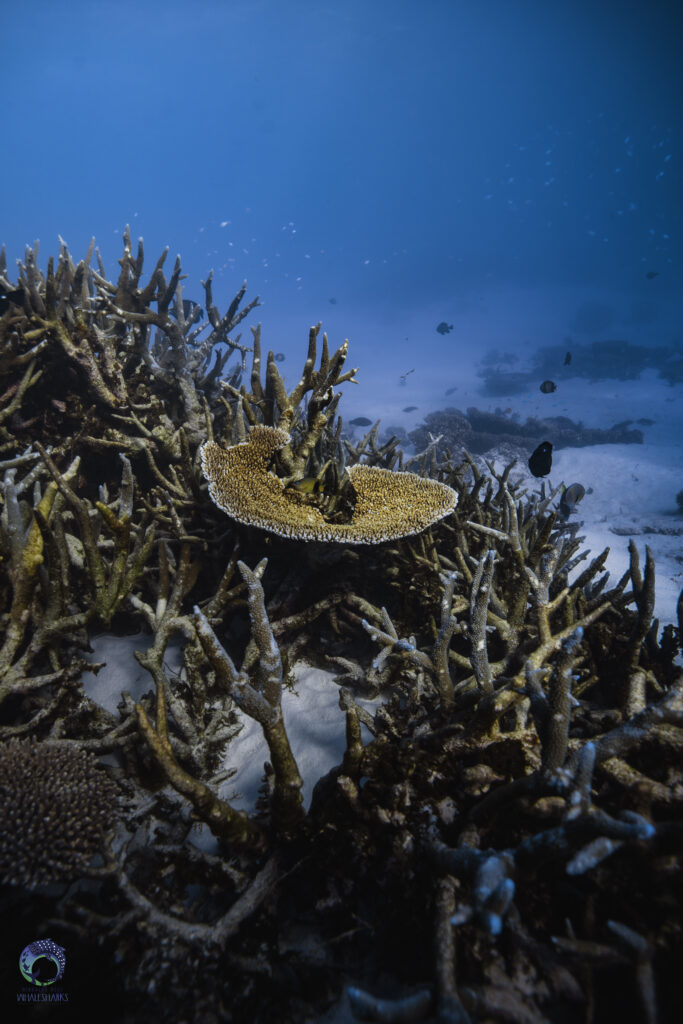
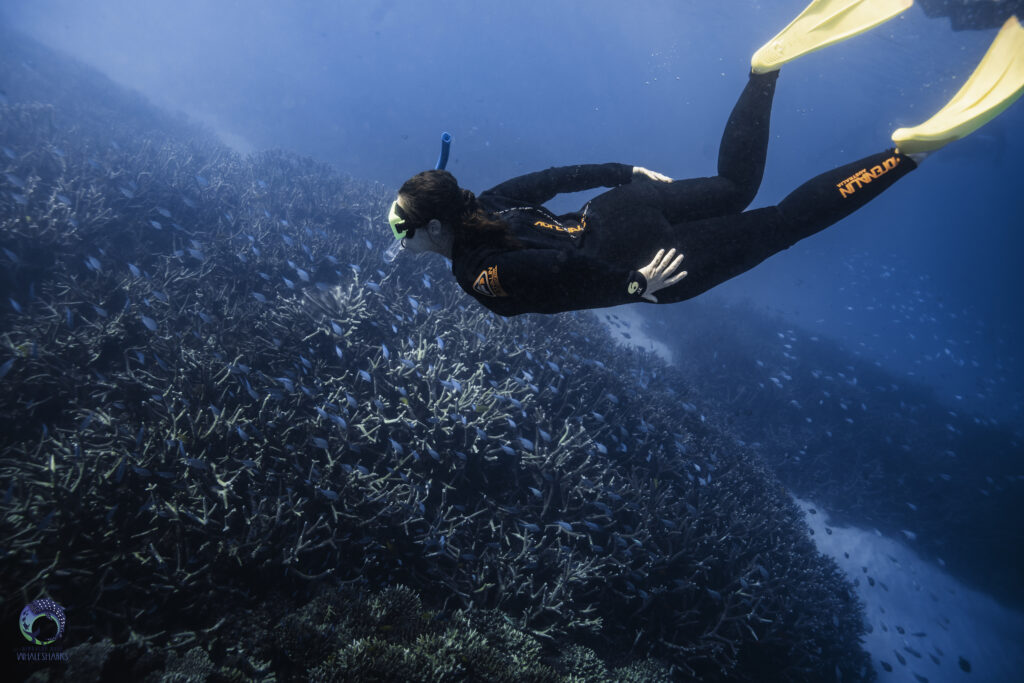
Ningaloo is a 604,500-hectare UNESCO World Heritage area with an incredible 300km of fringing reef which, in most cases, is accessible straight off the beach!
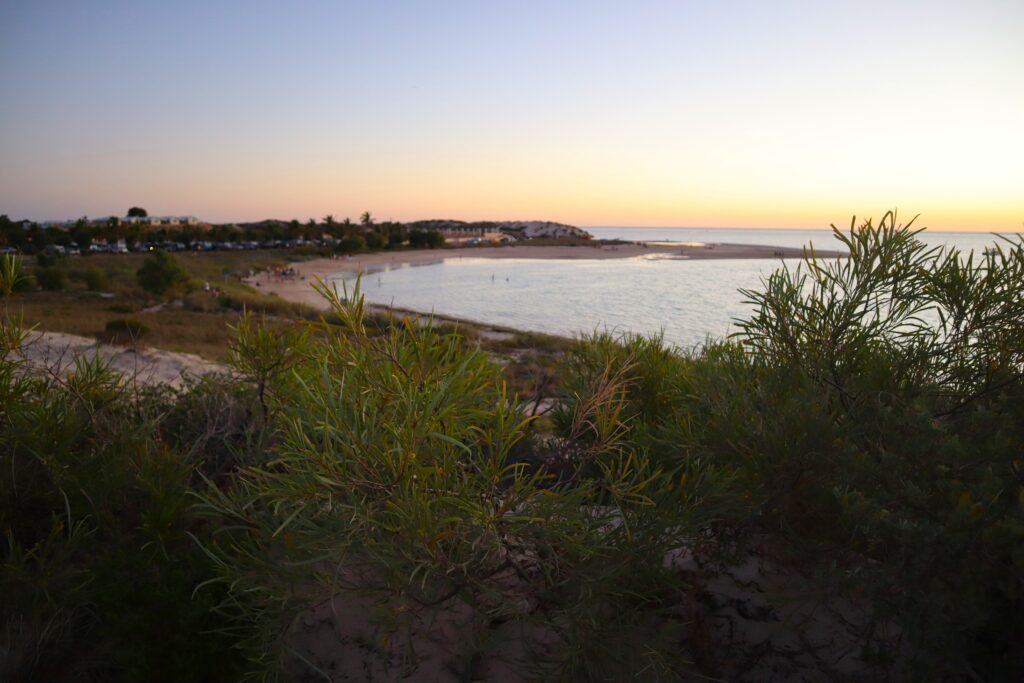
Coral Bay is a tiny laid back, chilled out settlement with the beach right on the doorstep, which we absolutely adored.
Exmouth is a proper town with significantly more infrastructure but you have to get in the car to get to the beach. Both options have whale shark, humpback and reef tours. Make sure to book early so you don’t miss out.
For the next three days, you get to choose your own adventure.
- Eat scones with jam and cream at Bullara Station.
- Snorkel The Drift, Turquoise Bay
- Snorkel at the Oyster Stacks – awesome, so many fish. Do this at high tide!
- Swim with whale sharks (March – July). Be warned, we went in July and the whale sharks had already left.
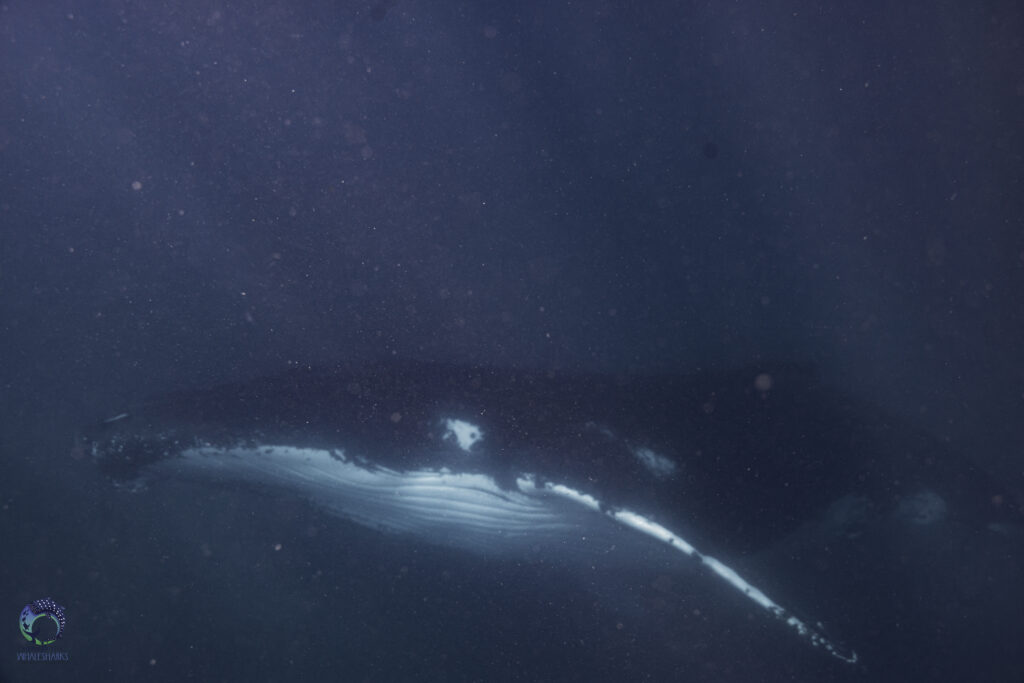
- Swim with humpback whales. (July – October) Amazing!
- Swim with manta rays
- Search for Nemo (clownfish)
- Explore Coral Bay
- Take a cruise on Yardie Creek
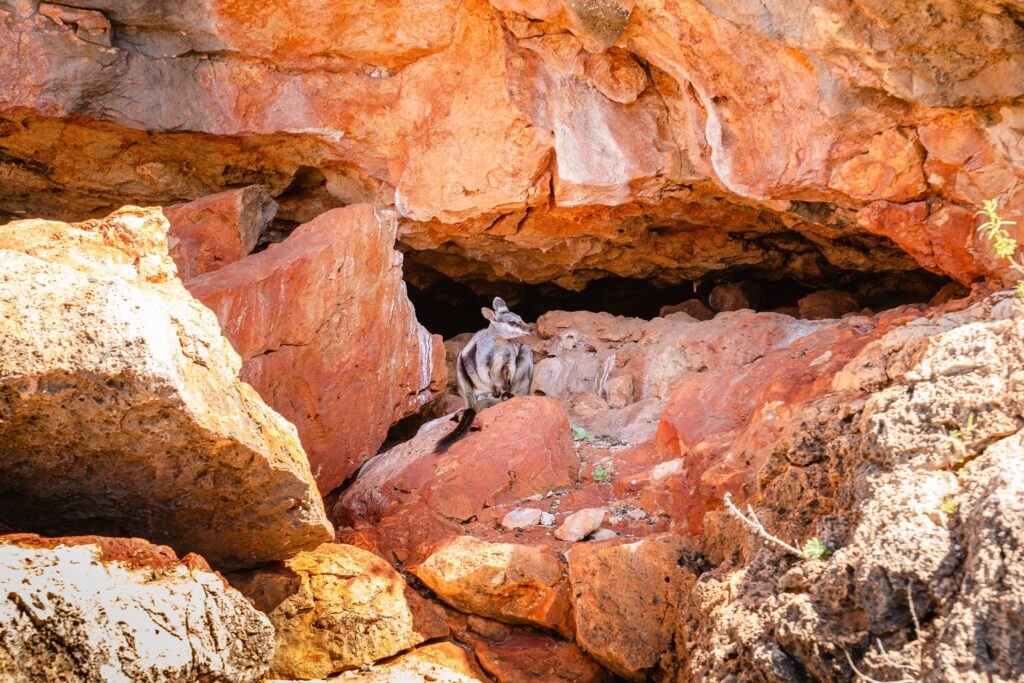
- Hike Mandu Mandu Gorge in Cape Range National Park
- Marvel at the panoramic views from lookouts at Charles Knife Canyon and Shothole Canyon.
Day 12 – Heading South to Kalbarri
Say good-bye to the tropics for your return trip south or if you are planning to head north to Broome, this is where you turn left instead of right at the highway. Unfortunately, this is a long driving day to Kalbarri. From Exmouth it’s 800km and a whopping 8 hours or slightly easier from Coral Bay at 675km and just under 7 hours. You will stay in Kalbarri for 2 nights.
Day 13 – Kalbarri
A day in Kalbarri National Park is a front-row seat to some of Western Australia’s most jaw-dropping scenery. Kalbarri National Park is located 25 minutes inland from Kalbarri township. You will require a national parks pass to enter. Day passes can be purchased at the gate for $17.
Kalbarri SkyWalk
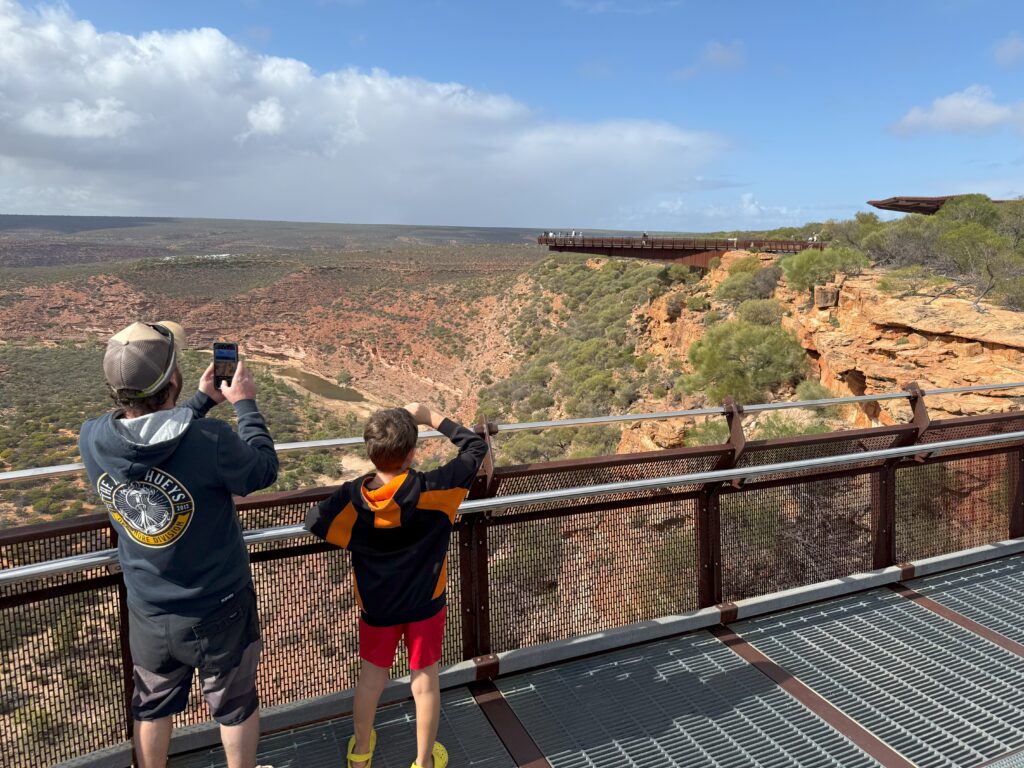
The adventure begins high above the Murchison River at the Kalbarri Skywalk, where twin cantilevered platforms stretch out over the gorge, delivering heart-racing views straight into the ancient red rock chasm below. The Skywalkis fully accessible and has a coffee shop for the early starters, or those just wanting to take in the scenery.
Nature’s Window
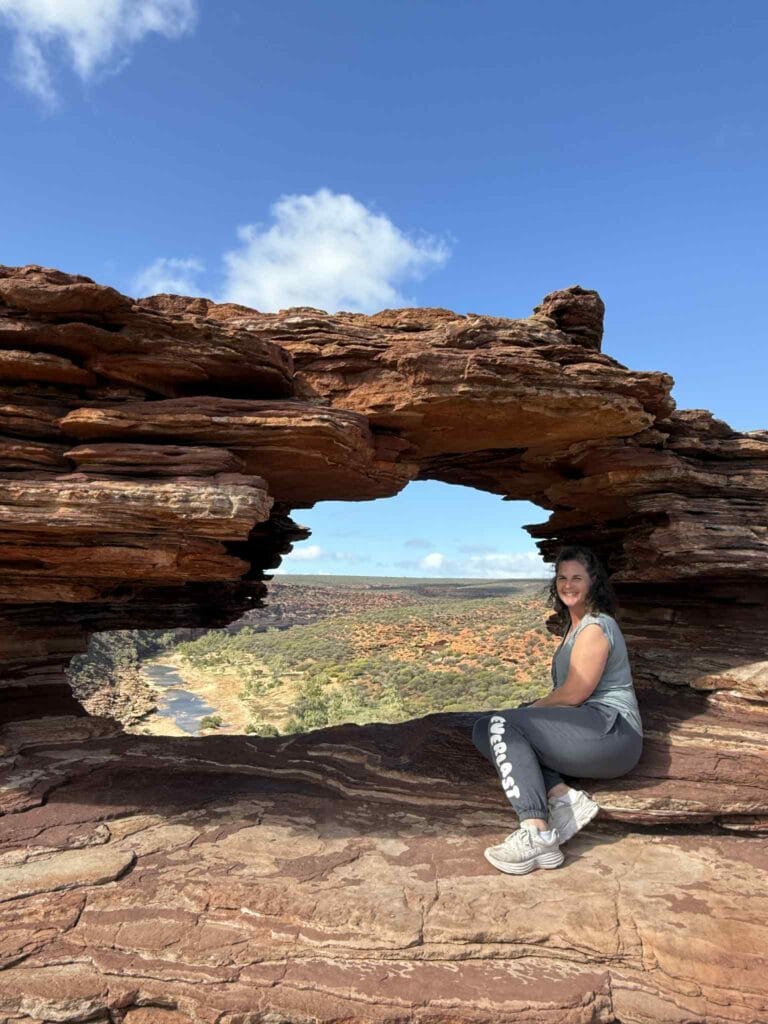
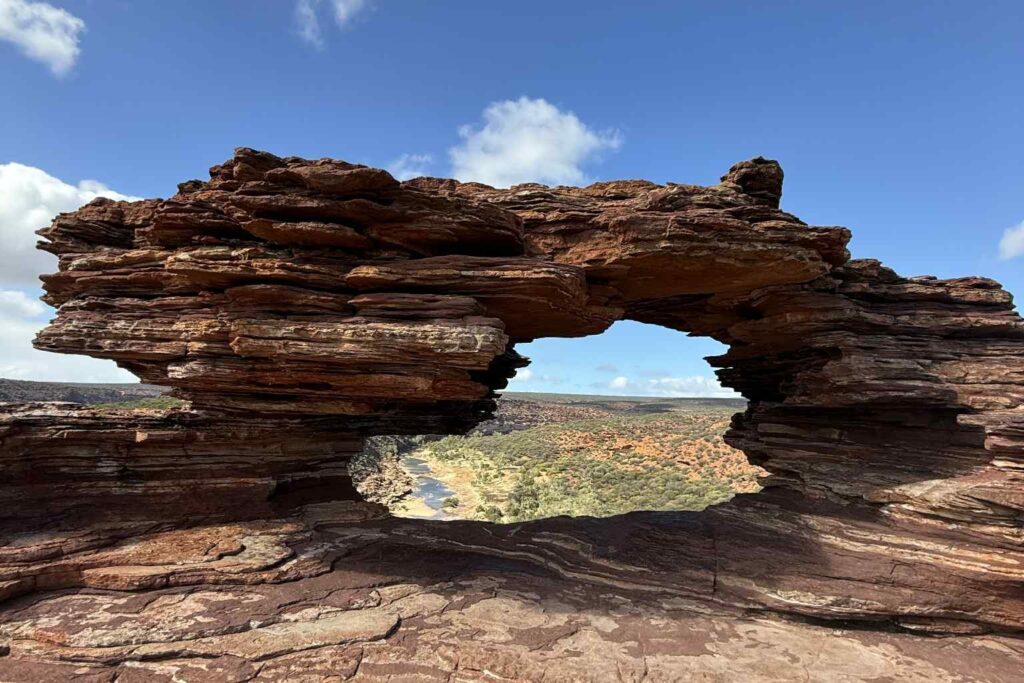
From here, it’s on to the iconic Nature’s Window, where a short bushwalk leads you to one of the most photographed natural frames in the country. Standing there, with the river winding through the gorge beneath you and endless outback stretching beyond, it’s impossible not to feel small in the very best way.
Z-Bend Lookout
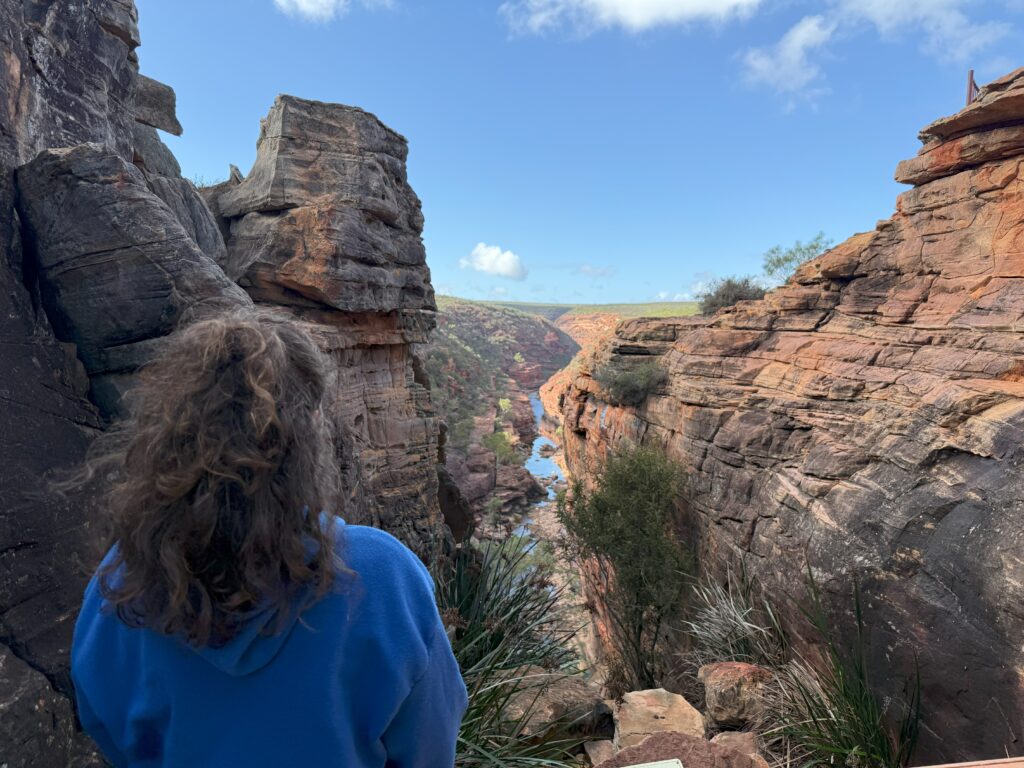
The drama continues at Z-Bend Lookout, where sheer cliffs plunge into the depths of the gorge and the colours shift from burnt orange to deep crimson as the light changes.
Loop Trail
For those keen to stretch their legs, the Loop Trail delivers serious reward – a rugged, unforgettable hike that descends into the gorge and follows the river before climbing back out, surrounded by towering rock walls and raw wilderness. In spring, the landscape comes alive with bursts of wildflowers, adding colour and softness to the harsh terrain.
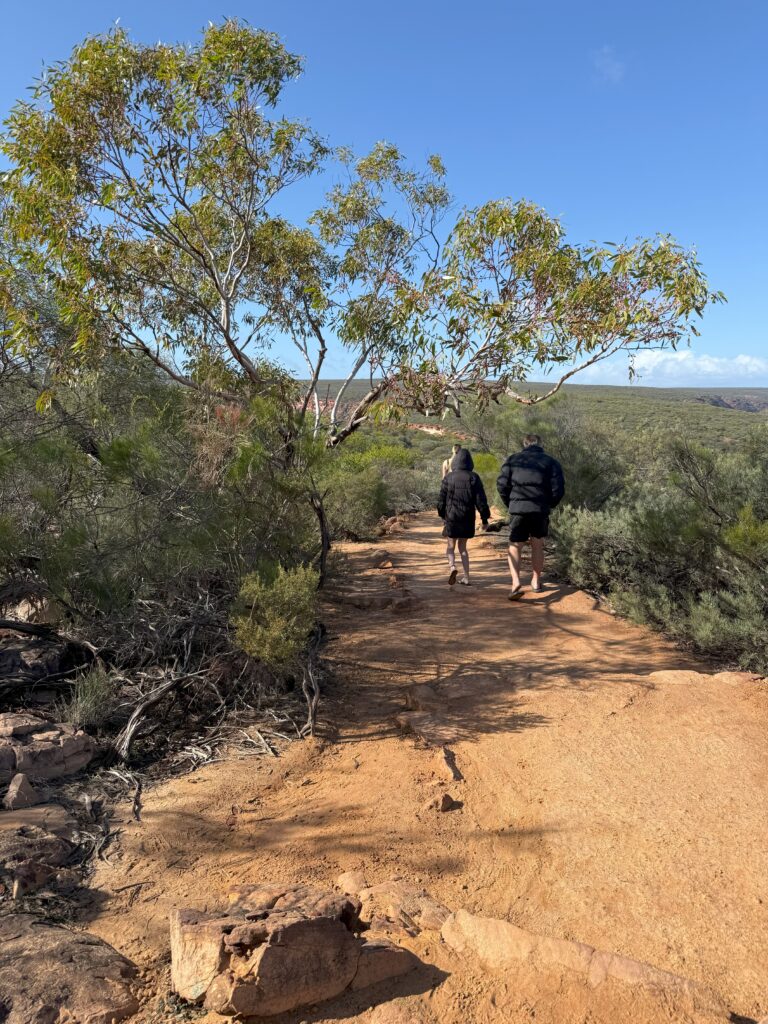
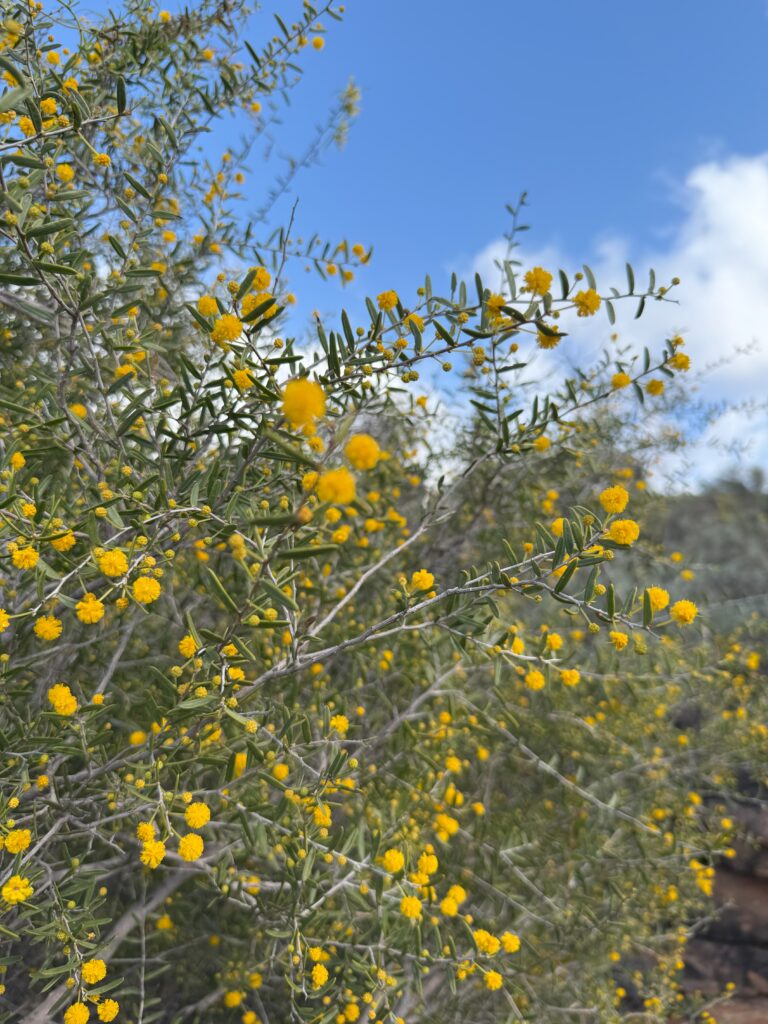
Between the bushwalking, the sweeping views and the powerful silence of the outback, Kalbarri is the kind of place that stays with you long after you leave – wild, humbling and completely unforgettable.
After a day of activity, end the day at Back Beach Sunrise Point. Watch as the sun sinks over the Indian Ocean. The sky changes from vibrant blue to pinks and oranges then to purple and then the stars begin to twinkle in the sky. Reminisce over the adventures of the past week. The highlights, the low lights and the unexpected.
Day 14 – Pink Lakes and Coastal Drive
Day 14 starts with a 2-hr scenic drive down the coast to Geraldton. Of course, there are lots of awesome stops on the way, so it could take a little longer.
There are numerous lookouts along the coast road accessed via short moderately difficult trails. These include
- Red Bluff to Beach – 700m one way, 20 mins
- Mushroom Rock Trail – 3km loop, 1 hour
- Pot Alley Beach – 400m return, 20 mins
- Eagle Gorge Beach – 1km return, 30- 45mins
- Bigurda Trail – 8km one way, 3 hours
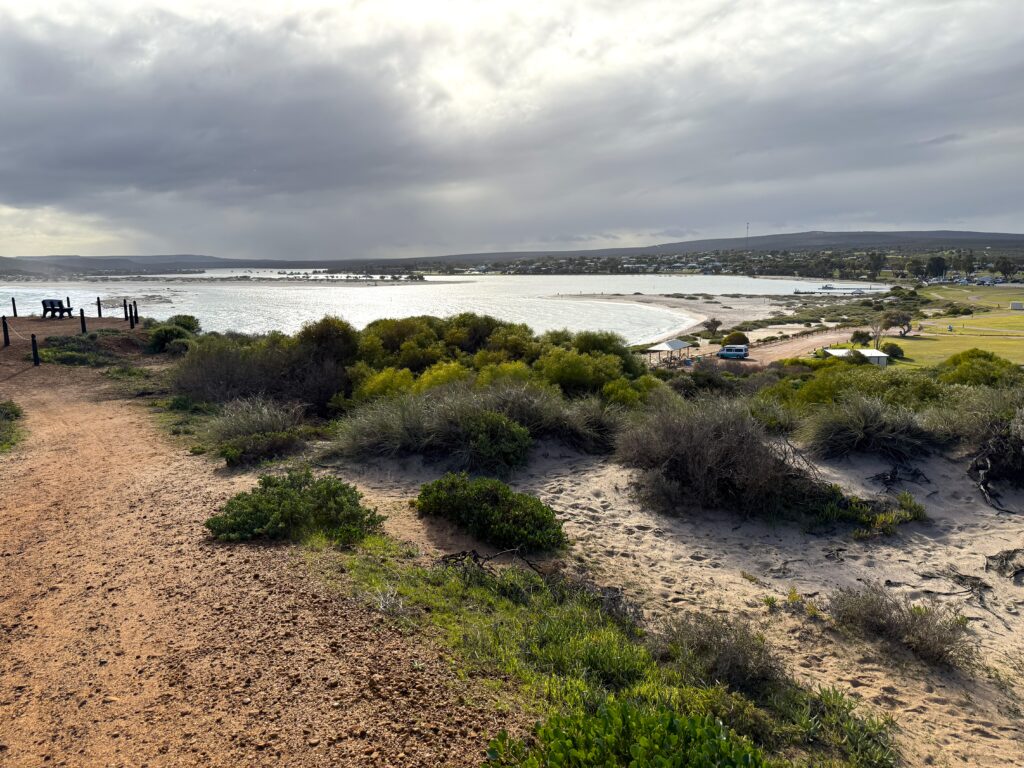
A Pink Lake – Hutt Lagoon
About 1.25hr south, is Hutt Lagoon, a pink lake! The most vibrant pink colours occur mid-morning or late afternoon when the sky is clear. It is not recommended to swim in the lake due to its high salt levels. Not to mention, you will sink knee deep in mud on the edges and it absolutely reeks! Trust me on that one.
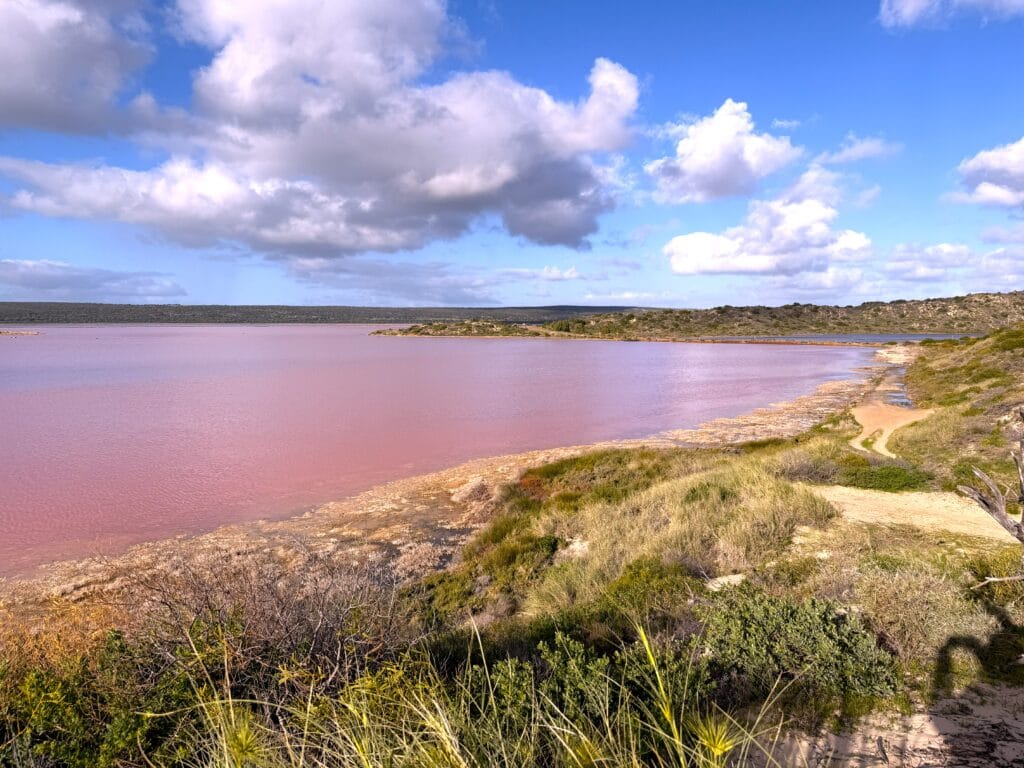
Coronation Beach
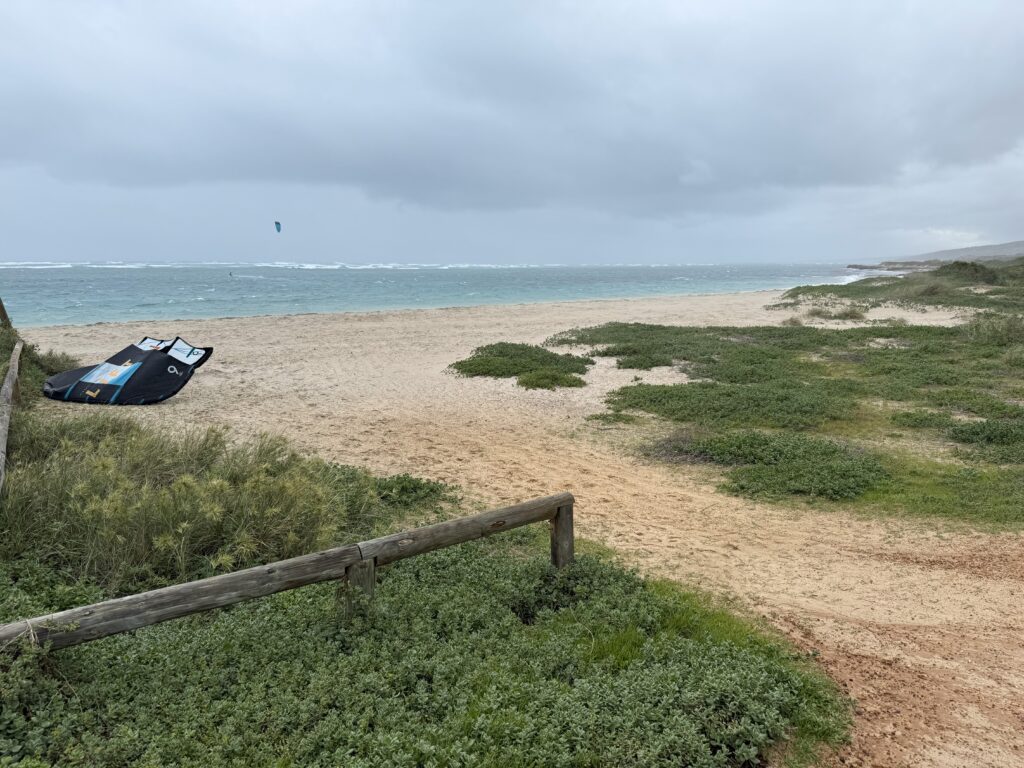
Another 15 minutes and you will get to Coronation Beach. If you have food on board, this is a great spot to have a picnic. The off-shore reef protects the beach from the Indian Ocean, providing a flat-water playground with consistent winds, a mecca for windsurfers and kitesurfers. This is the beach on a bad day. Imagine the spectacle, the speed and the adrenaline on a good day…………..
From Geraldton, it’s a 4.5hr (414km) drive back to Perth. Remember to take regular stops, avoid driving at dusk or dark when kangaroos are most active and look out for road trains.
The Coral Coast road trip from Perth to Exmouth is the kind of journey that stays with you long after the red dust has been washed off and the last saltwater swim is just a memory. Fourteen days of epic drives, wild landscapes, close-up marine encounters, and moments that remind you why road trips are still one of the best ways to travel. From sandboarding and sea lions to Ningaloo Reef’s once-in-a-lifetime swims and Kalbarri’s spectacular hikes, this is Western Australia at its most raw, remote, and rewarding.
Whether you follow this itinerary exactly or use it as inspiration to chase your own hidden gems. One thing is guaranteed — this is a trip that delivers adventure without compromise. The Coral Coast isn’t about rushing from highlight to highlight; it’s about slowing down, taking the long way, and saying yes to the detours that turn a good trip into an unforgettable one.
If this ultimate 14-day Coral Coast road trip itinerary has sparked your wanderlust, share it with your travel buddies, save it for later, and start planning the adventure you’ll be talking about for years. Because some journeys aren’t meant to be bookmarked and forgotten — they’re meant to be shared, driven, and lived.
Need help packing? Here is our road trip packing list.
Roam with no regrets.