A magnificent weekend at Mungo Brush Campground
Need a weekend escape? A magnificent weekend at Mungo Brush Campground will help you disconnect and get back to nature.
Some links in this post are affiliate links, which means I may earn a small commission if you choose to make a purchase. It helps support Roam with No Regrets at no extra cost to you — thank you for your support!
About the campground
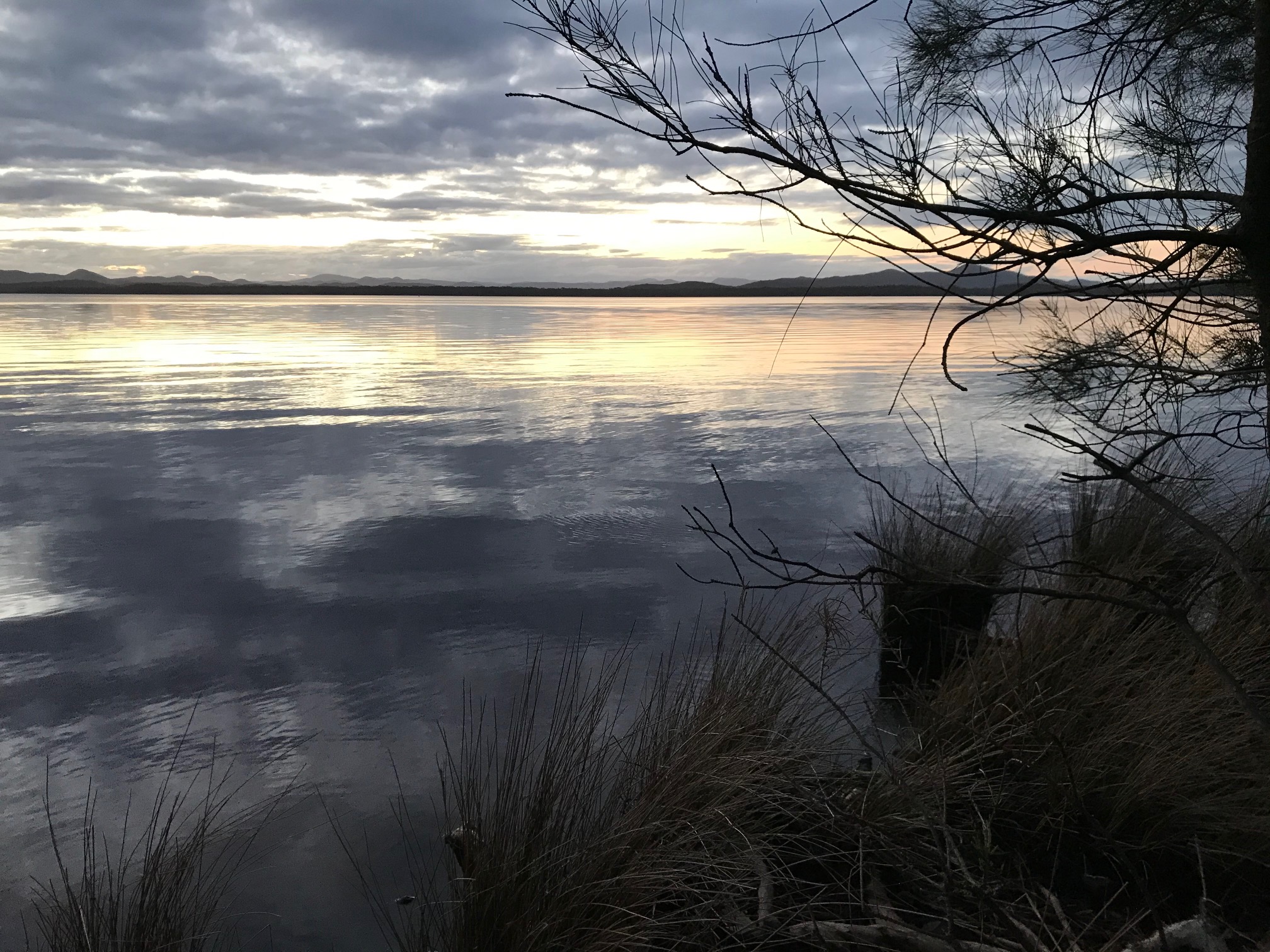
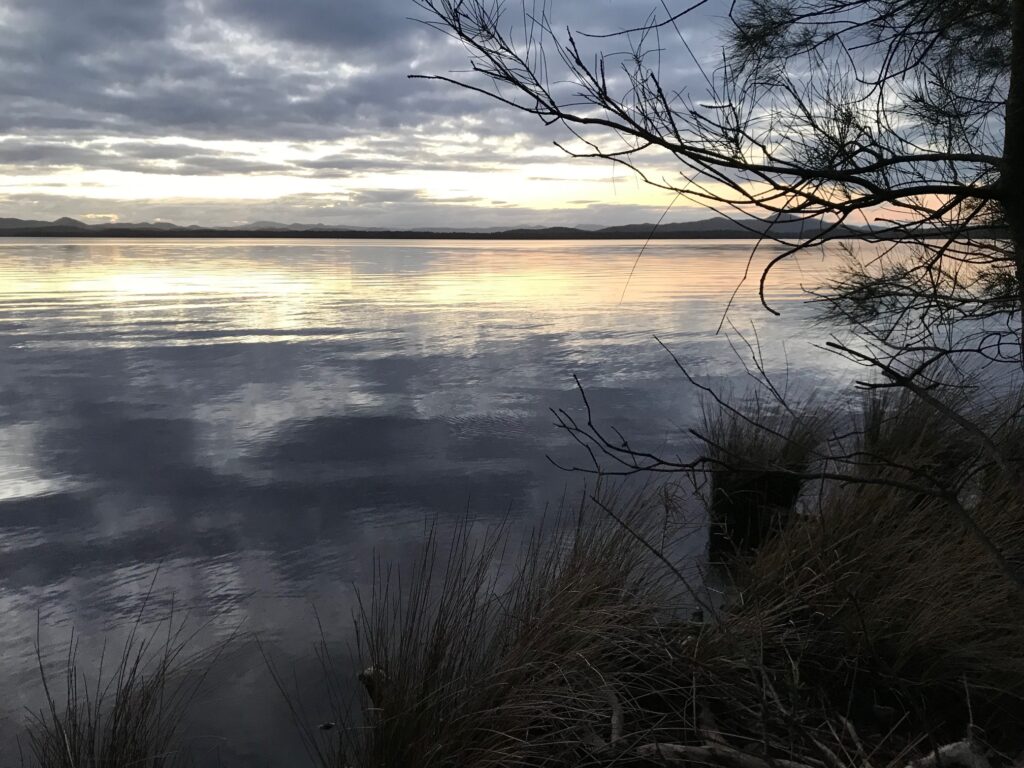
Mungo Brush is the signature campground for the Myall Lakes National Park (sorry – no dogs). It is located on the shores of the tranquil Myall Lakes with an awesome sandy shallow swimming area, picnic area with BBQs and drop toilets. BYO drinking and cooking water.
It has loads of sites suitable for Tent, Camper trailer, Caravan and Camping beside my vehicle for a weekend escape. Book sites online (rangers patrol the campground on weekends to make sure you have booked in). Book your site here.
If Mungo Brush is booked out, then I recommend the smaller Dees Corner or White Tree Bay campgrounds. Unfortunately, due to the devastating floods in May 2025, when boats were used instead of cars on the road, White Tree Bay campground and Dees Corner are currently closed. National Parks are hoping to have them back open by Christmas but give no guarantees.) If you are visiting in the cooler months, these campgrounds allow open fires – BYO firewood. Fires are not permitted at Mungo Brush.
If you don’t have camping gear, or just don’t want to rough it, enjoy Mungo Brush as a day trip from Hawks Nest, Tea Gardens or Buladelah. Here are some other accommodation options for day trippers. You will need to pay the park entry fee of $8/day or have an annual National Parks Pass.
Reflections Hawks Nest – Holiday Park
When to visit
Anytime is a great time to visit Myall Lakes National Park. It has a humid subtropical climate with moderately warm summers and mild winters. The average high temperature during summer ranges between 19 °C and 27 °C, while the average temperature during winter ranges between 10 °C and 19 °C.
Getting There
Mungo Brush is located 3 1/2 hour drive north of Sydney or 4 hours south of Coffs Harbour. From Sydney, take the Tea Gardens turn off (this is the last place for fuel), cross the singing bridge and turn left at the golf course. From Coffs Harbour, exit the Pacific Hwy at Buladelah and turn down Bombah Point Road. You will have to cross water at the Bombah Point car ferry which operates between 8am and 6pm. Ferry charges apply and are payable by cash only (internet/phone connection is not reliable in this area).
Alternatively, you can cruise up the Myall River from Port Stephens by boat. It is a beautiful trip but slow going as there is lots of 4 knot zones. If taking your boat, there is NO fuel available. The closest fuel is located at D’Albora Marina at Nelson Bay.
Things to do
Bushwalking
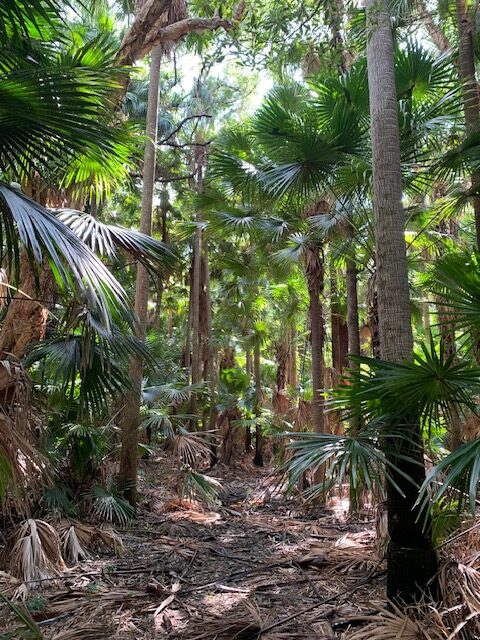
There are 4 walking tracks accessible from the campground.
- Access the Mungo Rainforest Walk from the north of the campground. The walk is a grade 3, 1.5km loop which takes 15-45 minutes. The first 700m is relatively flat, then the track takes you up some steps. The return loop goes through swampy ground which is not much fun after heavy rain.
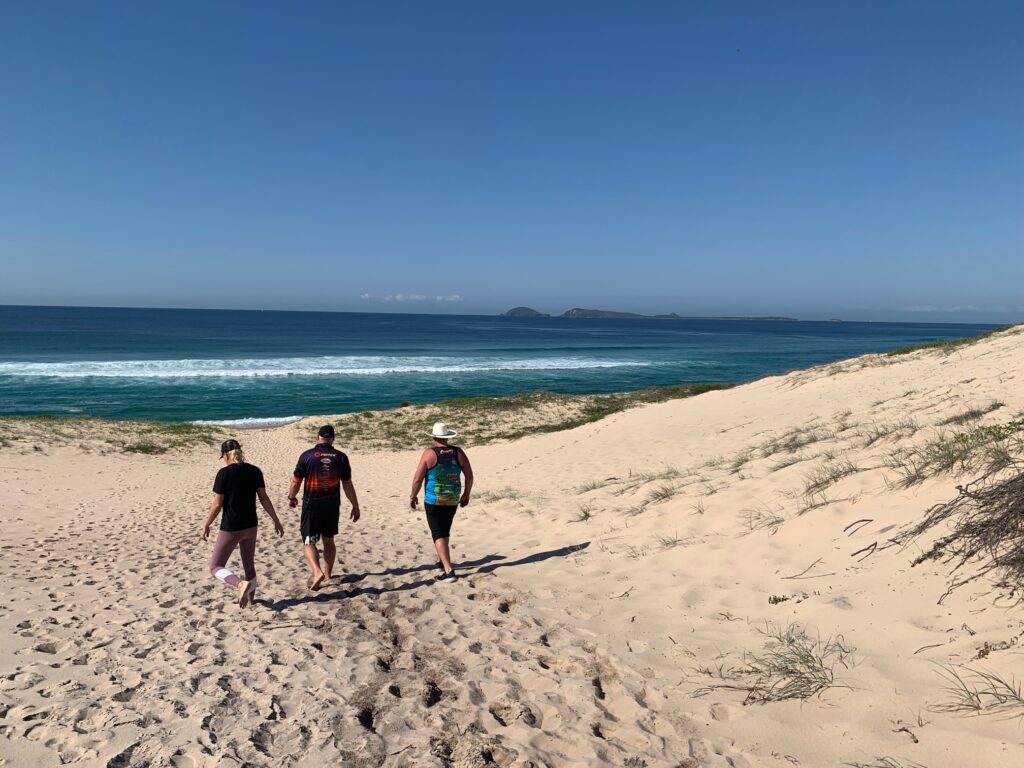
- Beach access track is located across the road from the entrance to the campground. It crosses the soft sand dunes to Mungo Beach where you can go beach fishing, swimming or surfing. The beach is not patrolled. It is heaps of fun to jump off the sand dunes.
- Tamboi Walking Track is located to the south of the campground. It is a Grade 3, 5.6km return track which takes you to the Tamboi fishing village. This is where the Pros (professional fishermen) catch the prawns. Each evening, the Pros draw for positions to place their nets across the river. The first spot is called the Top Shot and will get the most prawns for the night. On a good night, Top Shot can catch 1 tonne of prawns!
- Mungo Walking Track is a 21 km trail from Mungo Brush to Hawks Nest. This Grade 4 walking trail traverses through a diverse variety of coastal vegetation and along the beach passing through historic and aboriginal sites.
Swimming
Mungo Brush has an excellent safe shallow and sandy swimming area, great for kids, throwing a ball or frisbee around or just lazing on an inflatable.
For the more advanced and adventurous, you can take the path across the sand dunes to the surf beach. This beach is not patrolled and the beach drops away sharply.
Fishing
Fishing is a popular past time with campers at Mungo Brush.
Make sure you have your fishing licence (kids under 18 do not need a fishing licence) Recreational fishing licence | Service NSW and Get the FishSmart app | Service NSW. It shows you where you are and where the marine parks are, and the legal size and number of each species for sustainable fishing.
Myall Lakes offers lots of fishing spots. Mungo Brush has a good boat ramp and adequate trailer parking area. You can catch bream, flathead, whiting and mullet.
Many anglers head across the sand dunes to the beach with their beach rods to catch bream, tailor and Australian Salmon. You can pick up frozen bait from Hawks Nest or Tea Gardens or gather your own live bait by heading down to low water mark at low tide and doing the pippy dance (similar to the twist).
Boating
The Myall Lakes is one of NSW’s largest coastal lake systems making it ideal for boating, whether its fishing, sailing, water skiing, jet skiing or even just cruising around. Myall Lakes can be reached from Port Stephens up the Myall River past Tea Gardens. The river is long and windy and slow going as there are lots of 4 knot/no wash zones as it heads up to fishing village of Tamboi. Once you pass through Tamboi, the river opens out into the lake. Remember there is NO FUEL available in the Myall Lakes.
Alternatively, there is a good little boat ramp at Mungo Brush with adequate trailer parking.
Kayaking
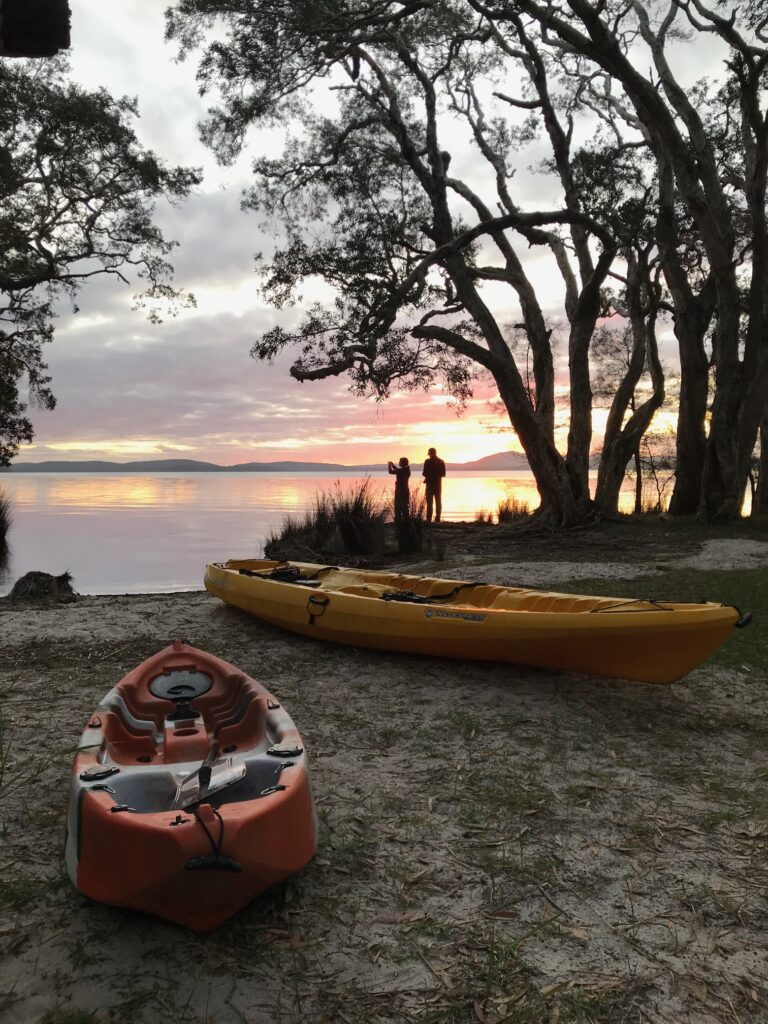
Myall Lakes is a gorgeous place to paddle. Kayaking along the shoreline is generally calm. It can get quite choppy in the middle when the winds blow.
Prawning
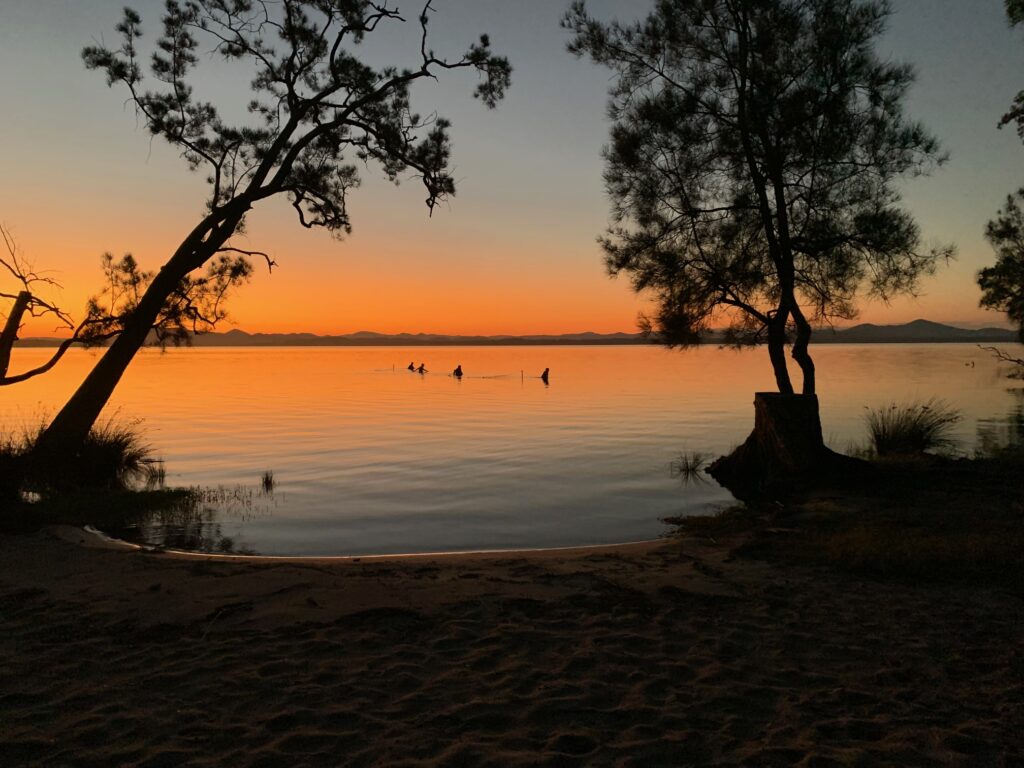
Just on sunset, during the warmer months, the prawners will arrive and set up their nets to catch the sweetest prawns you have ever eaten. Two prawners will walk out into the chest deep water each holding a pole. Between the poles is a 6m wide net with a weighted bottom and a long pocket. The longer the pocket the better. The prawners will drag the net through the water from point to point to collect the prawns. The bag limit for prawns is a 10 litre bucket. Each drag can take between 30 minutes and 1 hour depending on how far they go. Prawners will do 3 -4 drags in a night. No need to go to the gym, this is a workout in itself.
The unexpected thing about prawning is whilst walking out in the water, how quiet it is and how clear the sky is and how amazing the stars are – you can see the Milky Way.
Once the prawns are collected, the cooking begins. A special gas prawn cooker is used to bring the water to the boil quickly. It sounds like a jet engine when fired up. Prawns take a few minutes to cook and then are placed in an ice slurry to stop the cooking process. Once cool, they are ready to eat. Yum!
Wildlife
Mungo Brush Campground has all sorts of native visitors. These include:
Dingoes
The dingoes at Mungo Brush are beautiful and healthy and can often be seen in the late afternoon and at night walking along the road or through the campsite. I have also seen them walking down the main street of Hawks Nest. They are significantly bigger than the dingoes on K’gari (Fraser Island). They are not scared of people. It is important that all rubbish is placed in the bins at the campsite entrance to discourage dingoes from scavenging and associating humans with a food source. Don’t run from a dingo.
Brush tailed possums
Brush tailed possums are about the size of a cat and have grey fluffy fur and long bushy tails. They are nocturnal and known for jumping on caravan roofs and tearing apart rubbish bags.
Goannas
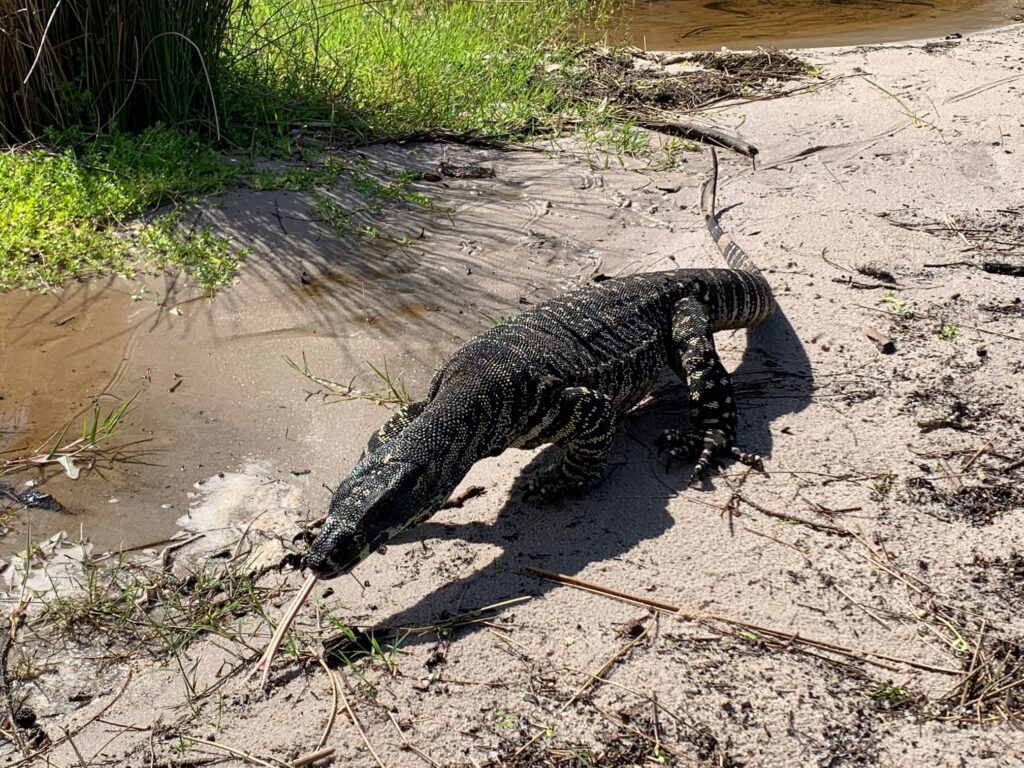
Goannas love Mungo Brush. I’ve seen 8 goannas in one day whilst visiting. Goannas or lace monitors can grow up to 2m long and are very good climbers and climb trees to steal birds eggs or the chicks. They will also eat any meat you leave lying around.
Kookaburras
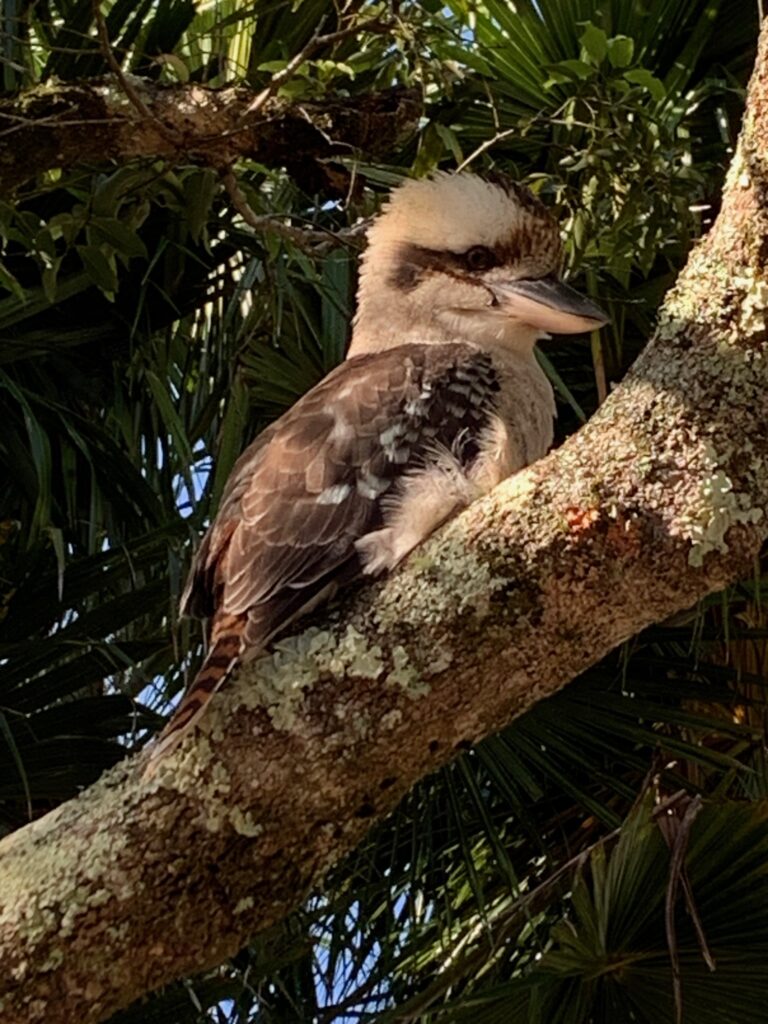
Kookaburras, also known as the laughing Kookaburra will sit in the trees and swoop down to eat small lizards and insects. They are also very good at taking your lunch right out of your hands. Legend says that when the kookaburra laughs, then it is going to rain.
Whistling Kites
These are a large brown bird of prey. You are more likely to hear their wonderful whistling than to see them. They feed on fish.
White bellied sea eagles
These have to be my favourite birds. They are the second biggest eagle in Australia (wedge tailed eagle being the biggest) and have a wingspan up to 2m, have a distinctive white head and belly and grey wings and back. They will often perch in the highest trees looking for prey or soaring on the breeze overhead. When soaring, their wings curve up in a U-shape.
Pelicans
Pelicans are a large water bird, mostly white with black wings and a large pink bill that can “hold more than its belly can”. You will see they guys cruising around the swimming area.
Brush turkeys
These ground dwelling birds are scavengers and can be seen cleaning up the campgrounds. They make huge nest mounds that can be over a metre round.
Rainbow Lorikeets
Rainbow Lorikeets are loud, chatty parrots with green backs, blue head, red beak, orange breast and blue belly. Normally seen in pairs, these birds mate for life. In the evenings, you can often see them congregate in the trees. Kind of like us going to the pub after work.
Yellow tailed black cockatoos
These large black parrots with yellow under their tails are hard to miss. You will see them flying above the trees in small groups and have a distinctive screech.
Snakes
Keep your eyes open around the edge of the campsite and walking through the rainforest. You might get a glimpse of a gorgeous diamond python (non venomous). Red bellied black snakes and eastern brown snakes also live in the area. These are venomous so treat them with respect and leave them alone.
Land Mullets
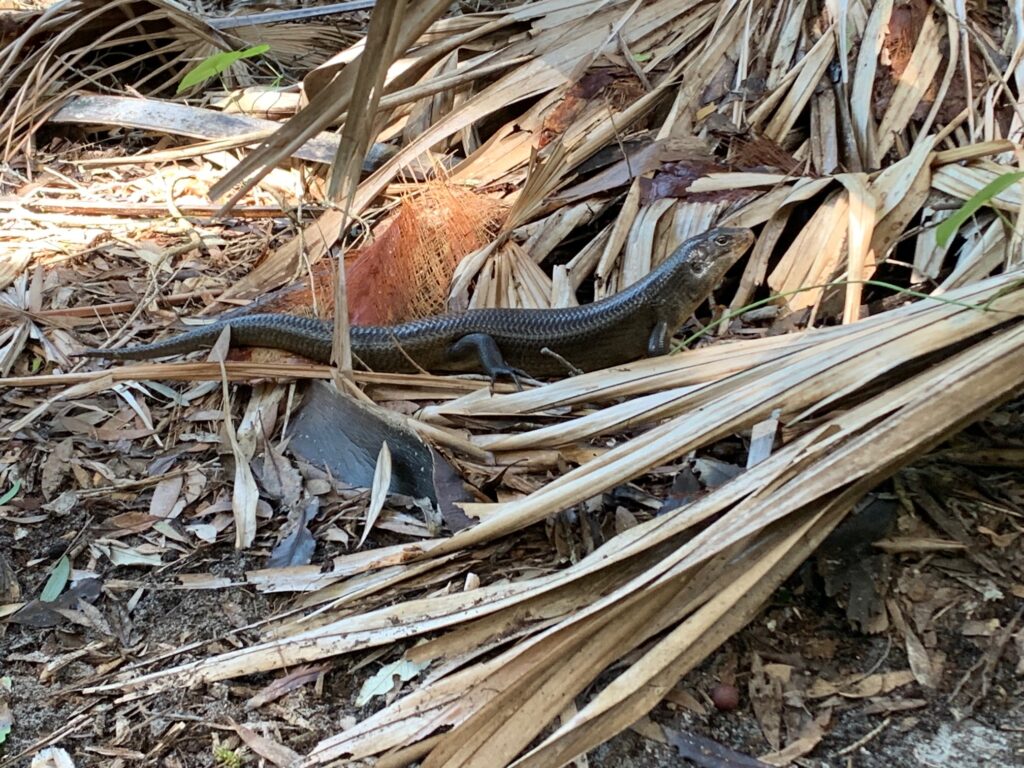
I didn’t know these even existed until recently when I saw one on the Mungo Rainforest Walk. A land mullet is one of the largest members of the skink family and can grow up to 70cm long.
I love going to Mungo Brush to recharge, and get the family a feed of delicious prawns. Maybe I’ll see you there.
If you liked A Magnificent Weekend at Mungo Brush Campground, please share this post, like this post or pin this post.
Other posts you may like