Where to See Kangaroos in the Wild of Australia
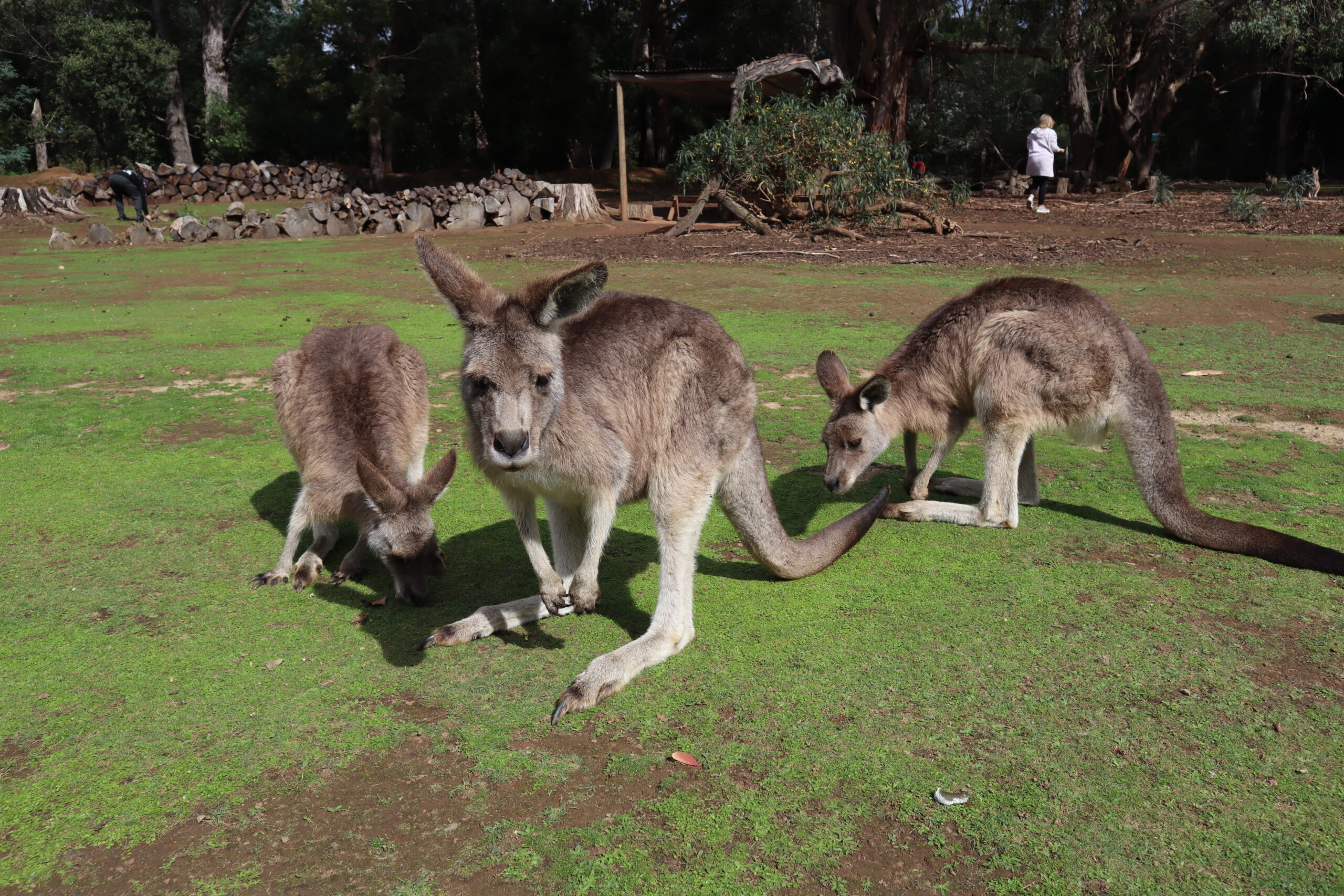
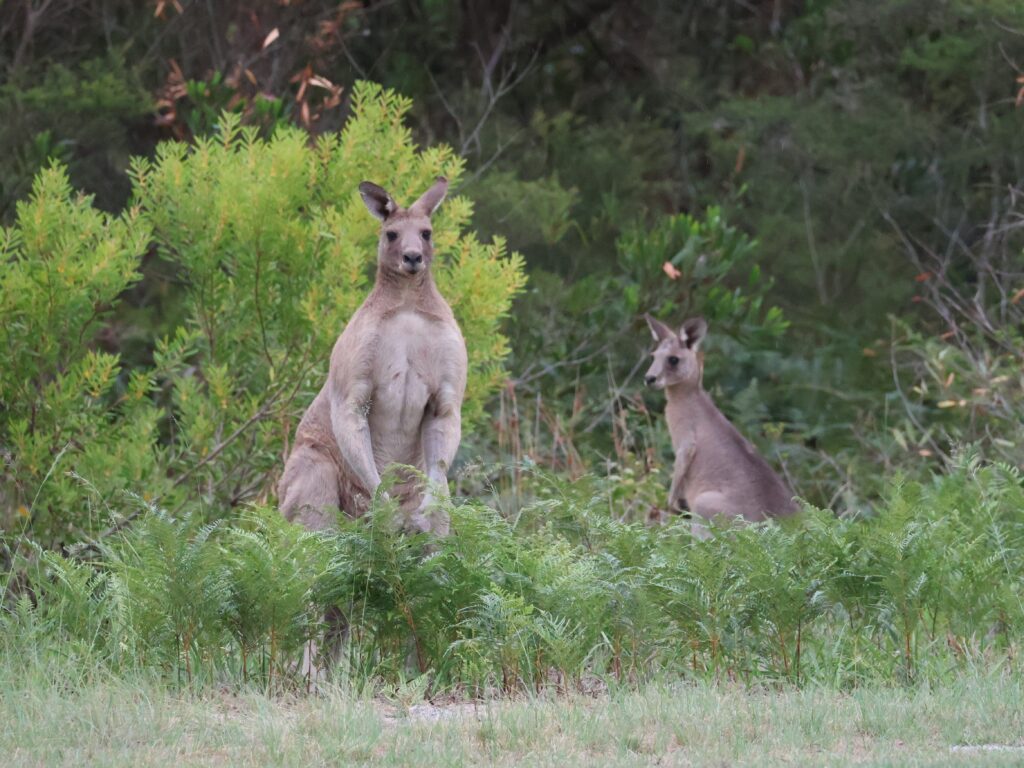
There are few experiences more Australian than seeing kangaroos in the wild. Not behind fences. Not in enclosures. Just out there in open fields, on empty beaches, and in rugged national parks—doing their thing, completely on their terms.
Whether it’s your first time in Australia or you’re a local who still gets excited every time you spot one, seeing kangaroos in their natural habitat is one of those simple, unforgettable moments that stays with you. And the best part? You don’t have to go far to find them.
This guide will show you exactly where, when, and how to see kangaroos in the wild across Australia—responsibly, safely, and with zero regrets.
If you’re planning to see more of Australia’s incredible wildlife, this animal is just one of many worth adding to your itinerary. From marsupials and marine life to rare outback species, Australia is home to some of the most unique animals on Earth. For a broader guide to the country’s must-see wildlife — including where to spot them in the wild — explore our full list of the 20 Iconic Australian Animals and Where to See Them in the Wild.
Why Seeing Kangaroos in the Wild Is So Special
Anyone can visit a zoo. But seeing a kangaroo hopping across a beach at sunrise, grazing in misty farmland, or silhouetted against a red outback sunset? That’s different. That’s Australia.
It’s the kind of moment that makes you stop, smile, and think, “How lucky am I to be here?”
Quick Kangaroo Facts
- Kangaroos are native to Australia and found in every state and territory
- There are 60+ species of kangaroos and wallabies. There is even a tree kangaroo.
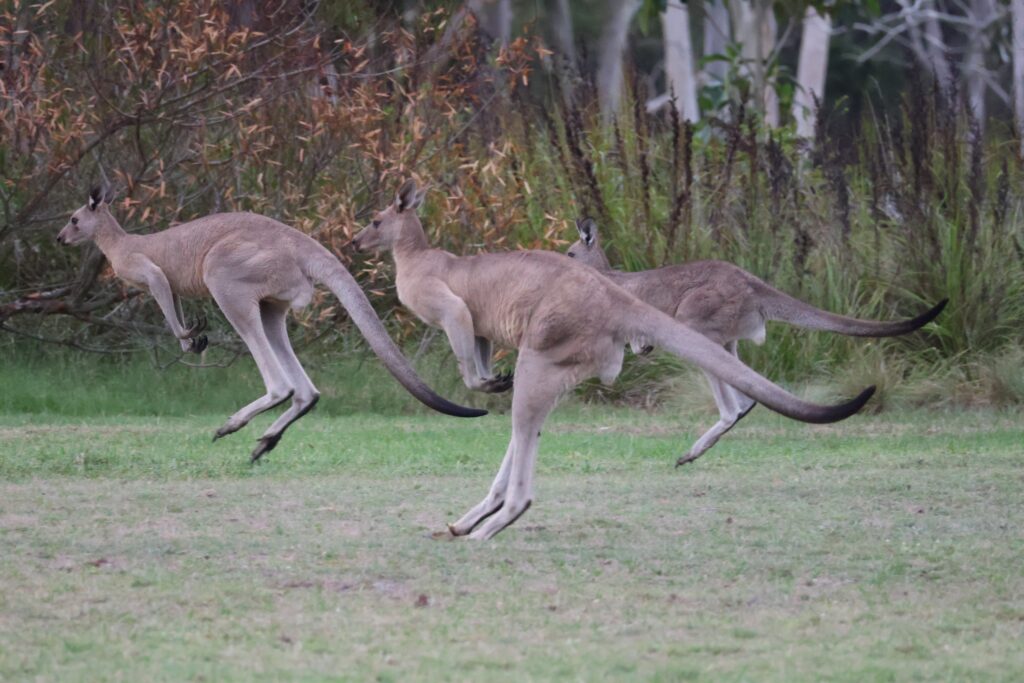
- They are most active at dawn and dusk
- Kangaroos are herbivores and primarily eat grass but will supplement with leaves, shrubs, flowers and ferns depending on the species.
- They can hop up to 60 km/h and leap over 3 metres high and cover 9 metres in a single bound
- A male red kangaroo is the largest marsupial on earth standing 2m tall and weighing in at 90kg.
- Kangaroos live in groups called mobs
- A baby kangaroo is called a joey
- There are over 40 million kangaroos in Australia
- A female kangaroo can have three young at different stages at one time: a joey outside the pouch, one developing inside and an embryo in suspended animation (embryonic diapause). Embryonic diapause is the ability to pause embryo development which helps kangaroos survive unpredictable climates whilst waiting for the idle time for embryo development. Like waiting for the drought to finish and grass to become plentiful before giving birth.
- The kangaroo features on the Australian Coat of Arms and the 50c coin. Along with the emu, it was chosen as it can’t go backwards, only forwards.
Best Places to See Kangaroos in the Wild (By State)
Firstly, kangaroos are easy to see when you leave the cities and major highways. Travel through regional Australia and you will see them alongside the roads at dawn and dusk, so much so they are considered a significant road hazard. They will also congregate on golf courses, sporting fields and other grassy areas. Also look for places called Kangaroo Point!
New South Wales
Pebbly Beach (Murramarang National Park)
Hands down one of the most iconic kangaroo spots in Australia. Kangaroos regularly lounge on the sand with the ocean behind them. Sunrise and sunset are magic.
Kangaroo Valley
Open paddocks, rolling hills, and frequent roadside sightings. Early morning drives are your best bet.
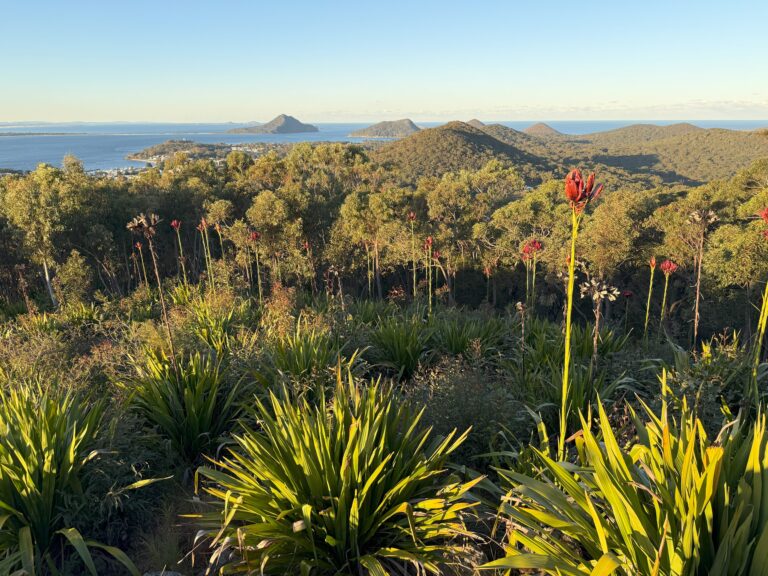
Myall Lakes National Park, Tea Gardens and Hawks Nest
Bushland, lakes, and dunes—perfect kangaroo habitat.
Port Stephens Hinterland
Often seen grazing in open fields and along quieter roads.
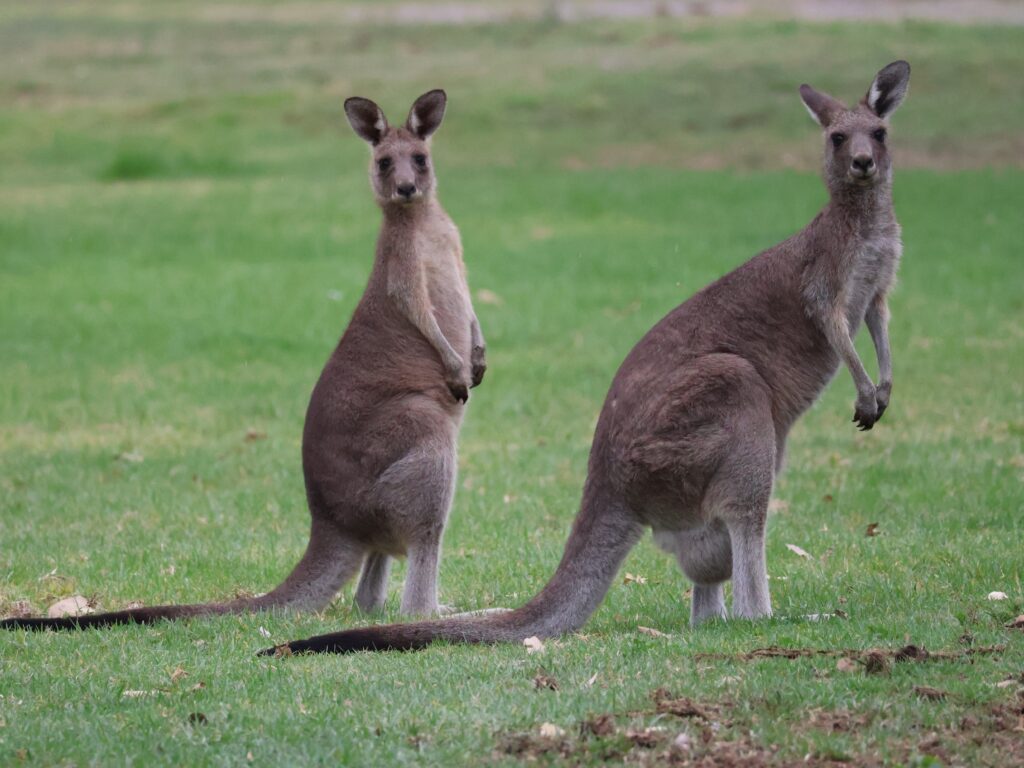
Victoria
Anglesea Golf Course
Yes, really. Wild kangaroos roam freely across the greens. One of the easiest and most reliable places to spot them.
Wilsons Promontory National Park
Open grasslands, beaches, and campsites with regular sightings.
Grampians National Park
Especially around Halls Gap and campgrounds.
Queensland
Cape Hillsborough (near Mackay)
One of the most famous kangaroo beaches in Australia. Visit at sunrise to see kangaroos and wallabies on the sand.
Magnetic Island
Wildlife is everywhere here, including plenty of kangaroos.
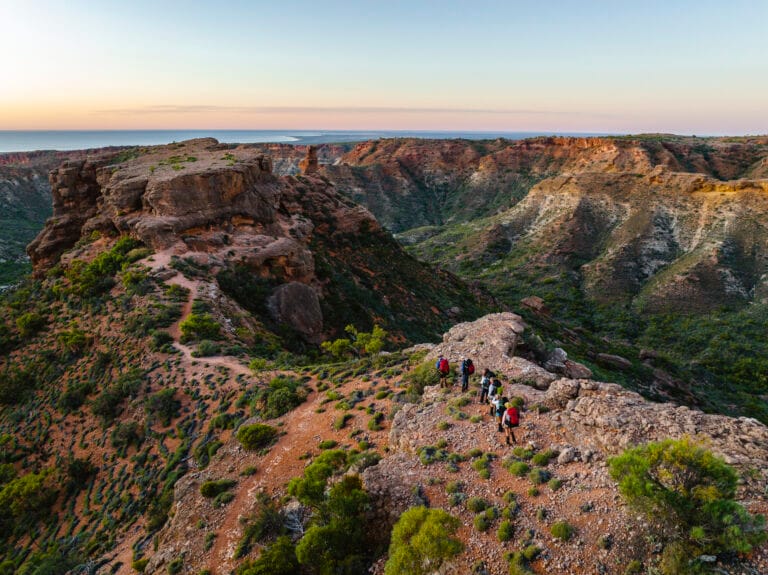
Carnarvon Gorge
Remote, dramatic, and full of wildlife encounters.
Atherton Tablelands
For tree kangaroos – look in the trees at the entrance to the Nerada Tree Plantation
South Australia
Flinders Ranges
Classic outback scenery with large mobs of kangaroos, especially early and late in the day.
Kangaroo Island
It’s in the name—and yes, you’ll see plenty.
Coffin Bay National Park
Dunes, bushland, and beaches with frequent sightings.
Western Australia
Lucky Bay (Esperance)
Arguably the most famous kangaroo beach in Australia. White sand, turquoise water, and kangaroos on the shore.
Cape Le Grand National Park
Reliable sightings, especially around campgrounds.
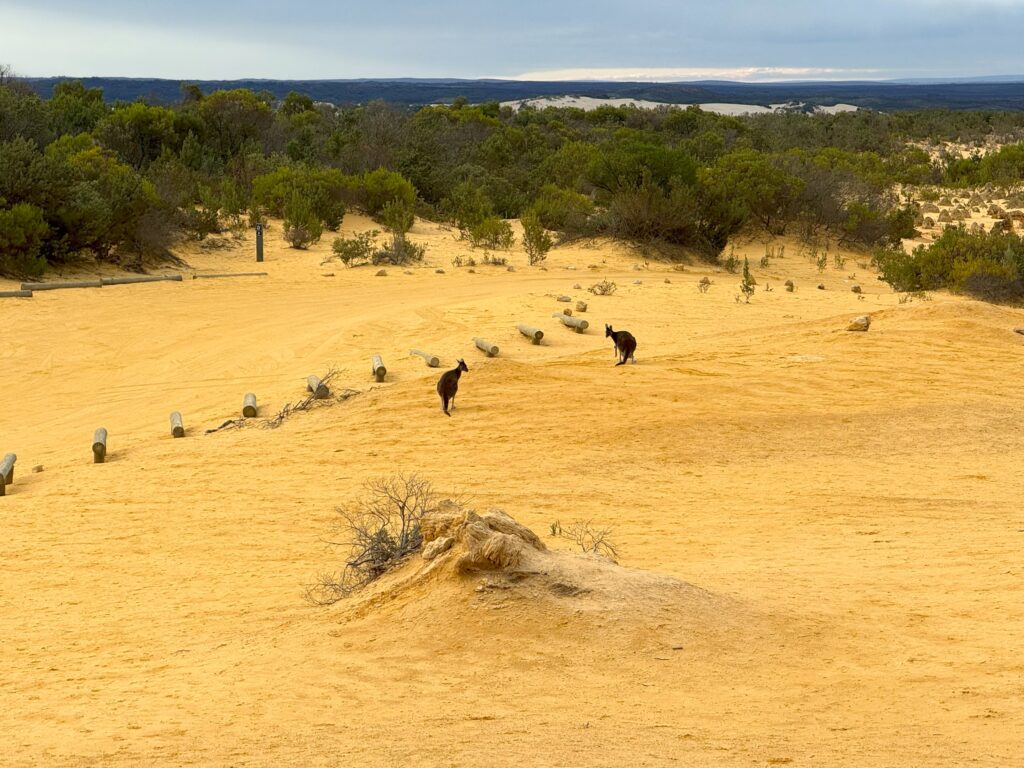
The Pinnacles
Frequent sightings in the desert at dusk.
Northern Territory
West MacDonnell Ranges
Stunning scenery and plenty of kangaroos, particularly around gorges and waterholes.
Around Alice Springs
You don’t have to go far—often seen on the outskirts of town.
Tasmania
Maria Island
A wildlife lover’s dream. Wombats, kangaroos, and zero cars.
Cradle Mountain–Lake St Clair National Park
Spot kangaroos and wallabies in open areas, especially early morning.
Where I’ve seen Kangaroos
Once you leave the cities and head out into regional Australia, kangaroos are easiest to spot at dusk along the side of the roads. Unfortunately, you’re likely to see a lot of deceased roos that have been hit by cars.
Saying that, I see kangaroos everyday in the fields on the side of Nelson Bay Road at dusk in Port Stephens. There is a big mob that comes to the Alexander Park Dressage Club to assist with lawn maintenance at Salt Ash. I saw one whilst bushwalking in the Tilligerry Peninsular just this week.
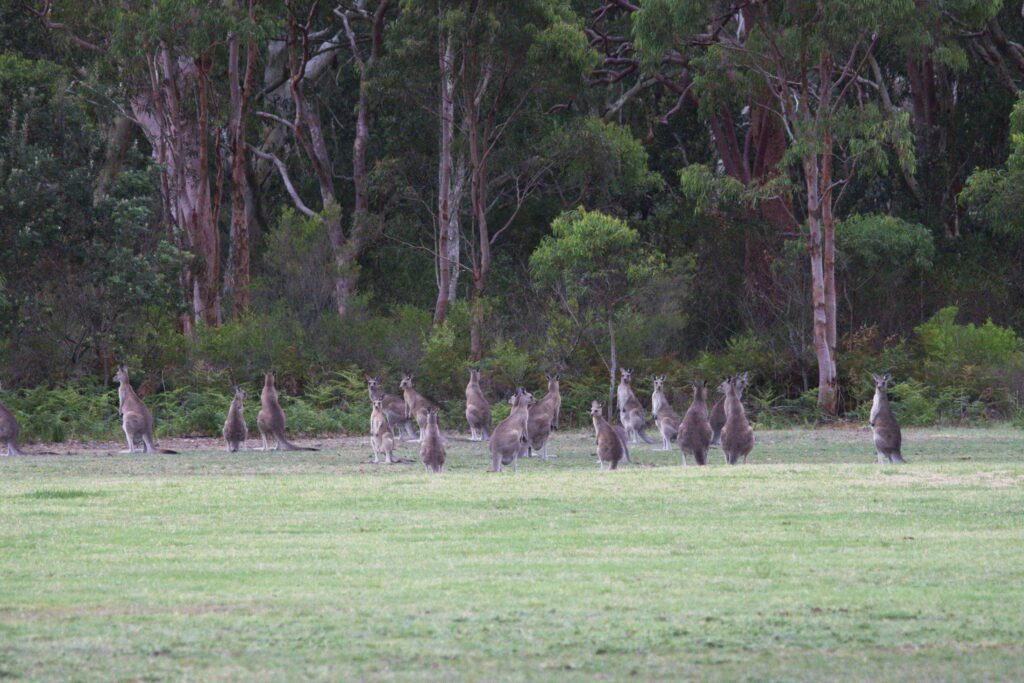
It’s pretty cool when they come down to the soccer fields at Mallabula in the evenings to watch the teams train.
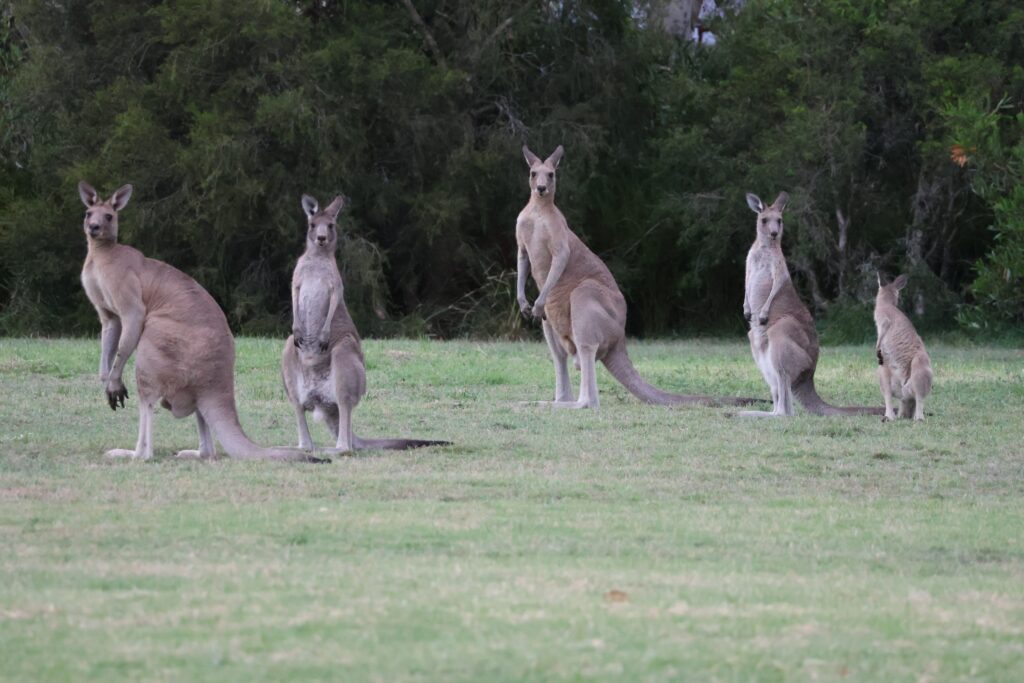
I saw them at the Look At Me Now (who came up with that name?) Headland north of Coffs Harbour. It was late morning and a group of 3 females with 2 joeys were having a feed in the shade of the adjacent properties.
Coomba Park is a small town on Wallis Lake near Forster, NSW where the kangaroos roam amongst the houses. You can’t miss them! There you will find massive male that the residents call Buttercup, at least 6 foot and would give any body builder and run for their money.
Then there was the Pinnacles in Western Australia on our 14-day Coral Coast Road Trip, where two kangaroos jumped out of the scrub and scared my girls before bounding off across the desert.
Not to mention Tasmania, taking a dip at Wineglass Bay in Frecinyet National Park, or Maria Island, Cradle Mountain and up Mt Wellington (OK, those were relatives called pademelons).
And of course, the elusive tree kangaroo at the gates of the Nerada Tea Plantation on the Atherton Tablelands inland from Cairns, Queensland.
Best Time of Day to See Kangaroos
Kangaroos are crepuscular, meaning they are most active at:
- Dawn
- Dusk
This is when they come out to graze, move around, and socialise. Midday sightings are possible, but less common—especially in hot weather.
Best Time of Year
- Autumn & Spring: Ideal—cooler temperatures and more activity
- Winter: Great visibility and often more daytime movement
- Summer: Early mornings and late evenings are best due to heat
If you want to see joeys, spring and early summer are prime time.
How to See Kangaroos Responsibly
This is important.
- Keep your distance – admire, don’t approach
- Never feed kangaroos – it harms their health and behaviour
- Do not touch – even if they seem calm
- Don’t block their path – let them move freely
- Drive carefully at dawn and dusk – kangaroos are unpredictable on roads
- Respect private property – always ask permission before entering farmland
Seeing wildlife is a privilege. Let’s keep it that way.
Photography Tips
- Shoot during golden hour (early morning / late afternoon)
- Use a zoom lens or phone zoom—don’t walk closer
- Stay low and still
- Avoid flash
- Capture them in their environment, not just close-ups
And remember: the best camera is the one you have with you.
Can You See Kangaroos Without a Car?
Yes—though it’s easier with one.
Good no-car options:
- Anglesea (VIC) – walkable town, kangaroos on the golf course
- Maria Island (TAS) – car-free island
- Magnetic Island (QLD) – walk and bus accessible
- Kangaroo Valley township
Guided tours are also a great option if you don’t want to self-drive.
Tours vs DIY – Which Is Better?
DIY is perfect if:
- You’re comfortable driving
- You enjoy exploring at your own pace
- You’re visiting national parks or rural areas
Tours are ideal if:
- You don’t have a car
- You want guaranteed sightings
- You want local knowledge + photography tips
Both are great—choose what suits your travel style.
Where to Stay for Kangaroo Sightings
Here are a few great bases:
- Pebbly Beach Shacks (NSW) – wake up with kangaroos on the beach
- Kangaroo Valley cottages (NSW) – surrounded by grazing mobs
- Esperance eco-lodges (WA) – close to Lucky Bay & Cape Le Grand
- Cape Hillsborough accommodation (QLD) – for sunrise beach sightings
- Flinders Ranges stations (SA) – classic outback experience
FAQs
Are kangaroos dangerous?
Generally no, but they can be defensive if threatened. They have a very powerful kick. Keep your distance.
Can you touch kangaroos in the wild?
No. It’s unsafe and unethical.
Do kangaroos really go on beaches?
Yes—Pebbly Beach, Lucky Bay, Cape Hillsborough and more.
Are kangaroos everywhere in Australia?
Not everywhere, but very widespread—especially outside cities.
Final Thoughts
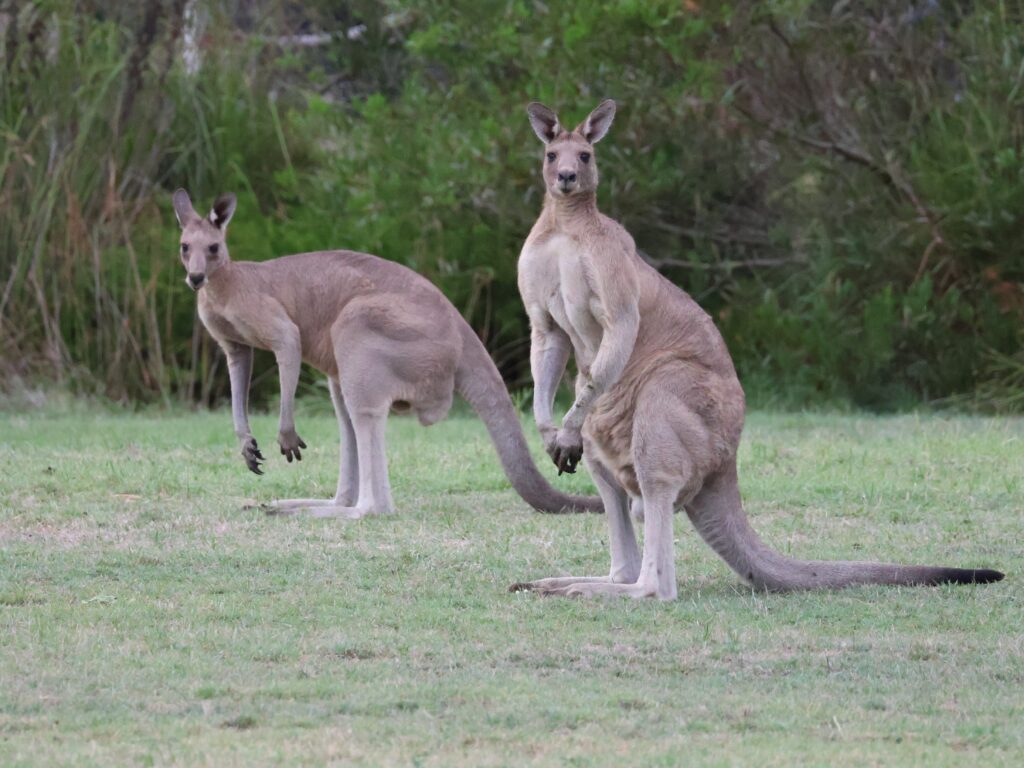
Seeing kangaroos in the wild is one of those moments that reminds you why travel matters. It’s not about ticking boxes—it’s about standing still in a quiet place, watching something completely natural and completely extraordinary unfold in front of you.
Whether it’s your first kangaroo or your fiftieth, it never gets old.
So slow down, get off the main roads, chase the early mornings, and keep your eyes open. Australia has a way of surprising you when you least expect it.
And when you find yourself watching a mob of kangaroos hop across an open field or laze on a beach… take it in. That’s the good stuff.
Roam with no regrets. 🦘
Share This Guide
Know someone dreaming of an Australian adventure? Share this guide, save it for later, and start planning your own wildlife encounters—because the best travel stories are the ones you didn’t plan.